WISHING YOU CONTINUED HEALTH AND SAFETY!
From the President
by Bob Campbell
Planning a trip to the Salida Museum can be both exciting and fulfilling. To make the most of your visit, consider the following recommendations. Start by checking the museum’s official website for any upcoming events, special exhibits, or programming that might enhance your experience. It is advisable to review the current admission prices and operating hours, as these may vary.
We welcome visitors of all ages at the museum and encourage you to include family and friends in your plans. The Salida Museum is dedicated to ensuring accessibility for every guest, including individuals with disabilities.
As you walk through the different exhibits, take your time reading the informative signage and multi-media presentations. They provide valuable insights into the various important historical people and events that have influenced the Upper Arkansas Valley. Some displays feature artifacts, oral histories, and audiovisual components that enrich the storytelling experience.
Lastly, be prepared to spend a few hours at the museum to fully appreciate the rich collection of exhibits and installations. Consider bringing along a notebook or camera to document interesting facts and experiences that you come across, as this can enhance your personal connection to the history presented throughout the museum.
Before your departure, we recommend visiting the gift shop area, which features distinctive souvenirs and literature related to Colorado’s history and culture. Acquiring a keepsake provides an excellent opportunity to commemorate your visit.
We’re growing and seeking ways to connect with new people while maintaining relationships with existing members and supporters. Even if you are new to the area consider volunteering at the museum.
We strive to pursue continual improvement, ensuring that our actions align with our organizational values and capabilities. When approaching change, we prioritize careful consideration of both our mission and the impact on our community.
The board and volunteers set the museum’s mission statement years ago. That mission is carried out through our stewardship of the museum and area heritage sites including the Maysville School and Salida Smelter Smokestack. This mission describes our organization’s operations at its optimal level and serves as a guide for making decisions regarding future projects and activities.
Upcoming Event
Salida Museum will host an Open House Weekend of Halloween Fun on Saturday, Oct. 25, and Sunday, Oct. 26, with ghostly tales and a downtown walking tour highlighting murder and mayhem.
Steve Chapman of Salida Walking Tours will present chilling tales from his Ghost & Murder Tour on Saturday at the museum, with 3 presentations at noon, 1 and 2 p.m. Admission will be free, and refreshments will be served.
Then, at 2 p.m. on Sunday, Chapman will host a 90-minute Outlaws, Whores & History walking tour in downtown Salida, exploring the Wild West years from 1880 to 1900.
The tour is an easy paced walk starting and ending at the F Street Bridge. Advance registration of $20 is required, and proceeds will benefit the Salida Museum. Email StevenTChapmanBooks@gmail.com to secure a spot.
Summer Book Signing
On August 16 at the museum, award winning author Sherry Skye Stuart conducted a book signing featuring her newest book “Forgotten Female Felons”. The book tells stories about early women inmates at the Colorado Territorial Prison in Canon City, built in 1871. Stories include the history of a midwife jailed for committing abortion and the woman who forged her husband’s signature to keep the ranch. The book signing was a great success and also included a free open house at the museum.
Visit www.sherryskyestuart.com to stay in touch with the author’s latest books, presentations and newsletter.
New Salida Historical Newspaper Exhibit
by Arlene Shovald, Ph.D.
Salida Museum’s most recent exhibit is a history of print publications in the local area. Artifacts and historic editions from what is now The Mountain Mail are displayed on a work table that was used at the Chaffee County Times, thanks to the donation of the table by O’Rourke Media Group, the current owner.
Newspapers began recording happenings in the area even before the town of South Arkansas became known as Salida in 1880. The first newspaper, probably just a single printed sheet, was The Cleora Journal, published in 1879. Cleora was a town about a mile east of Salida. When the Denver & Rio Grande Railroad decided to locate in South Arkansas (now Salida), Cleora businesses and residents moved upstream to where The Mountain Mail was established in June of 1880. However, prior to that, local mining camps already had newspapers. About 40 mining towns were established and 59 newspapers existed. None of those very early newspapers are available, but early editions of The Mountain Mail are on display in the exhibit along with artifacts from the “olden days.”
Typewriters were used before computers, and the Associated Press Stylebook has been a standard in newsrooms for decades.
George Oyler was publisher of The Mountain Mail from 1951 until 1971 and was President of the Colorado Press Association in 1963. He was responsible for returning the original name of the newspaper to The Mountain Mail, which had undergone several name changes since its inception in 1880. A photo of Oyler, at about age 12, is included in the exhibit, along with a photo of Merle and Mary Baranczyk, who owned Arkansas Vally Publishing Company for 48 years before retiring in April of 2023 and selling to O’Rourke Media Group. Merle was also president of the Colorado Press Association, serving in 1989, and president of the National Newspaper Association in 2012.
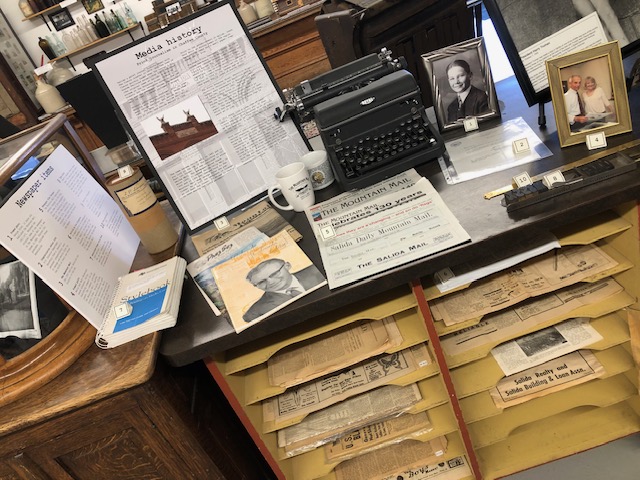
Other items in the exhibit include a copy of an in-depth article on the history of newspapers from the publication “100 Years in the Heart of the Rockies” published in Salida’s centennial year, 1980; a type stick used for handset wood and metal type; a package that contained darkroom chemicals for processing black and white film and a pica pole/stick from about the 1950’s which was used by printers to measure spacing, leading and alignment in type and designs.
For anyone currently working in print media, the museum’s newspaper display provides an interesting visual and print history of “the way it was” and probably an appreciation of the way it is today.
In Memoriam
Betty Irene Veltrie died March 17 at Columbine Manor at age 98. She served on the Board of Directors of the Salida Museum Association for almost a decade into to 2000’s. Betty came to Salida in 1945 and married into the Veltrie family living in Cleora. Let us not forget the Veltrie name as Cleora modernizes with new development. It was Veltrie land that was donated for the pioneer cemetery at Cleora, which, despite being neglected for years, was recently added to the National Register of Historic Places.
Fall Roundup
by Earle Kittleman
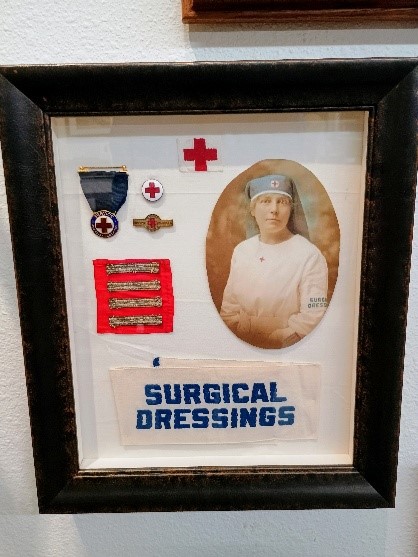
Out of the blue, things that have been saved for years as family keepsakes show up at the museum as donations for all to see and appreciate.
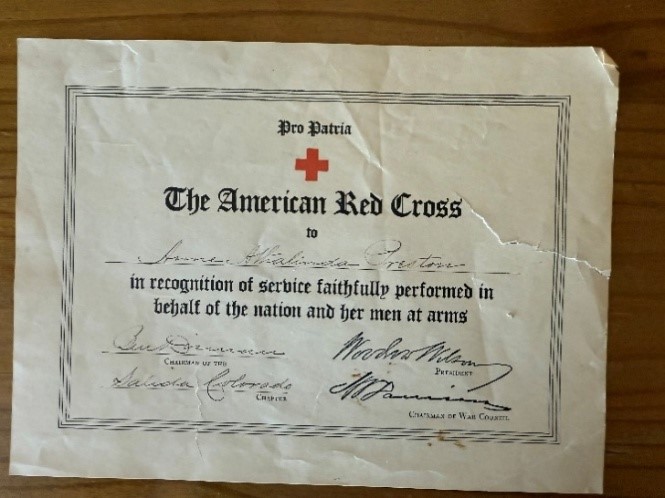
The surprise this spring was a collection of World War I nurses items that belonged to Anne Athalinda Preston, wife of Horatio Preston, president of First National Bank of Salida. Included were insignia and pieces of Anne’s uniform and certificate of appreciation signed by President Woodrow Wilson.
Mrs. Horatio Preston was one of the organizers of the Salida chapter of the American Red Cross. Historic newspapers portray her as a prominent woman of her time.
She and her husband were both born in England so you can imagine them bringing a touch of refinement to the American frontier. Anne’s copybooks, which were included in the donation, display immaculate handwriting in English and French from her time at the Royal Masonic School for Girls near London.
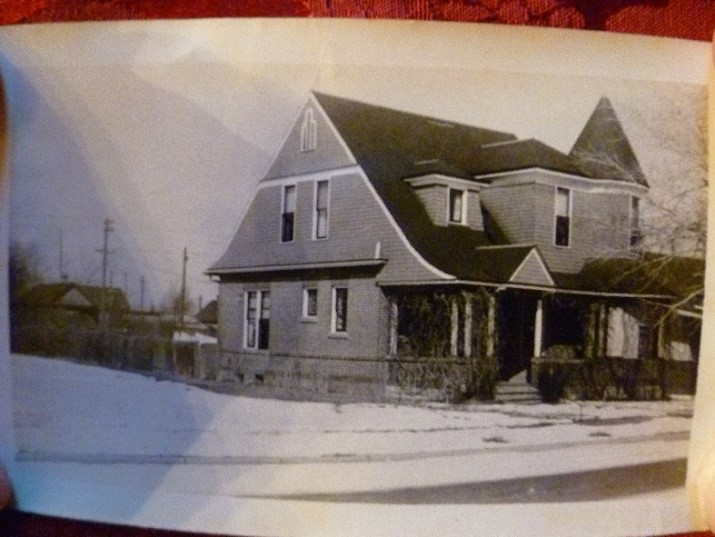
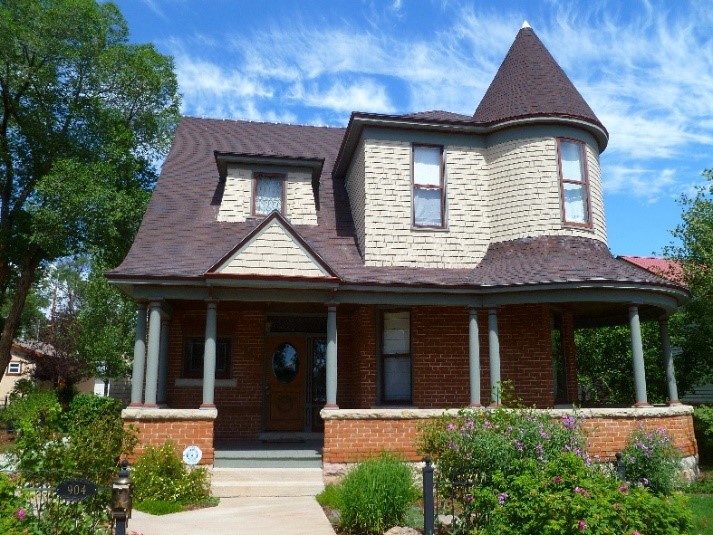
The couple raised a daughter, Allison, in Salida and lived at 904 F Street in a house that still retains its Queen Anne style beauty.
Anne kept her ties to Salida after moving to Denver where she died in 1972 at 101 years of age.
The donation was in the name of Allison Preston Goodheart, her only beloved daughter, and Donald Preston Goodheart, her beloved grandson.
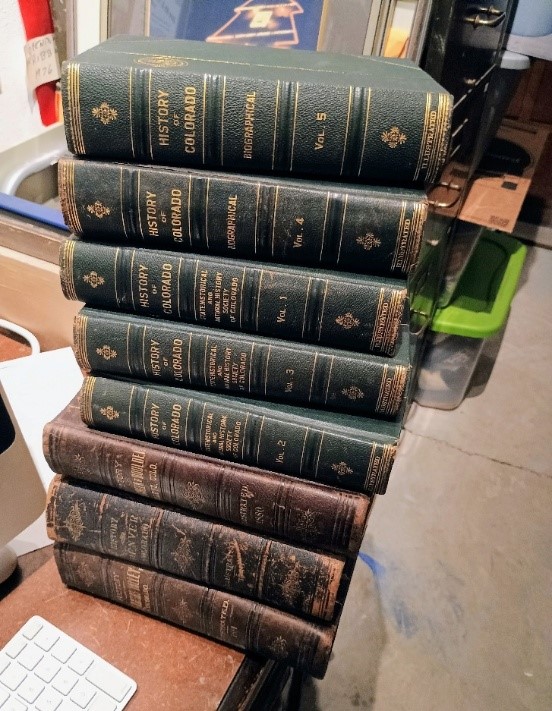
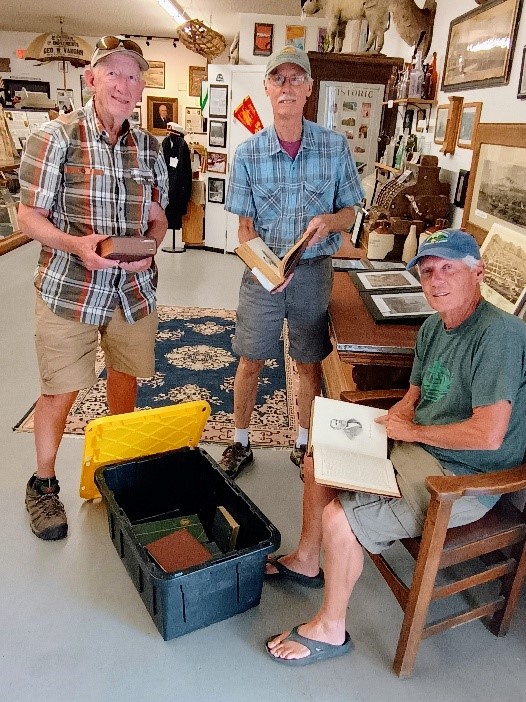
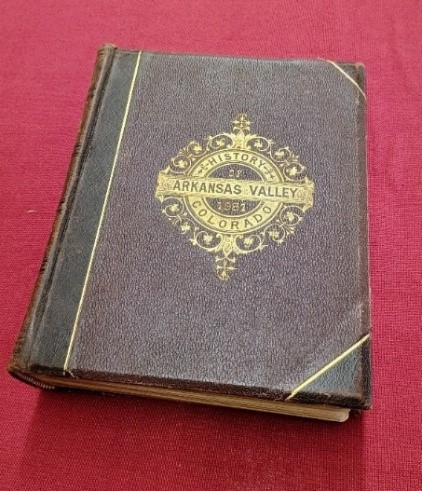
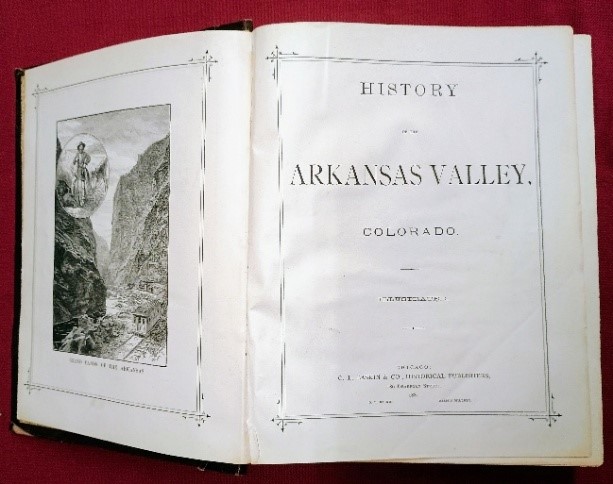
Another surprise came during a museum board meeting in July when Jon MacManus walked in with several antique books, among them History of the Arkansas Valley Colorado, published 1881 and illustrated with portrait and scenic lithographs. Also included was The Pacific Tourist, Williams’ Illustrated Trans-Continental Guide of Travel, from the Atlantic to the Pacific Ocean, 1879, containing full descriptions of railroad routes across the continent with illustrations of the wonders of the Rocky Mountains and Sierra Nevada Mountains.
Jon MacManus was active in Salida for years. He now lives in Red Lodge, Montana.
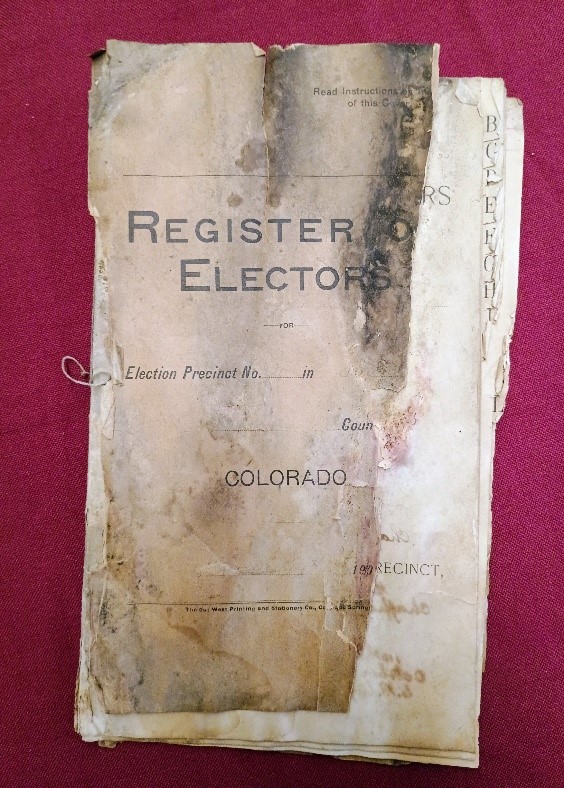
Not exactly a keepsake, but a treasure nonetheless, a 1905 Voter Registration Book turned up in the wall during a remodel at 314 W 1st Street. The molded and tattered book contains handwritten names of Chaffee County voters listed in alphabetical order. Thanks to donor Brian C. Freeman, the book is saved for anyone checking on voter fraud in early Salida history.
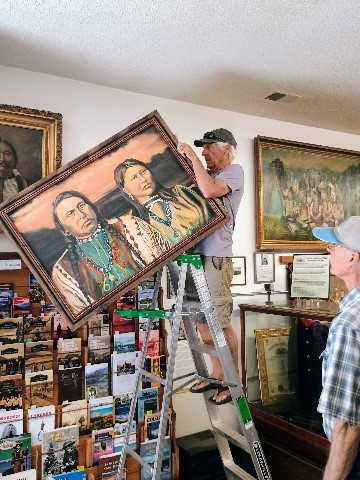
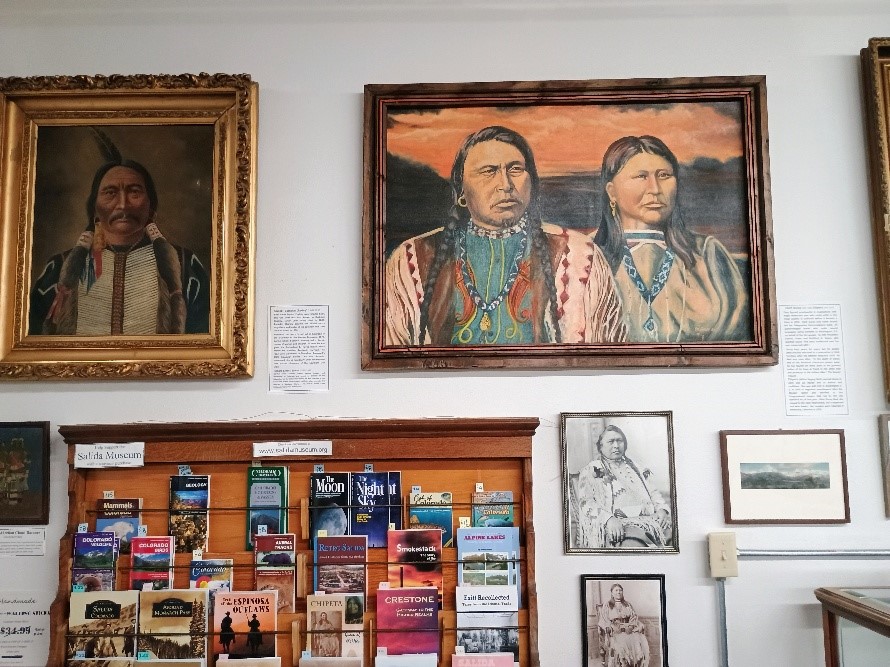
A fine oil portrait of Ouray, Chief of the Utes, and his mate Chipeta that used to hang over the fireplace at Doc Hutchinson’s ranch house on the way to Poncha, now resides at the museum. Rod Farney, Jr., the artist, taught art at Salida High School 1971-2000.
The museum also has single portraits of Ouray and Chief Buckskin Charley that were done by Richard Ernesti who taught art here and in Buena Vista 1903-04.
Thanks to Art Hutchinson for donating the Farney painting.
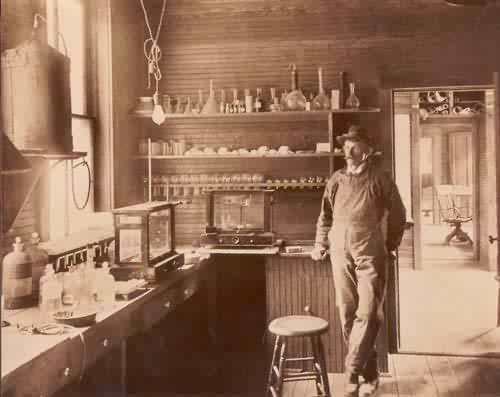
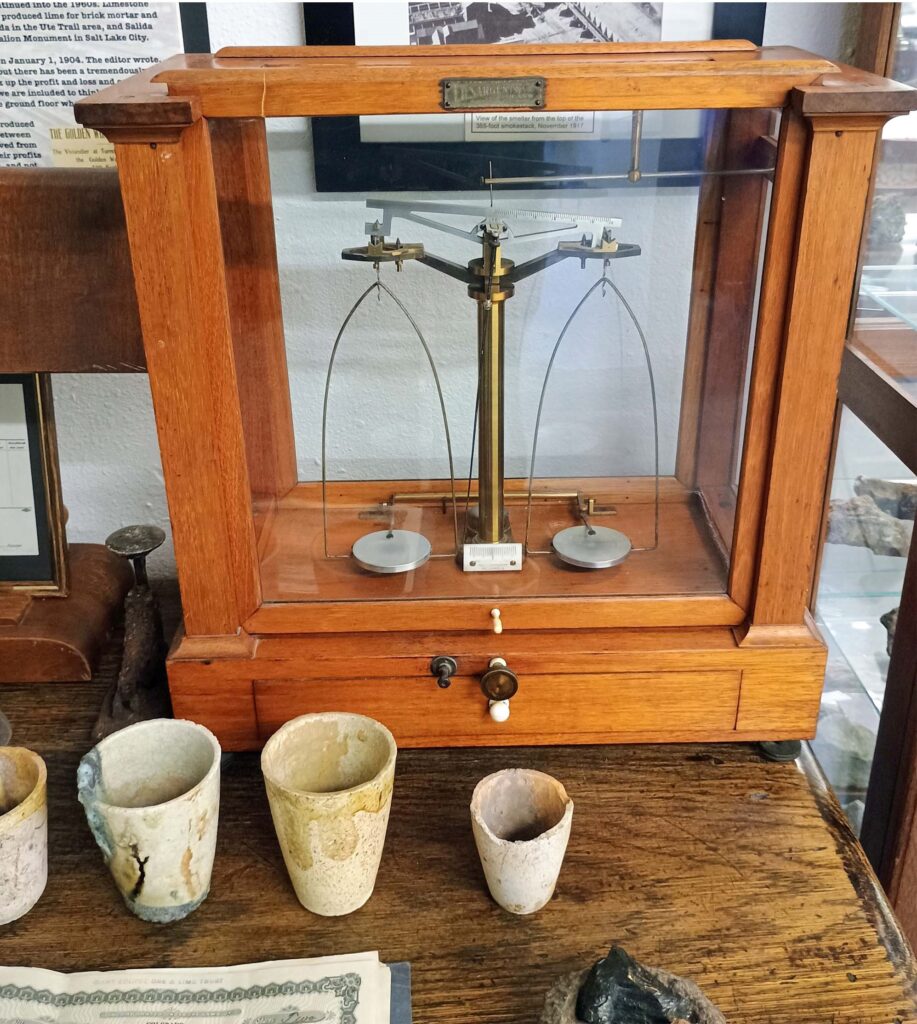
The most recent donation comes from Karen Hasselbrink: a cabinet-encased apothecary scale made by E H Sargent & Company of Chicago. It’s on display in the mining section since it looks very much like the scales seen in historic pictures of assay offices. Wikipedia says Ezekiel H. Sargent started selling assaying equipment to gold prospectors in 1849. The company published a catalog in 1875, becoming the first US mail order instrument supplier.
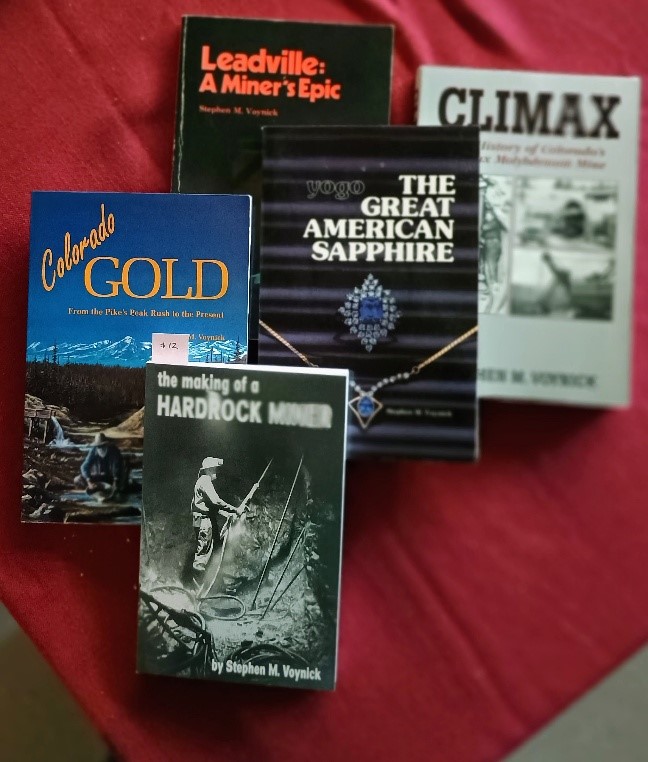
In October, Stephen Voynick donated copies of five books he has authored about mining in the area. He gave us copies of one of his books,The Making of a Hardrock Miner, which has been reprinted several times, and is now on sale at the museum. The late Ed Quillen wrote an exciting review of this book in Colorado Central Magazine in 2005. The link to this article is: https://www.coloradocentralmagazine.com/the-making-of-a-hard-rock-miner-by-stephen-m-voynick/.
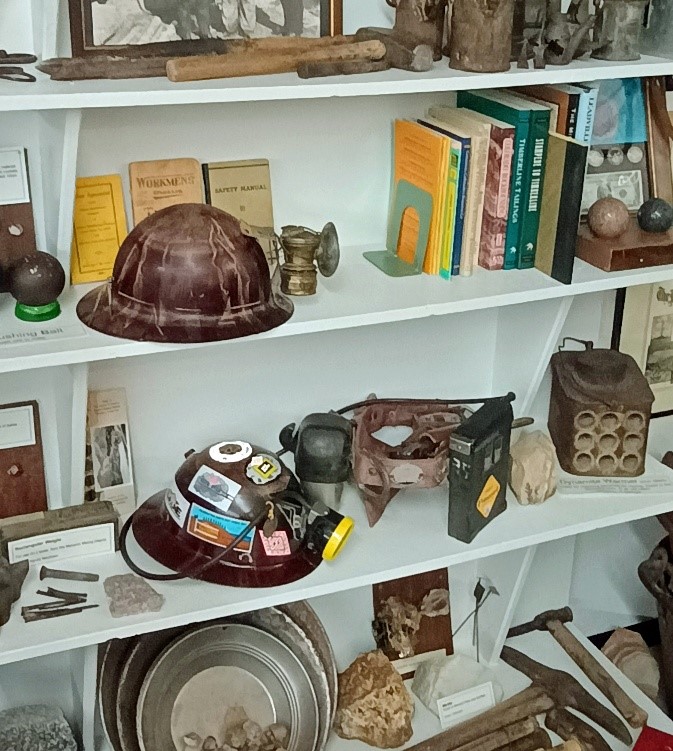
Stephen also donated the hard hat and safety belt he wore as a miner. It has headlamp and battery, supplementary oxygen container and attachments for tools.
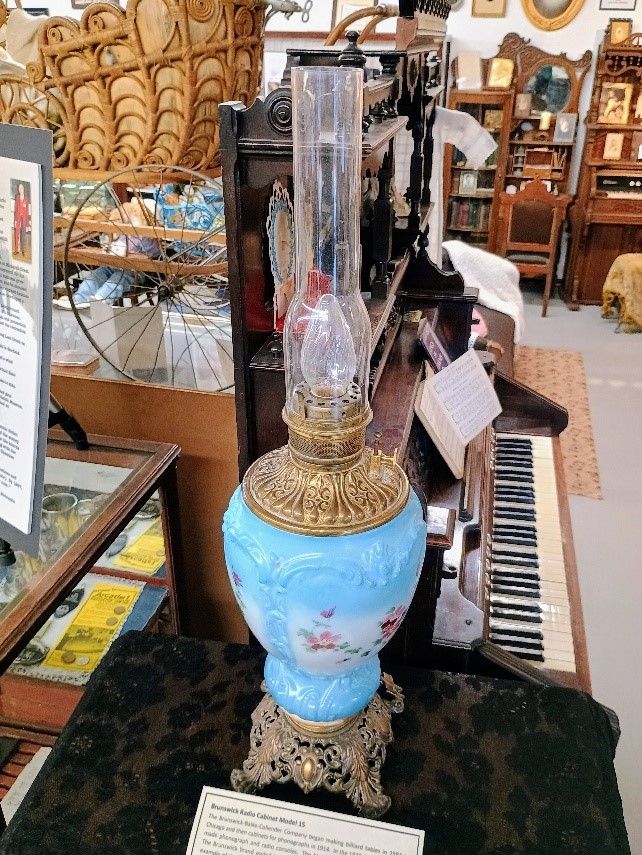
Also in October, two very old lamps one of which had been converted from kerosene to electric were donated by Michele Simes of Salida. The lamps belonged to Marie Wright and came from the Wright’s guest lodge at the base of Mt. Princeton in the 1930s. The lamps were donated in the name of Marlene Armstrong Givan and her daughters (granddaughter and great granddaughters of Marie Wright).
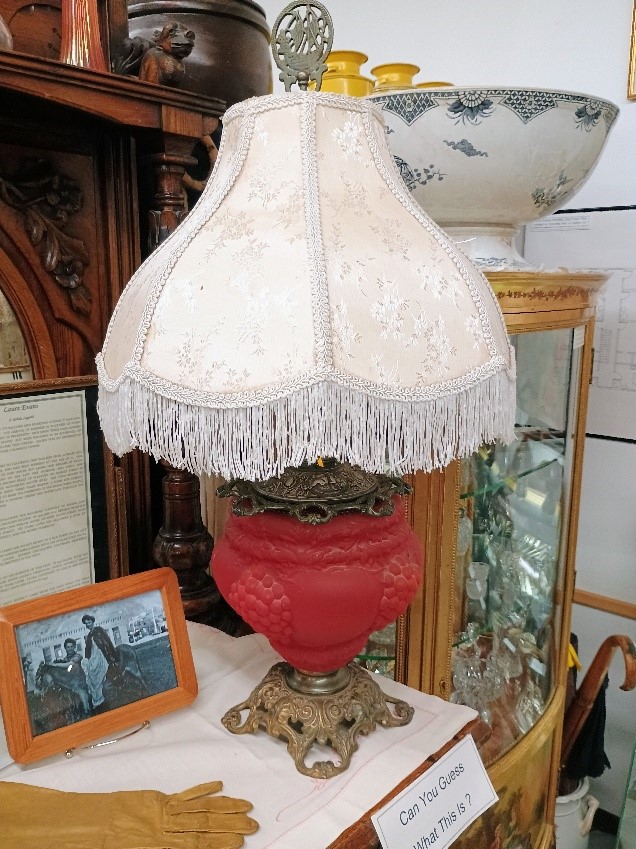
As always, we appreciate people who care to donate to the museum and share their history with the community.
War of the Worlds
by Arlene Shovald, Ph.D
Halloween in Early Salida
With the fun Halloween Salida Museum ghost stories event coming up on Saturday, Oct. 25, and Steve Chapman’s downtown walking fundraiser on Sunday, Oct. 26, I was prompted to go back in history to an article I wrote for The Mountain Mail about how Halloween was celebrated in the early days.
There was the good and the bad and it was great fun visiting with the folks who were the “old timers” then, as Salida was approaching its centennial year in 1980.
Halloween was always a time for parties and parades and other fun events and articles in the early day newspapers described those things, but it was also a dreaded time because Halloween was a favorite time for pranks.
A common trick was to take a farmer’s wagon and reassemble it on a roof or outbuilding.
Mervin Aude recalled a trick he and some friends pulled when he was in high school in the early 1930s. The boys found a way of getting into the high school after hours, took a Model T Ford apart and reassembled it on the stage of the old high school which would have been on the corner of 10th and D streets. That school was destroyed by fire on April 13, 1962.
Looking back at the “olden days , Mr. Aude recalled how on the morning after Halloween the principal found the car on the stage and was faced with the problem of getting it out. The boys let him figure that out for himself.
Salida High School has always had an excellent auto shop program since I moved to town in 1979, but I don’t think anyone ever took a whole car apart and reassembled in in one night.
Outdoor toilets, which were called privys, were a target on Halloween night. Kids got a kick out of tipping them over, and woe to the person who happened to be using the privy at the time and found it turned upside down with the door side on the ground.
Sidney Mulvaney was a resident at Columbine Manor when I interviewed her in 1979 and she remembered soaping windows with homemade lye soap.
As the years went by efforts to dispel the vandalism resulted in parades and other community activities being organized. For many years kids marched in costume from Alpine Park to First Street after which they were treated to a free movie and a sack of candy That stopped in about 1966.
Halloween night in 1938 is one many Salidans remembered . That was the year of the Orson Wells presentation of “War of the Worlds” on his radio show, Mercury Theater of the Air. At the beginning of the show he stated that the show was ficticious. But the show was about an invasion by Martians that was happening “now”. Folks who tuned in a little late didn’t realize it was fictitious and it scared people throughout the country. Some suicides were said to have occurred, although there was never any proof of that happening. During the 45 minutes the show was in progress, many people across the nation were terrified. Many of the residents at Columbine Manor in 1979 had heard about the program or read about it in the newspapers but none had actually heard it. The smaller towns like Salida didn’t have good enough radio reception, but they read about it the next day in the newspaper.
Dennis Kapela is planning to air “War of the Worlds” on KHEN sometime near Halloween on his deejay show.
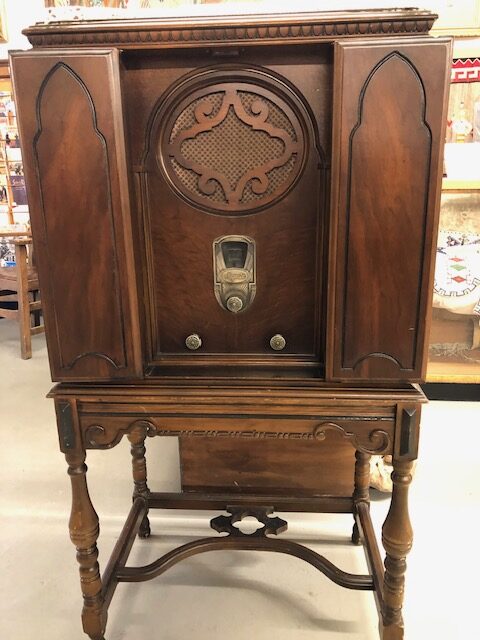
Radios like this 1930’s Majestic may or may not have been able to receive the War of the Worlds broadcast, especially in places like Salida. No Salidans reported hearing War of the Worlds, probably because the radio signals in those days were not strong enough and also not everyone could afford a good radio.
Museum Exhibits
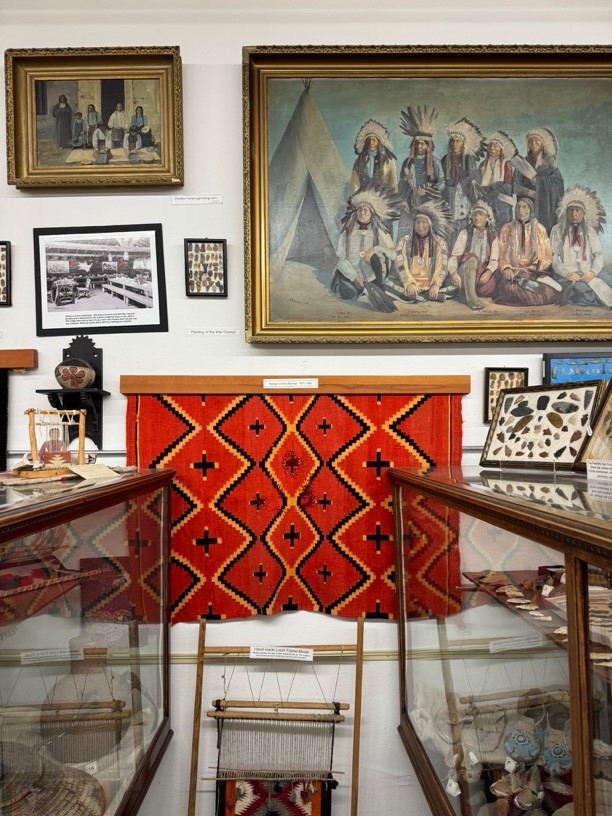
Navajo Child’s Blanket, 1870-1880.
This is a late classic Navajo wearing blanket.
The Indigo blue dye classifies the possible time period that it was made.
Of all the dyes, indigo shrinks onto the skin (keratin) of the sheep hair as it dries, and it glows in sunlight.
Salida Museum Photo Digitization Project
The digitization of the Salida Museum photo collection is still continuing on a steady basis.
The goal is to scan and digitally store a large amount of the photo collection on external devices and in the cloud. In the event of any possible damage to the collection, these will serve as a permanent backup.
The scanning is being done primarily by volunteer Mike Rosso, who has a background in commercial photography and photo restoration. Patrick Hardin, one of the museum docents, has been trained to scan photos as well.
The museum website has been updated and is now displaying many of the photos thus far scanned. Visit www.salidamuseum.org and look in the “Galleries” drop-down menu where you will find four categories: People, Places, Buildings and Railroads. The photos are available for research, publication and for those just curious about Salida history. Larger resolution versions of the photos can be ordered by email at salidamuseum@gmail.com.
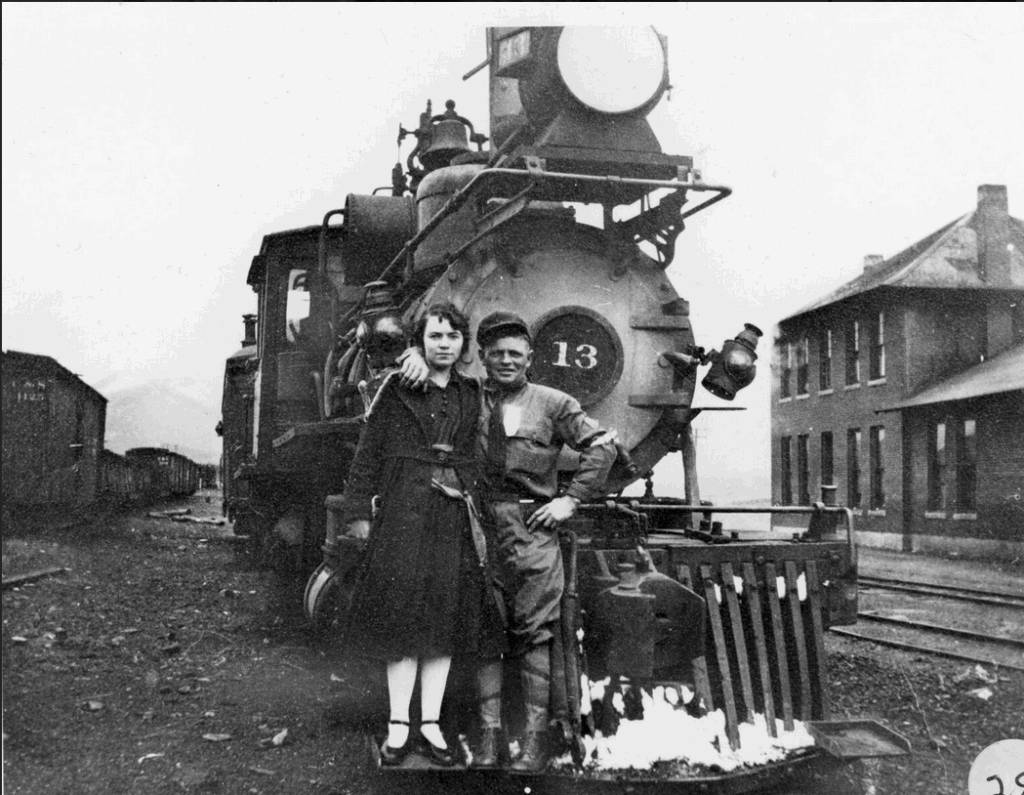
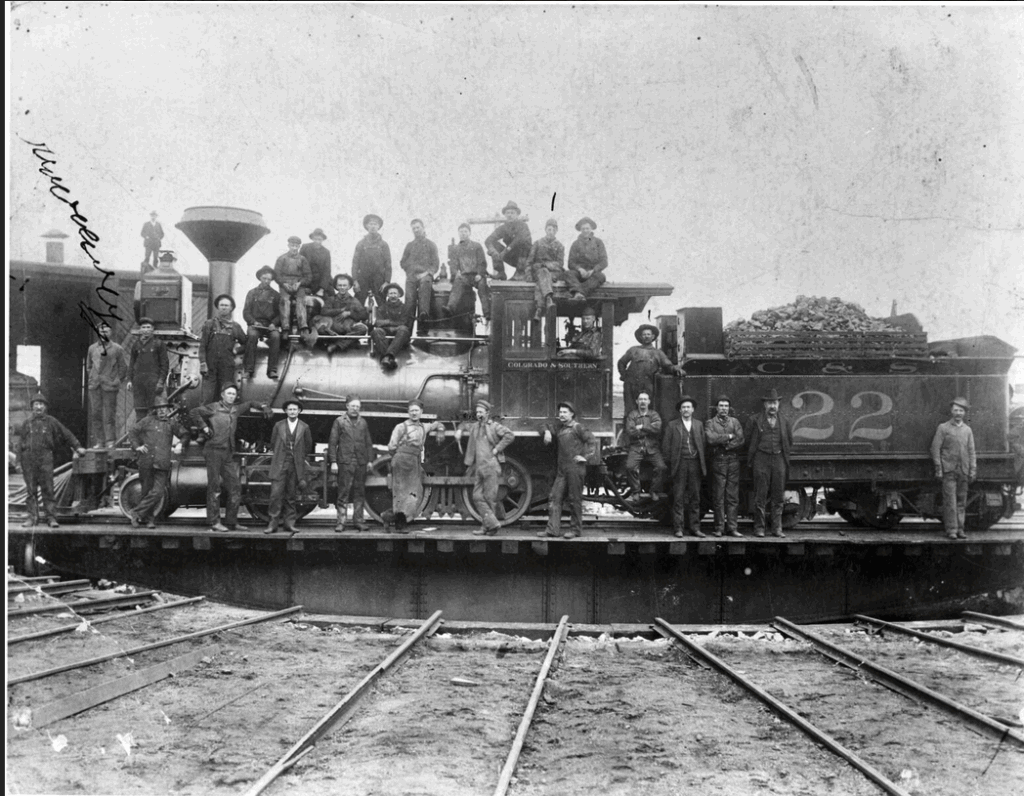
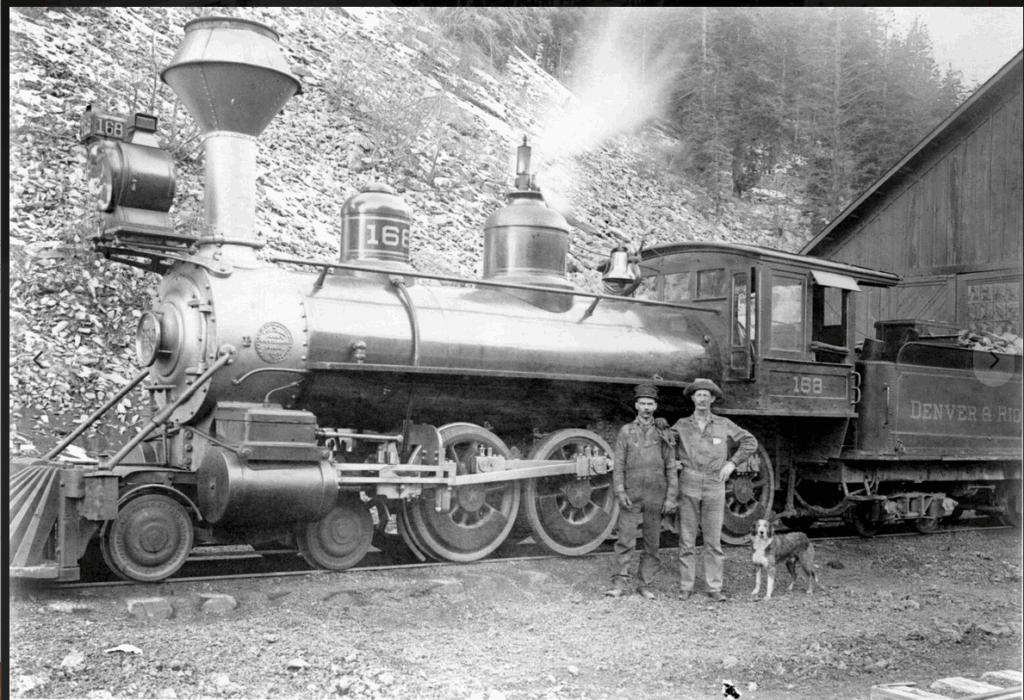
These photos are examples of what you will find in the drop-down menu of the “Galleries” tab in the museum website..
Museum Board of Directors
The current museum board of directors is comprised of the following:
President, Bob Campbell
Secretary, Earle Kittleman, 719-221-3685
Treasurer, Larry Kovacic, 505-280-4831
Board Member, Arlene Shovald, 719-539-3139
Board Member, Bonnie Konopka, 505-270-6523
Board Member, Terry Pintane, 719-221-4177
Board Member, Dennis Kapela, 720-320-9132
We wish to thank Margaret Dean, who volunteers as a board representative from Maysville. The members of the South Arkansas Landowners Association (SALA), comprising residents in the Maysville area, do a lot of work taking care of the historic Maysville School, which is owned by the museum. We appreciate their efforts to maintain the school as a historic landmark and look forward to a long and fruitful relationship.
Museum Docents
Patrick Hardin
Giff Kriebel
Terry Pintane
Dennis Kapela
Earle Kittleman
Bonnie Konopka
Larry Kovacic
Many thanks go to our docents; they are the reason the Salida Museum remains open to visitors.
Volunteers Needed
If you are interested in becoming a board member and coming to one meeting a month, or becoming a docent and working one day a week, let us know. We would be very happy to talk to you about joining our team. Our board meetings are open to the public, so if you want to attend one and find out if you’re interested, the meetings are the third Wednesday of the month, 11:00am, at the museum.
Support the Salida Museum
The Salida Museum Association is an all-volunteer non-profit organization that relies on donations, memberships, admissions and limited fundraising to remain operational. You can help support the museum by making a donation or becoming a member.
Donation – any amount appreciated
Annual Membership – $15, includes 5 free visits
Lifetime Membership – $100, includes unlimited free visits
Memberships and donations are tax deductible. Send your payment to the address listed below, use our website to remit with PayPal, or join when you come in to see the museum. You will receive an acknowledgement letter for tax purposes. (make sure we have your address)
Salida Museum Association
406 1/2 W. Hwy 50, Salida, Colorado 81201
salidamuseum@gmail.com
719-539-7483
For more museum information, see our website or Facebook page.
Golden Age of the Buckaroo
by Joy Jackson at Salida Regional Library
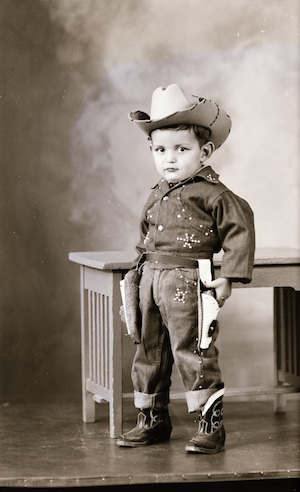
For a century, the mythology of the West has held America in its grip. It all started with rodeos, which were originally competitions held between neighboring ranches. In their spare time, cowboys of rival outfits would see who was the best at roping and riding. Rodeos soon became mainstream and were popular 4th of July events in small towns across the country. By the 1920s, Old West culture had permeated music, television, radio programs, movies, and comic strips.
Though it wasn’t named as such, Salida’s first rodeo and stock show occurred in 1890 about a mile west of town on William Van Every’s property. A group of local businessmen formed the Salida Jockey Club and soon had an event planned for a horse fair. Besides the local ranchers showing off and selling their livestock, the event featured best stallion competitions, trotting races, and cowboy races. These were something akin to a pony express race, where the riders would race five miles, changing horses out at every mile.
In the following decades, rodeos were becoming popular in America and towns big and small began to incorporate them into their event schedules. Monte Vista’s Ski-Hi Stampede started in 1919, Colorado Springs’ Pike Peak Rodeo began in 1921, and Buena Vista’s Head Lettuce Days began in 1922, all within traveling distance of local Salidans, and all featuring rodeo events.
During the late 1920s, local ranchers George Everett and Joseph Spence organized Salida’s Mid-Summer Round-up, a full-fledged rodeo that took place near the Little Arkansas, probably southwest of town. The Round-Up included a wild cow milking contest and a bucking bronco contest, and the advertising announced: “100 Head of Wild and Wooly Horses will be roped and mastered and they will be the baddest of the bad ones.”
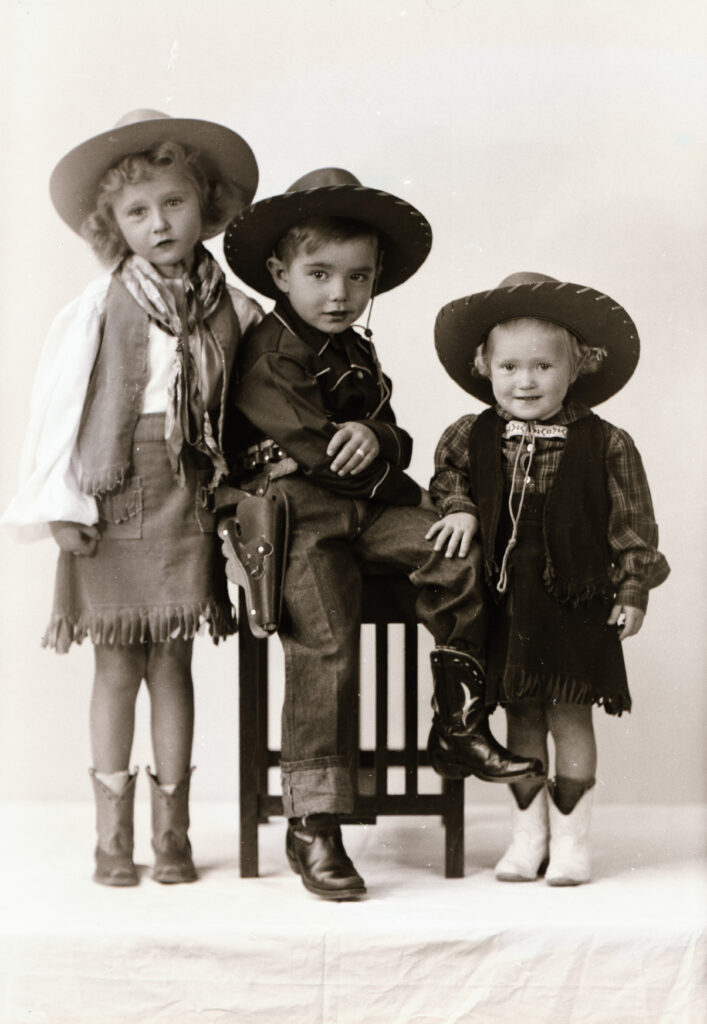
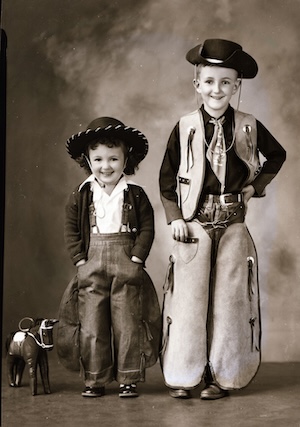
The Golden Age of the Western permeated every aspect of a child’s existence during the 1930s-40s-50s. They were inundated with western movies, starting with John Wayne’s Stagecoach which premiered in 1939. That same year, the Salida Mail newspaper began publishing Fred Harman’s Red Ryder cartoon, which followed the adventures of our hero Red Ryder and his Native American sidekick Little Beaver. It later debuted as a radio program, joining other popular shows, like the Lone Ranger and Hopalong Cassidy.
Local mercantile operator Dick Tuttle, owner of Tuttle’s Trading Post at 207 F Street, capitalized on the craze and began selling genuine leather cowboy outfits and Red Ryder 1000-shot air rifles.
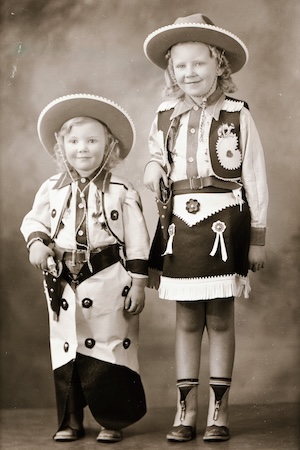
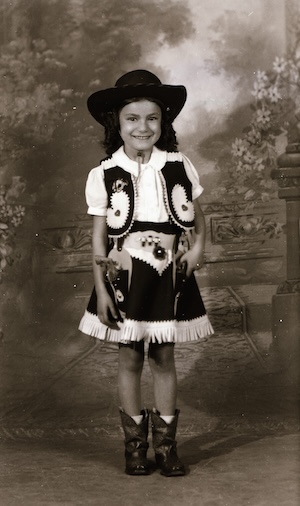
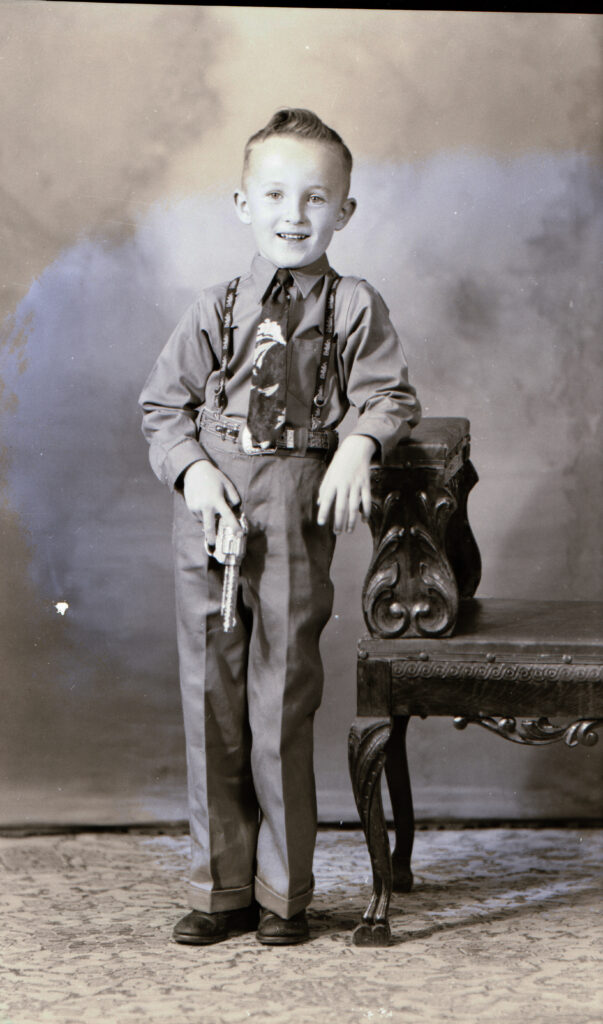
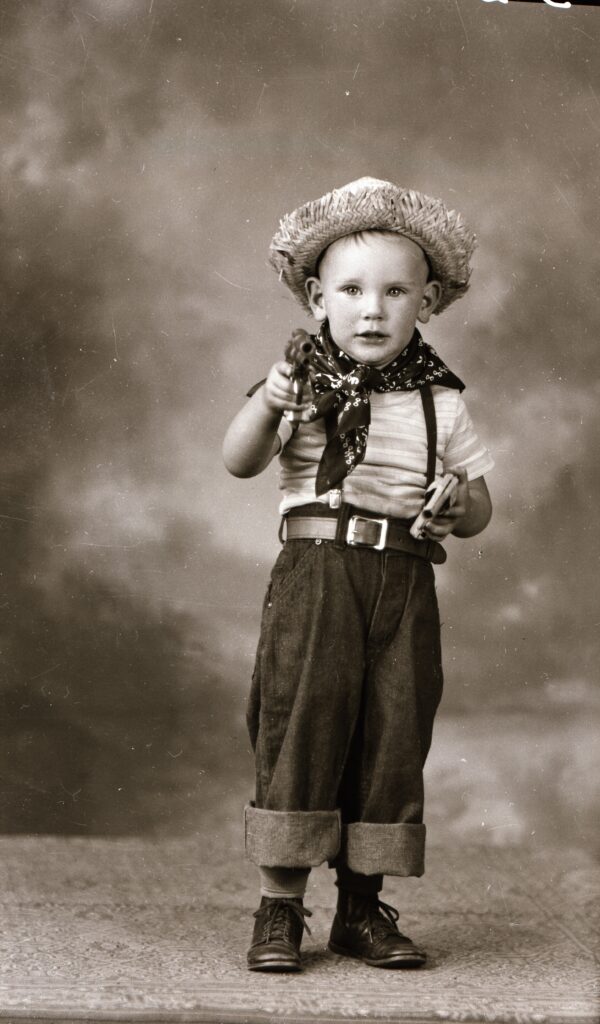
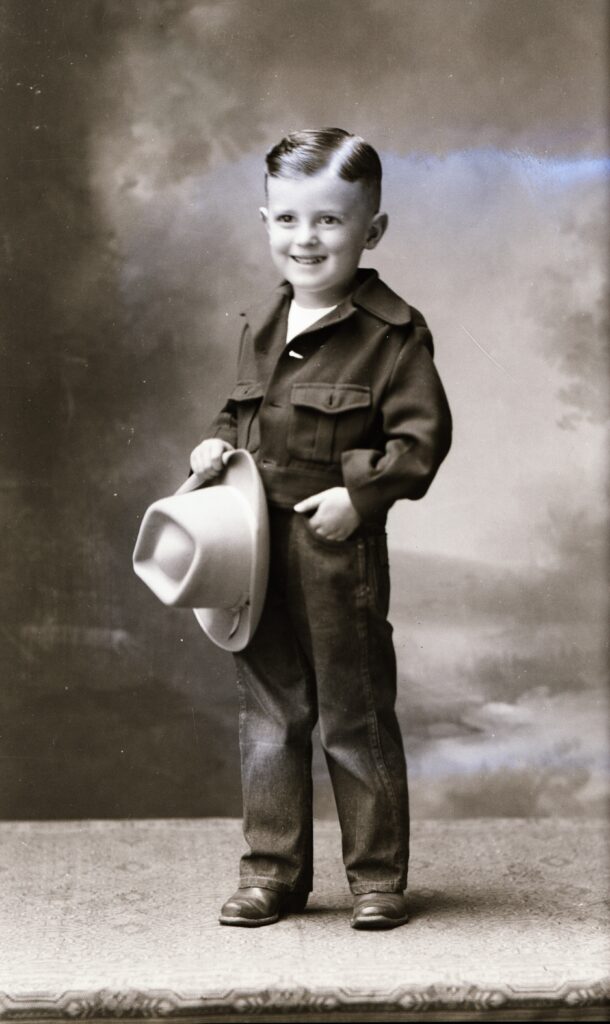
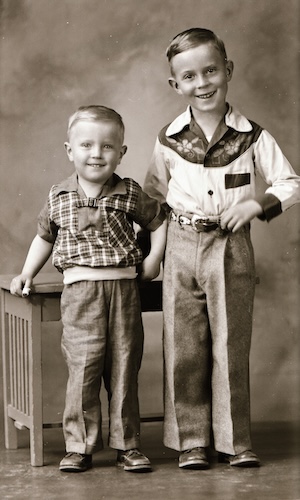
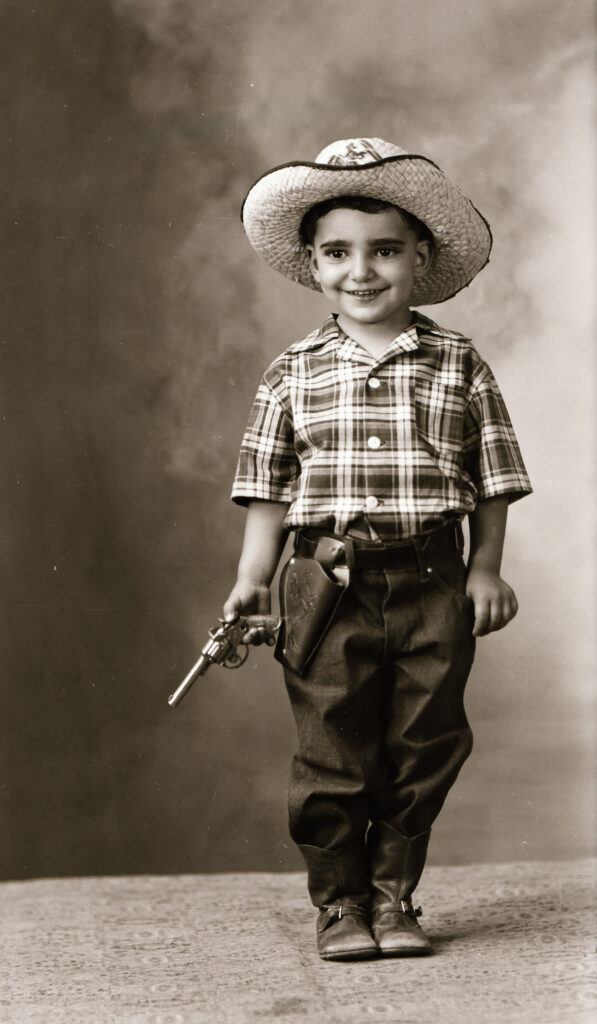
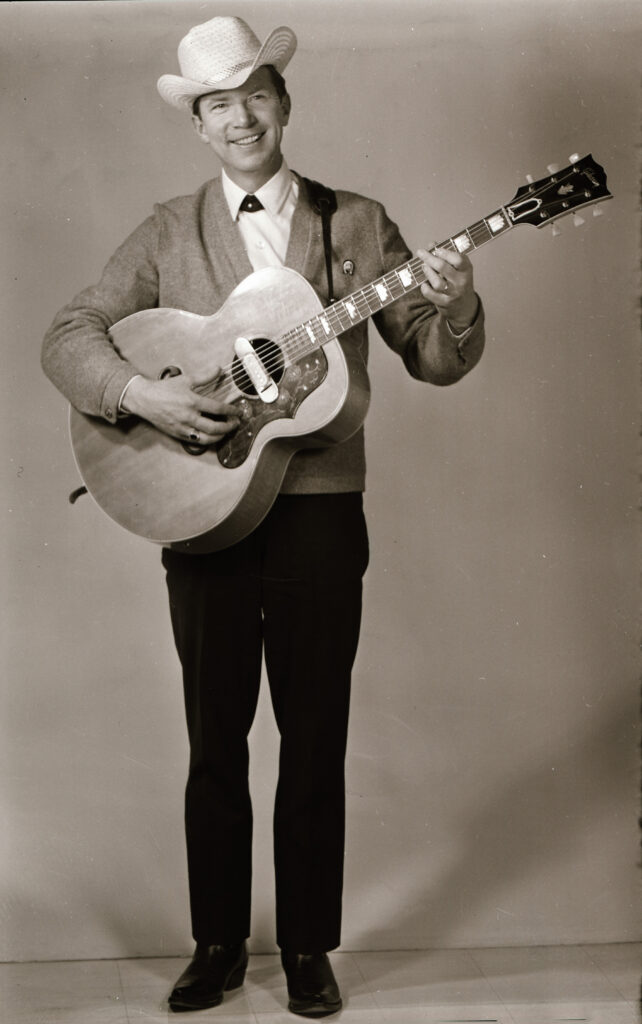
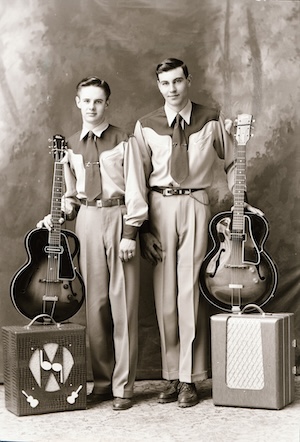
Portrait photographer Helen Hanks, owner of the Hay Studio at 229 F Street was a pro at bringing out the inner cowboy/cowgirl in her subjects. These images were photographed by Helen and are all part of the Salida Museum’s donation of Hay Studio negatives to the Salida Library. All of the images were simply marked with a surname; some detective work has determined identities of a few. If you recognize any of these people, let me know! Please call the Salida Library at 719 539-4826 and ask for Joy.