WISHING YOU CONTINUED HEALTH AND SAFETY!
From the President
Spring 2026 marks a period of notable activity for the Salida Museum, and we extend our sincere gratitude to all supporters for their continued engagement. We appreciate the enthusiastic response from the community, evidenced by increased attendance at both the museum and the Salida Library’s 2026 Museum Lunch and Learn program.
This year, we commemorate a significant milestone: fifty years serving Salida and the Upper Arkansas Valley in the building made possible by Harriet Alexander and others, spanning from 1976 to 2026 within the museum’s seventy-two-year timeline.
History encompasses not only individuals, locations, and artifacts, but also time and its connection to our collective narrative, and the museum does just that. The Salida Museum’s origins preceded many current supporters, and numerous individuals are owed recognition for their contributions to preserving the story of the Upper Arkansas River Valley. We acknowledge the invaluable efforts of countless volunteers, both named and unnamed, who have helped shape our institution.
Harriet Alexander, instrumental in establishing a museum in Salida, began her initiative in 1953 with the assistance of Byrd Fuqua. The first iteration of the museum opened in 1954 at the Salida Hot Springs Building, featuring artifacts from Alexander’s personal collection, Native American items from Fuqua, and donations from the public. By 1955, the museum housed enough artifacts to occupy three rooms and had received a “Yard Goat” engine donated by the Koppers Creosote railroad tie treating plant; this engine remains on display at the museum entrance.
Alexander’s involvement extended across many facets of Salida, including membership in the Tuesday Evening Club, founding the airport, and serving as the first female member of the Salida City Council. Following her passing, her estate contributed a donation that facilitated the formation of the Salida Museum Association in November 1973—a nonprofit dedicated to preserving the region’s history. Support from Alexander’s estate, the Colorado Centennial-Bicentennial Commission, Chaffee County, City of Salida and private donors enabled the realization of the museum building plans in 1976.
This year in July, the museum will celebrate the fiftieth anniversary of its opening in the current facility. Board member Earle Kittleman has located photographs from the original opening day in July 1976. To honor this important occasion, board members have proposed Saturday, July 11, for a commemorative event. We invite you to join us to celebrate this outstanding anniversary.
Found in The Mountain Mail 50 years ago.
Jan. 20, 1976: If all goes well, the new Salida Museum should be completed by March 1.
The new facility is now under construction beside the municipal hot spring pool on Highway 50. The shell of the building has been erected.
Hoppi Randolph, a member of the Salida Museum Association, says that she expects the building to be finished prior to the target date – unless extremely bad weather forces delays.
Pickrel Construction of Buena Vista has the contract for the building.
The museum itself, Mrs. Randolph says, won’t be open to the public in March. It will not actually open until the Memorial Day weekend, late May.
Although the deadline was not met, the facility opened at the earliest opportunity. We invite you to visit, and we appreciate your continued support.
Bob Campbell
President, Salida Museum Association
Upcoming Event: 50th Anniversary Celebration
This July marks the 50th anniversary of the Salida Museum moving into it’s current building. The museum was originally established by Harriet Alexander in the Hot Springs Aquatic Center in 1954. When Harriet passed away in 1971, she left money to be used to build a new museum building. With that bequest and funds donated by the City of Salida and the Colorado Bicentennial Commission, work on the building was started in it’s current location. During that time the Salida Museum Association was formed, and the doors to the new museum opened in July, 1976. See the article below by Earle Kittleman for more detailed museum history.
On July 11 we will be celebrating 50 years in our building with a ceremony featuring Steve Chapman, local Salida historian, speaking on the history of the museum, and the Mayor of Salida, Justin Critelli, speaking for the City of Salida. We will be honoring the following: Mrs. Harriet Alexander who founded the Frontier Museum in 1954, locating it at the hot springs pool and seeding it with her collection of historic objects; and Mrs. Ara “Hoppy” Randolph who organized the nonprofit Salida Museum Association and fundraised for a building of its own, which was finished in 1976; and Mrs. Judy Micklich who helped move the museum to its new location, managed public visiting hours, built exhibits, tracked donations, kept a catalog of the growing number of artifacts, answered public inquiries on genealogy and all aspects of local history and trained and supervised a constant stream of volunteers until she retired in 2015. The ceremony will, of course, be accompanied by a museum Open House, with free admission and refreshments. The Open House will last from 11am until 4pm, with the ceremony happening around noon. Please join us for the celebration.
Salida Museum History
Written and footnoted: 1-20-2012
Earle Kittleman
The Salida Museum started as the Frontier Museum located in two rooms in the Hot Springs Pool building. Opening ceremonies were held May 30, 1954.
The remarkable person who organized the volunteer effort and seeded the museum with her personal collection of antiques was Mrs. Harriet Alexander. A petite woman described as having boundless energy, Harriet Alexander was a prominent citizen.
HARRIET WRIGHT ALEXANDER moved from Indiana to Salida for her health in 1905 when she was 23 years old. She married WILLIAM CALVIN ALEXANDER, who ran the local jewelry store and eventually became Mayor. After he husband died in 1941 Harriet Alexander continued operating the store at 2nd and F Streets (now Lallier’s Pharmacy).
In 1954, the same year she organized the museum, Harriet Alexander was elected the first woman to serve on the Salida City Council and remained in office for the next ten years. She also served as president and secretary of the Republican Women’s Club and had been the volunteer chairman of the Red Cross Chaffee County Home Service to veterans through two world wars.
While serving on the city council she advocated for airport facilities and made a $1000 gift as one of the first contributors to build the new terminal at the airfield in Salida. Ultimately, of course, the airfield was named for her.
Harriet Alexander’s friend and co-founder of the museum was also a remarkable woman.
BYRD RAIKES FUQUA gave up her high society connections in Missouri to come west. She proved her outdoor abilities by bagging a live mountain lion and, in the process, winning a $500 bet. Newspaper accounts say she roped the critter after tracking it for five days west of Buena Vista. Eventually she donated the cat to the St. Louis zoo.
An amateur thespian, BYRD FUQUA had been secretary of the Missouri Chapter of the National Shakespeare Society. During World War I, she donned another costume—a Red Cross uniform–and drove from Detroit in an ambulance donated by Henry Ford to St. Louis promoting the war effort.
Between the wars Byrd Fuqua operated the Byrd Colonies at Mount Princeton—a dude ranch for wealthy Easterners and those not so fortunate who came out in summers on the train. The colonies are now operated as the Young Life Camp.
Like her friend Harriet Alexander, BYRD RAIKES FUQUA also collected Native American and other Western objects and donated hers to the Frontier Museum.
In 1955, one year after the museum opened, the Koppers Company donated the little Porter tank engine that still sits in the park by the Hot Springs Pool. Koppers, which treated railroad ties with creosote, was going out of business in Smeltertown.
By 1966 there was no more space. Reportedly some 75 stuffed animals waited to be donated, along with several Indian baskets and a gem and mineral collection.[1]
Then Harriet Alexander’s final civic contribution was discovered in her last will and testament. She had died Aug. 3, 1971 at the age of 89, but a provision of her will was not made public until 1973. Mack Witty, City attorney, stunned City Council with the announcement that her will contained a $10,000 bequest to build a new museum building.[2]
Alexander’s will named as executrix Donna Nevens, a co-worker at the museum. Alexander had no children and her other belongings had since been sold at auction so that her estate could be divided among her heirs living out of state, according to Colorado law.
By November the nonprofit Salida Museum Association had organized to administer the nest egg left by Mrs. Alexander and to search for a suitable building to house the museum. The Association board named Mrs. SAM “HOPPY” RANDOLPH president, HUGH WILSON vice president, JACK BYARS treasurer and JUDY MICKLICH secretary. Other board members elected were DONNA NEVENS, Mrs. GEORGE DOMINICK, ED BRADBURY, RALPH TAYLOR, ART HEAD, GEORGE ENGLE and GEORGE EVERETT.
In the meantime, JACK HENDERSON, Chief and 20-year veteran of the Salida Fire Department, had been killed in an automobile accident. Henderson had taken pride in the department’s collection of antique fire equipment and kept it in mint condition for occasional public display. It was suggested that the collection be housed in a memorial wing of the new museum. Equipment included a hose cart from pioneer days, a 1911 Kissel pumper truck, a huge 1928 American-LaFrance ladder truck and a 1942 International pumper.
When charter and bylaws for the new Association were in place, President MRS. SAM “HOPPY” RANDOLPH said she hoped enough funds could be raised to “erect a suitable building, it may be located on a city-owned site just east of the swimming pool building.”[3] Later at a crowded city council meeting to discuss the pool’s future Randolph proposed that “the city build a new museum and general purpose building on the ground adjoining the pool in which an enlarged museum could be housed. She also suggested that such a structure could include a meeting room for the use of local organizations and small conventions, as well as a curio shop.”[4]
The purpose of the museum would be to preserve area history, create interest in preserving historical items, cater to school field trips, attract tourists and generate revenue for the city.
[1] Newspaper story, More Room Needed, Feb. 8, 1966.
[2] Mountain Mail, April 3, 1973. According to Witty, if the will was accepted for probate, the money could be used to help construct a new building. It would contain “all of Mrs. Alexander’s personal property which was on display in the present museum at the time of her death, so long as it is displayed in a local museum for a period of not less than 21 years.”
[3] Pueblo Chieftain
[4] Mountain Mail (probably)
Arrival of Spring Display
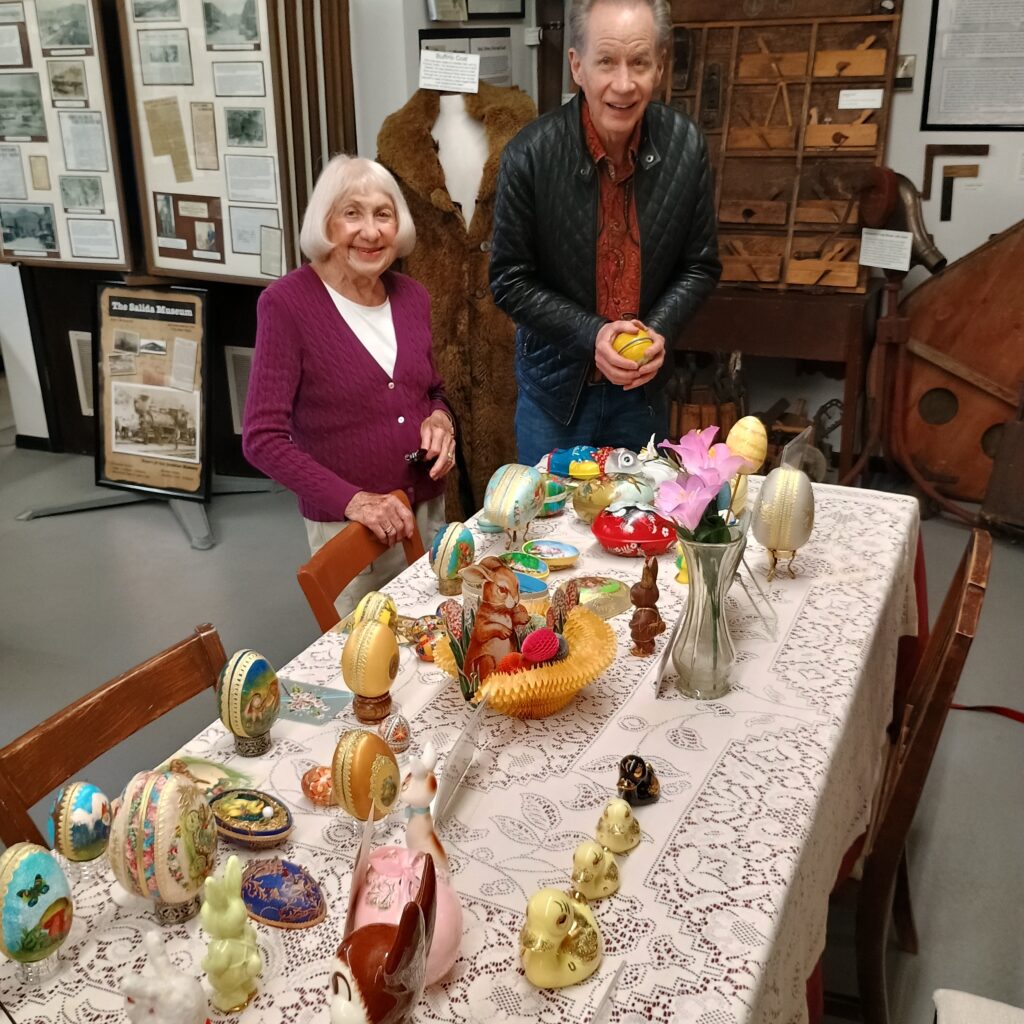
The Salida Museum celebrated the arrival of Spring 2026 with three free days, March 20, 21 and 22 featuring a display of vintage Easter memorabilia. March 20 was the vernal equinox, also known as the first day of spring.
The weather was bright and sunny in keeping with the first weekend of spring and docents and volunteers were kept busy with visitors who enjoyed Brock Oyler’s collection of vintage Easter memorabilia that included ceramics, hand crafted Easter eggs, postcards and a honeycomb tissue centerpiece, circa 1925.Most of the items were a century old.
Slice of Salida History
by Arlene Shovald, Ph.D.
Salida’s centennial in 1980 prompted several journalists to compile the history of various aspects of the community.
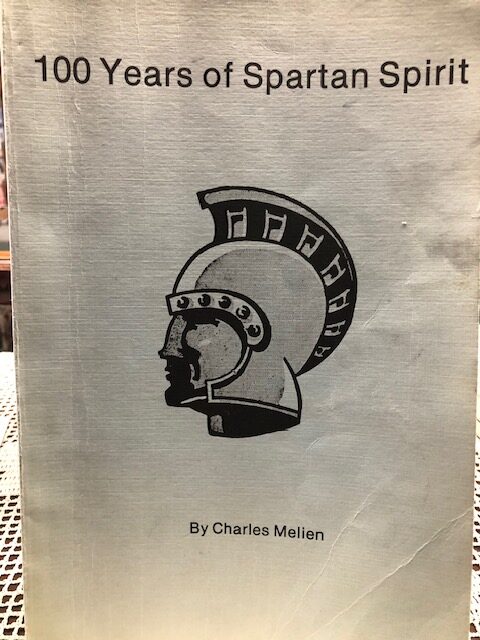
Charles “Chick” Melien, former superintendent of Salida Schools wrote “100 Years of Spartan Spirit”, a history of the schools. He was proud of the school system which was always recognized for athletics, music, journalism and scholastics.
Recalling outstanding journalism students, he told of a high school girl in 1946 who talked her way through the Secret Service to interview President Truman when he visited Salida on the train. The same girl took the famous classical violinist, Rubinoff, out for a hamburger to give him a taste of what small town life was like.
Unfortunately, Melien didn’t give that student’s name.
Another outstanding Salida journalism student was the Jim Sheehan who became a reporter for The Denver Post. During his stint at The Post there was more news in that paper about Salida than ever before. Other journalism students went on to write for The Denver Post and other major newspapers, among them Cynthia J. Pasquale who edited The Mountain Mail’s Centennial publication, “100 Years in the Heart of the Rockies.”
Salida music students were another group Melien praised in his writings. Cynthia Makris, a vocalist, went on to tour Europe.
The high school band played for important school and community events. Purple and white uniforms were worn. Melien said that style was influenced by the Eisenhower Era and the popular Eisenhower style jackets were worn. Another musical item of interest was a harmonica band in the 1930s.
The school district was created in June of 1879, a year before Salida became a city. Miss Jennie Smith was the first teacher and was hired at $40 a month for a three-month term. A room was rented to accommodate 25 students. Among the purchases were a wood stove, a load of wood and a black board.
The basic curriculum consisted of reading, ‘riting and ‘rithmatic. Melien noted that a fourth “R” was the ruler by which the teacher maintained discipline. Later the curriculum expanded to include foreign languages, wood shop, domestic science (also called home economics), and other subjects. And of course, today there is computer science, something that was yet to come when Melien wrote his book.
Students enjoyed parties at the Osos Grande Theatre for various events in the early 1900s. Another mention of celebration was a Fudge Party held by the senior girls, a Leap Year Social and a freshman dinner party at the Denton Hotel, a four-story hotel located at the corner of First and E Streets that was torn down in the early 1970s.
The Boettcher Scholarship, one of the top scholarships in the state, was awarded to three members of the same family in different years. Anne Ruttum won it in 1961, Paul in 1965 and Mark in 1968.
Drama students have always enjoyed presenting operettas and plays and still do. One of the earliest was the 1910 senior class who presented “At Vassar,” a play written by Orah Shay, a member of the class.
Over the past nearly 50 years since Charles Melien wrote his book, many other Salida students have gone on to accomplish great things in journalism, music, education, theater and other fields and probably when we reach the bi centennial year in 2080, someone will compile a history of those folks, but for now, this is what we have.
If you know of a Salida student who has gone on to accomplish great things, send an email to Arlene Shovald at witcharlene@gmail.com saying who and what was accomplished and perhaps we can identify some of them in another newsletter.
Lunch ‘n’ Learn
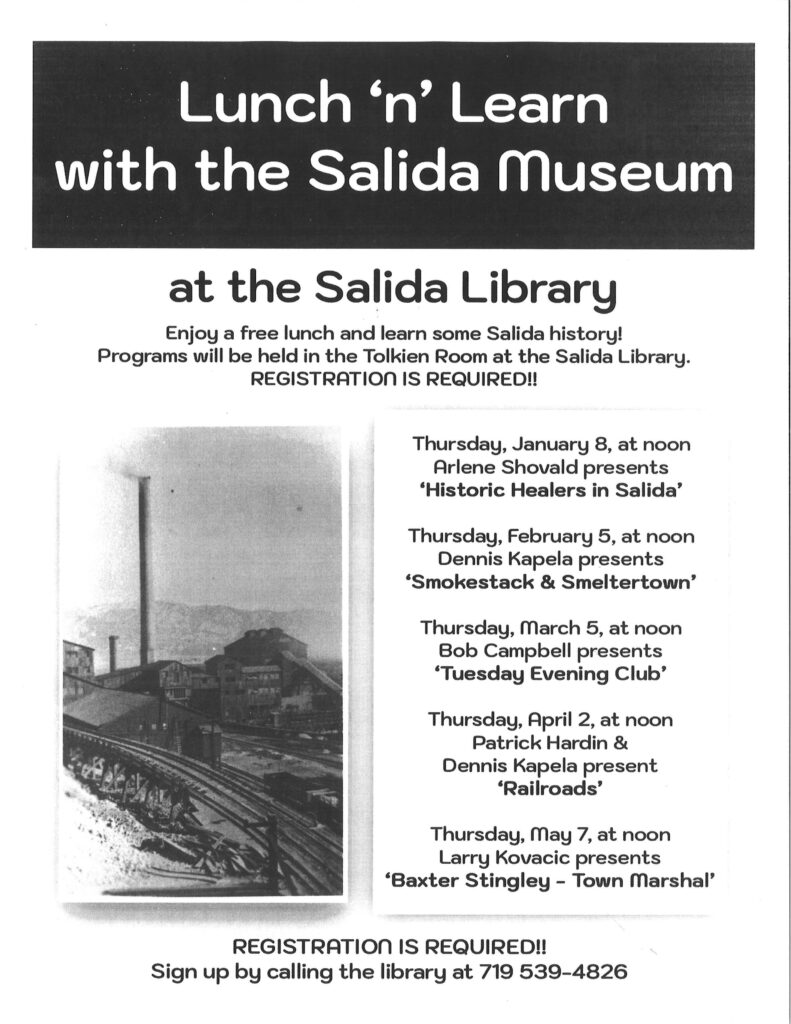
The Salida Regional Library has been conducting a Lunch ‘n’ Learn series featuring Salida Museum staff presenting programs on local history with connections to displays in the museum. The series has been very successful with each program being sold out and the food excellent. We thank the library for this chance to present our historical information the the public and hope the event continues into the future.
Happenings
by Earle Kittleman
We started the year having lost one of our most loyal volunteers, Giff Kriebel, who has moved back to his home town of Peterborough, New Hampshire. Giff has been showing up on Sundays at the museum for almost a decade. We miss his expertise and enthusiasm.
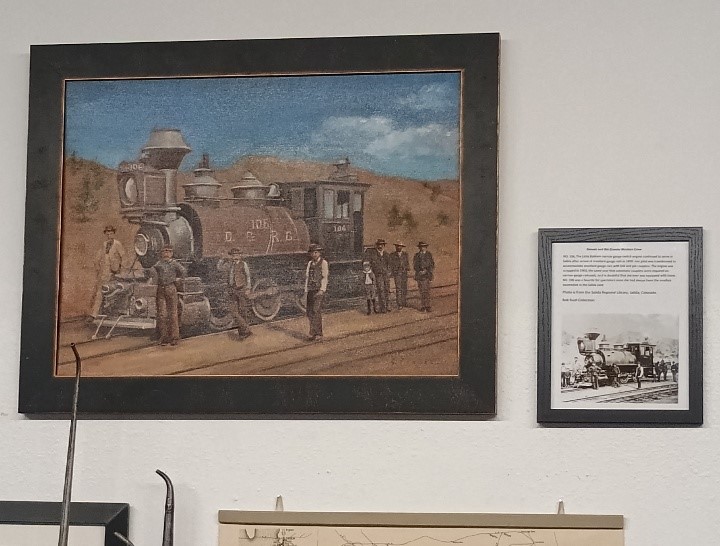
We enhanced the railroad exhibit with a painting of old narrow-gauge Engine No. 106 that ended her long career on the D&RG Railroad working as a switcher in the Salida yard. Gail Franke, donor and longtime friend of the museum, finds inspiration in historical photos of scenes more than a century old. The painting hangs right beside the original picture.
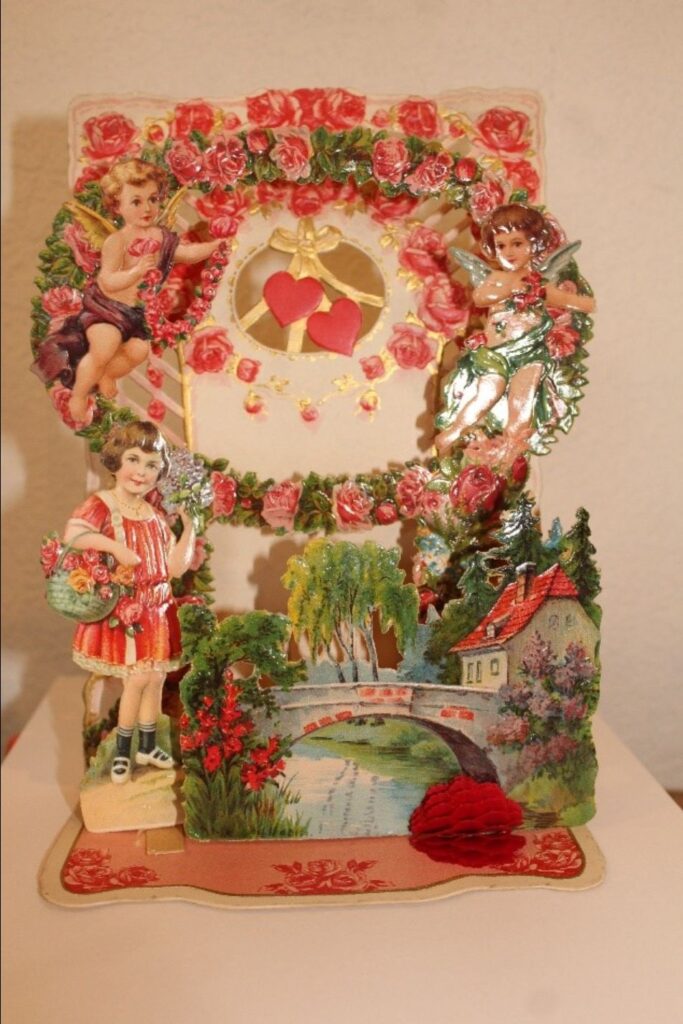
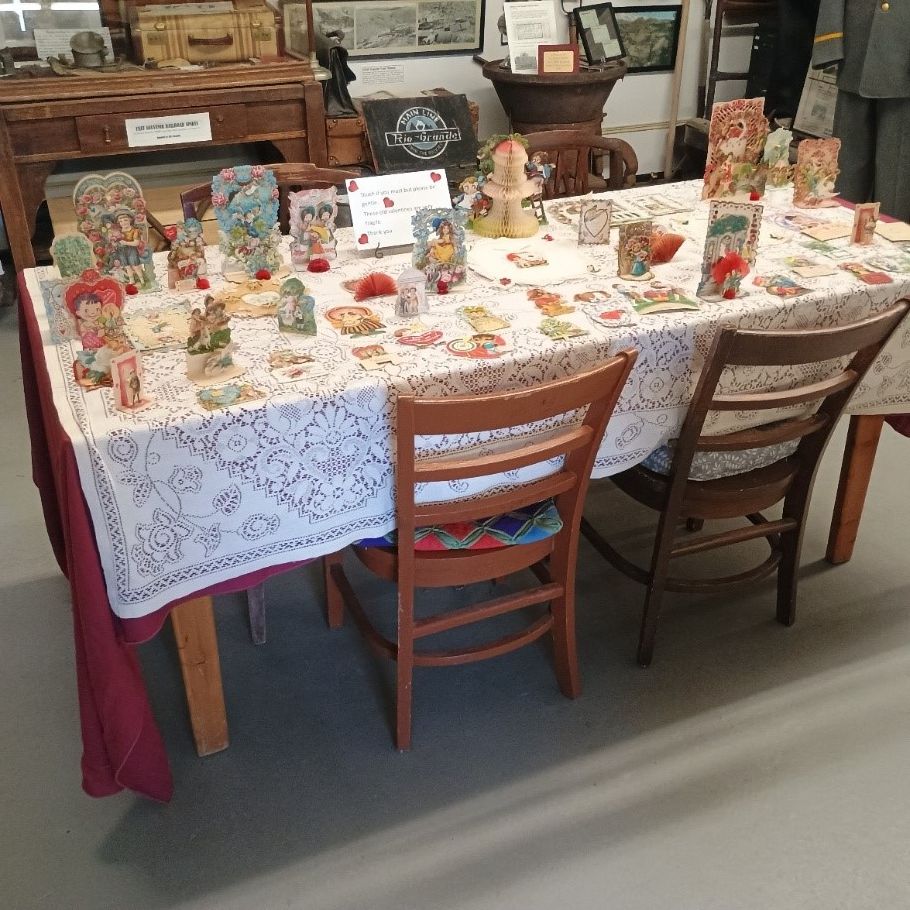
Brock Oyler made news for the museum in February when he put his valentine collection on display for the first time to the public. He has been collecting vintage specimens for decades. The cards dating from the early 1900s to about 1950 and revealed the graphic styles from a bygone age in brilliant color. Some were three-dimensional with intricate honeycomb inserts.
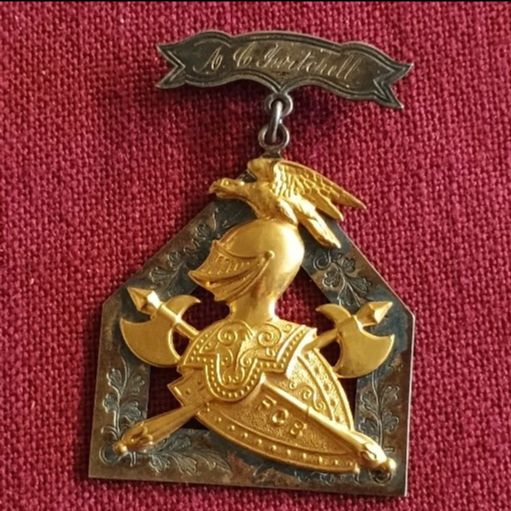
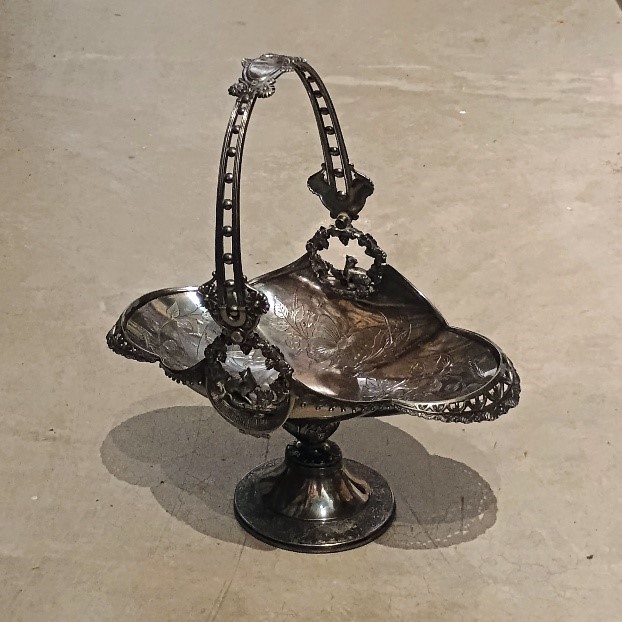
Kristi Upp Allison of Salida visited on Valentine’s Day and donated Knights of Pythias pins engraved with the names A.C. Twitchell and Rosa Twitchell. According to historic newspaper articles, A. C. Twitchell was the nephew of N. R. Twitchell, the Salida pioneer who built the Twitchell building at the corner of 1st and F Streets. A. C. retired as a railroad conductor and was a member of the Knights of Pythias. He died Jan. 16, 1938. Mrs. A. C. Twitchell, the former Rose Stevens, was also active in the Tuesday Evening Club. (We don’t which spelling of her first name is accurate.) Ms. Allison also donated a silver-plated bride’s basket.
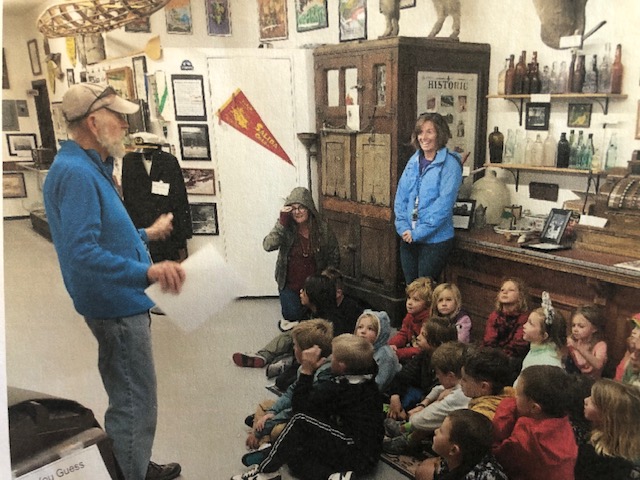
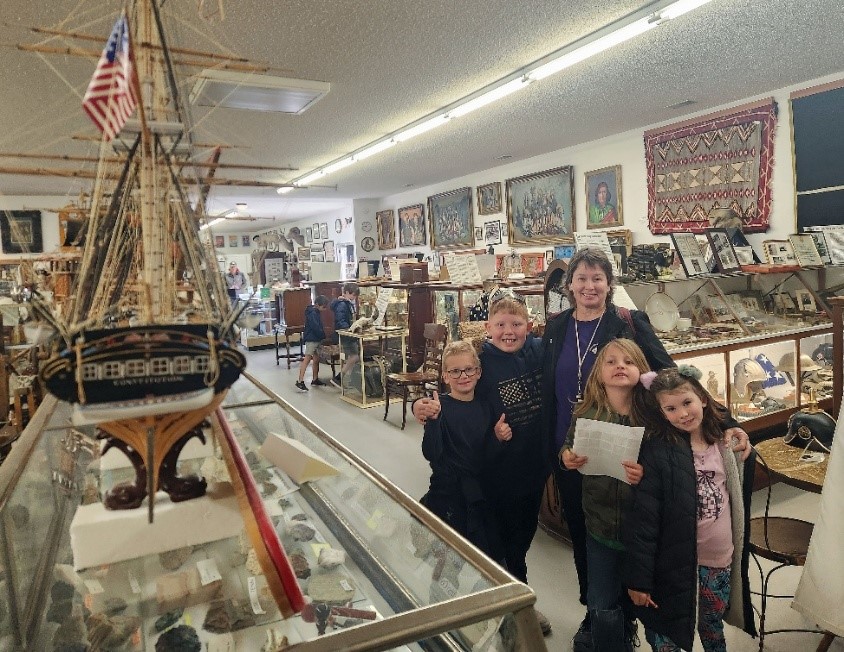
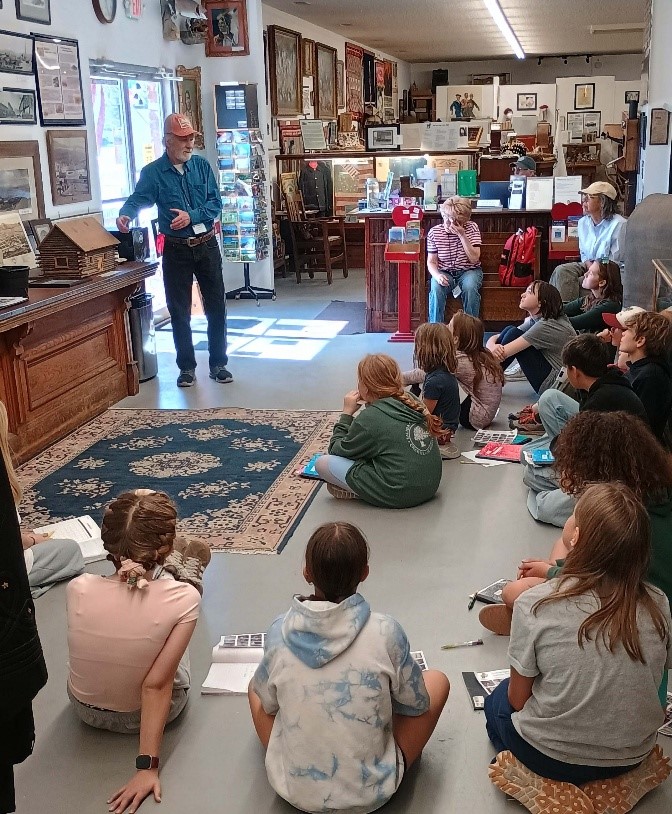
Longfellow school 2nd graders have been coming to the museum every year for longer than any of us can remember. This year 4th, 5th and 6th graders from the new Salida Montessori Charter School on J Street near the museum added to the numbers.
We got a picture of Lorita Groover and four of her charges who came in the first wave March 12.
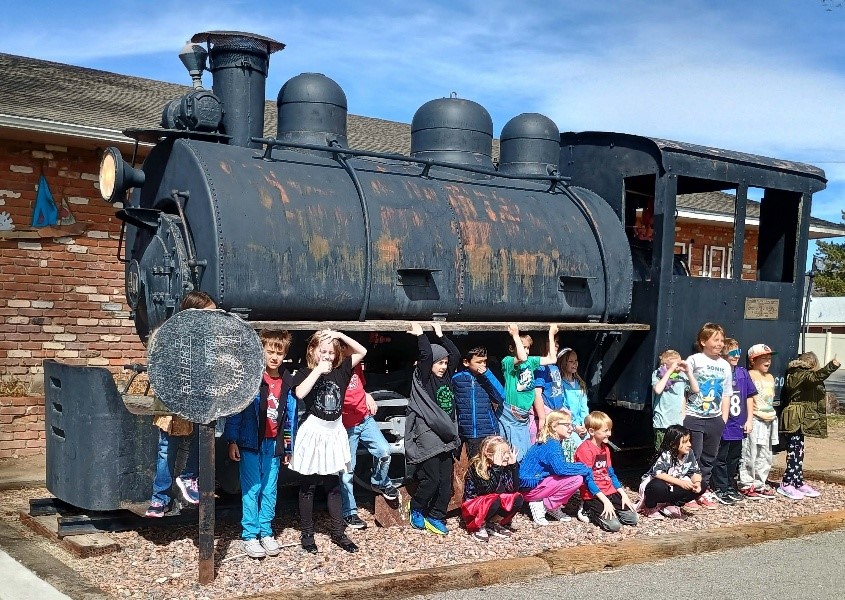
The old Porter tank engine No. 40 outside is a favorite spot for a 2nd grader group picture.
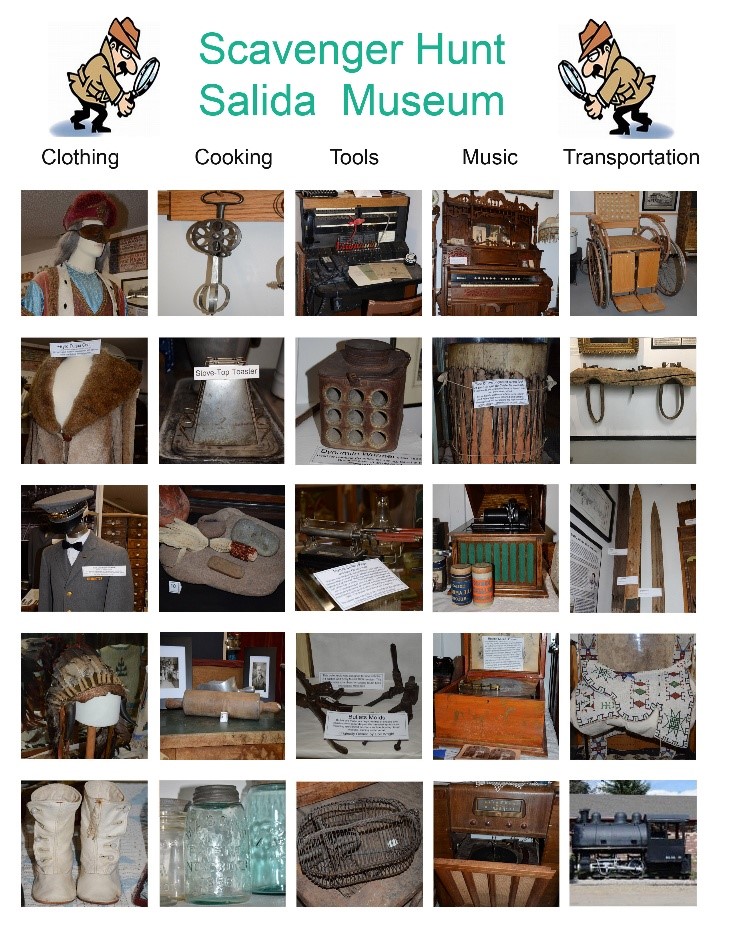
The Montessori students came over two days, March 25 and 26. Museum volunteer Dennis Kapela greeted them and gave them a lesson in museum etiquette before letting them explore on the scavenger hunt. Former museum president Susan Jesuroga and her teacher friends created the hunt years ago and we have been using it ever since.
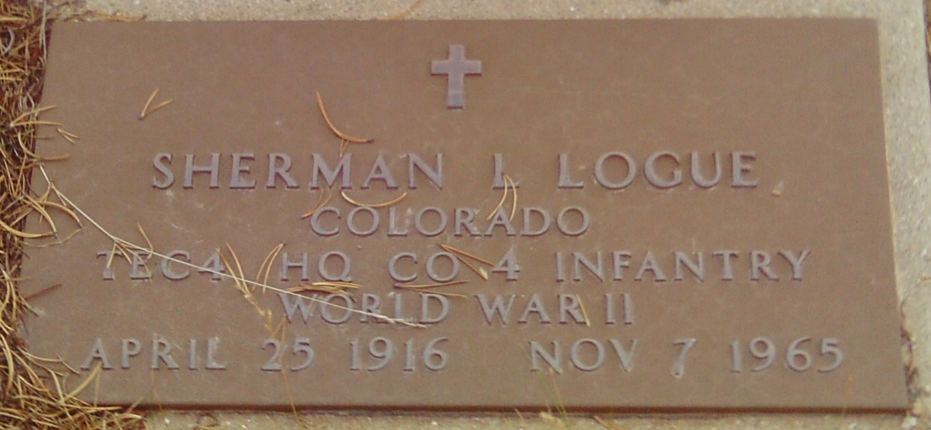
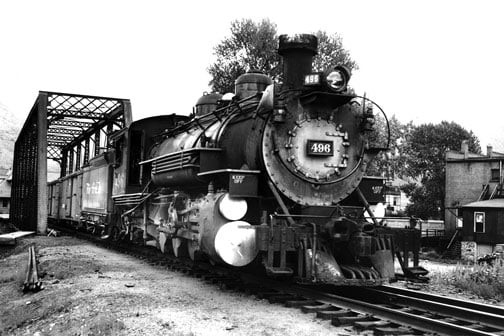
On the photo digitizing project, Mike Rosso is busy scanning an album of railroad images taken in the 1930s and 40s by S. L. Logue. He was Sherman Lester Logue and apparently went by the name Les. Originally from Denver and a University of Denver grad, Logue served in WWII and was treasurer for the Rocky Mountain Railroad Club and a member of the Denver Posse of Westerners. He worked at the Climax molybdenum mine and then moved to Leadville where he died Nov. 7, 1965 at 49 years of age. It was in 1989 that we received the prints along with the negatives, but the name of the donor was not recorded.
Again, thanks to the library for tracking down the bio on Logue. Joy is always there when we need her.
As always, we appreciate people who care to donate to the museum and share their history with the community.
Coming: Salida Self-Guided Tour
by Mike Rosso
As a lifelong history buff, Salida resident Jane Jolley recently discovered the digital phone application, STQRY, which features historic downtown Leadville and she decided to meet with Stuart Francone who developed the tour for that city.
STQRY is the acronym for Self Guided Tours and Interactive Experiences which offers self-guided, digital tours used by museums, universities and tourist-based communities to help visitors learn more about the history of those places from their smartphones.
“I came back last fall from traveling and doing several digital tours and started asking around Salida to see if anyone was going to step in to doing history tours after Steve Chapman left,” said Jolley. Chapman is a Salida-based author and historian who used to lead physical walking tours of downtown Salida.
“I started searching for anyone who might get excited about working on it. I have gone to the Museum Board, the Library, the Heritage Board, the Destination Management Council. I called (local historian) Jack Chivvis after listening to his interview on the Salida Library Archives,” she said.
Once completed, the app will be available for visitors and locals alike to learn more about the historic buildings in downtown Salida in real time.
The app displays not only current, but historical photos of individual buildings and structures and offers an audio tour as well.
“This isn’t my project,” she stated. “It will be special if it’s a community grassroots project with input from many locals.”
“Raising money is, of course, important because the idea is for it to be free for users. The cost will be determined by the app or website used. I hope the County Destination Management will come through with most of the funding since this is an all-season tourism draw and that is one of their priorities.”
The address for the Leadville tour is leadvilleco.stqry.app.
To learn more about the project or to donate, please contact Jane at jolley.jane@gmail.com
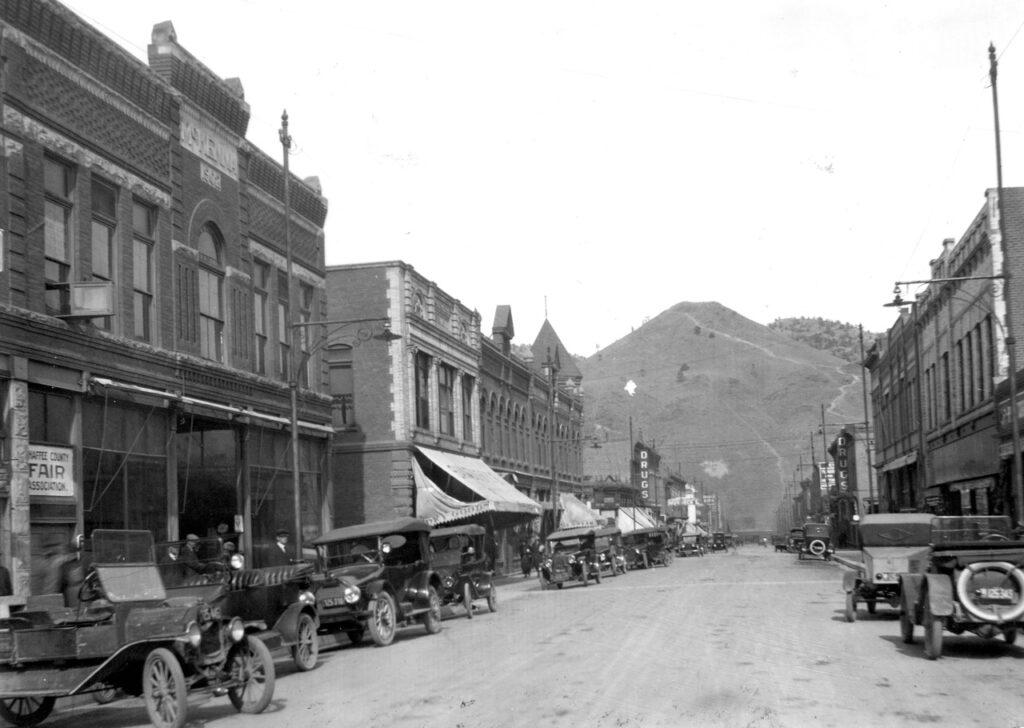
Museum Exhibits
by Bonnie Konopka
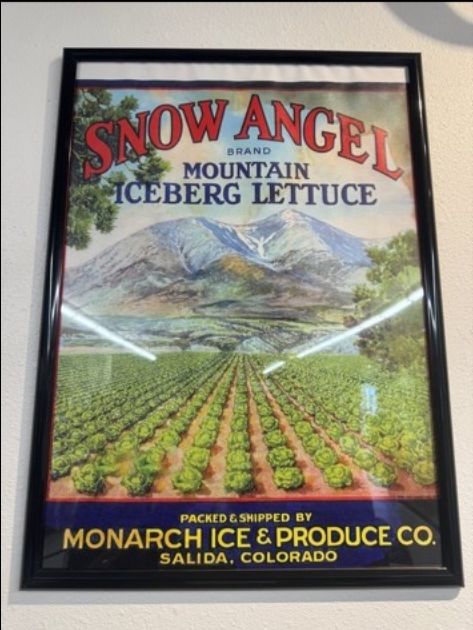
Lettuce Days of Chaffee County:
From the 1920’s to the 1940’s.
Starting in 1922 the altitude, soil and irrigation were declared desirable for producing head lettuce.
By 1927 Monarch Ice and Produce Company in Salida shipped 21,000 crates of lettuce with each crate holding up to 30 heads packed with crushed ice. In 1929 farms along the D&RG tracks had planted over 10,000 acres.
By 1934 the harvest had decreased to about 5000 crates. The Depression, changing farm economics and the invention of refrigerated rail cars doomed the local industry.
Salida Bird’s Eye Views and a Primer on Salida Buildings and Landmarks
by Joy Jackson
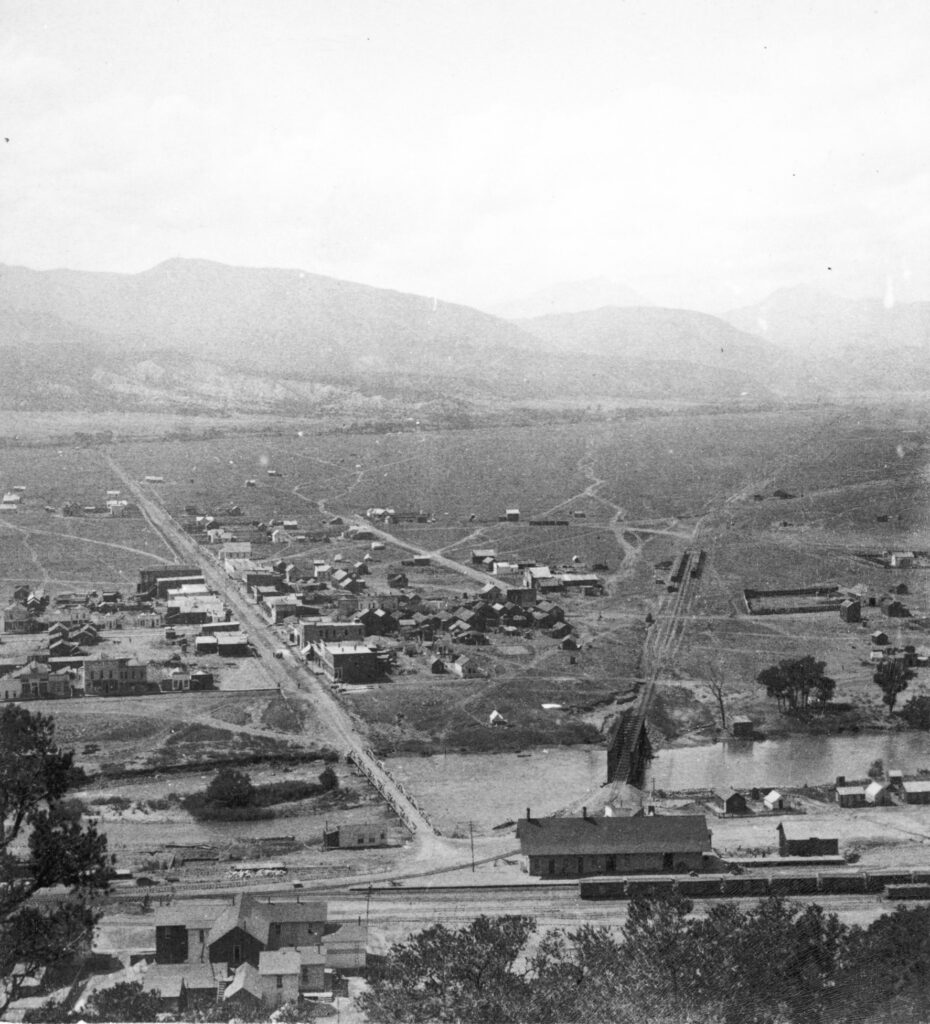
Get your notebooks out because there will be a quiz at the end!
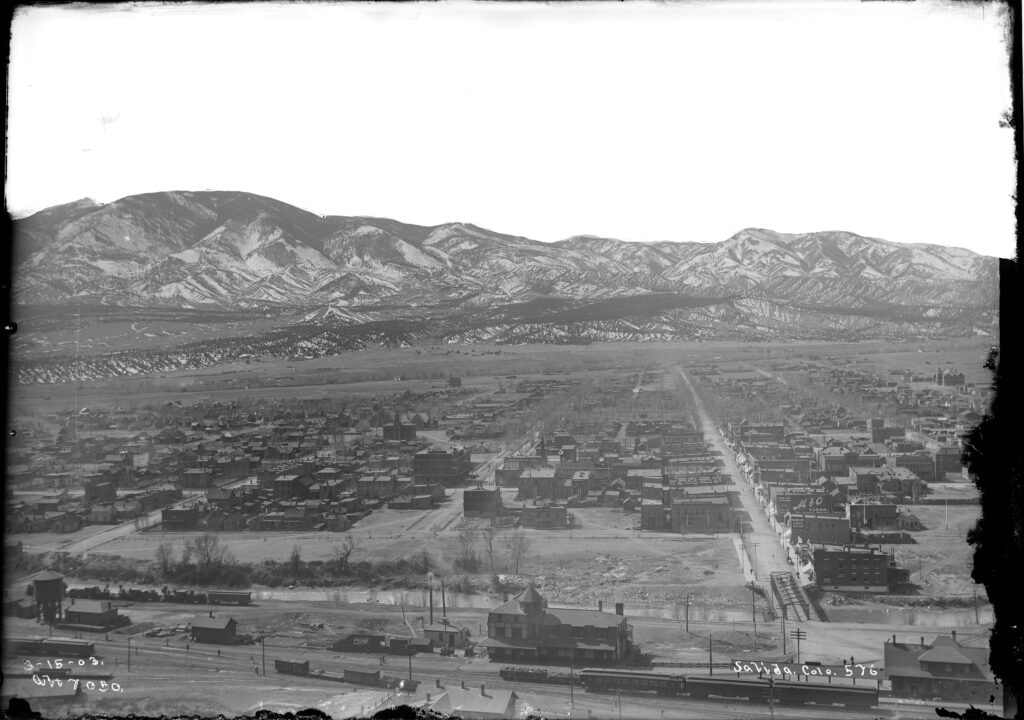
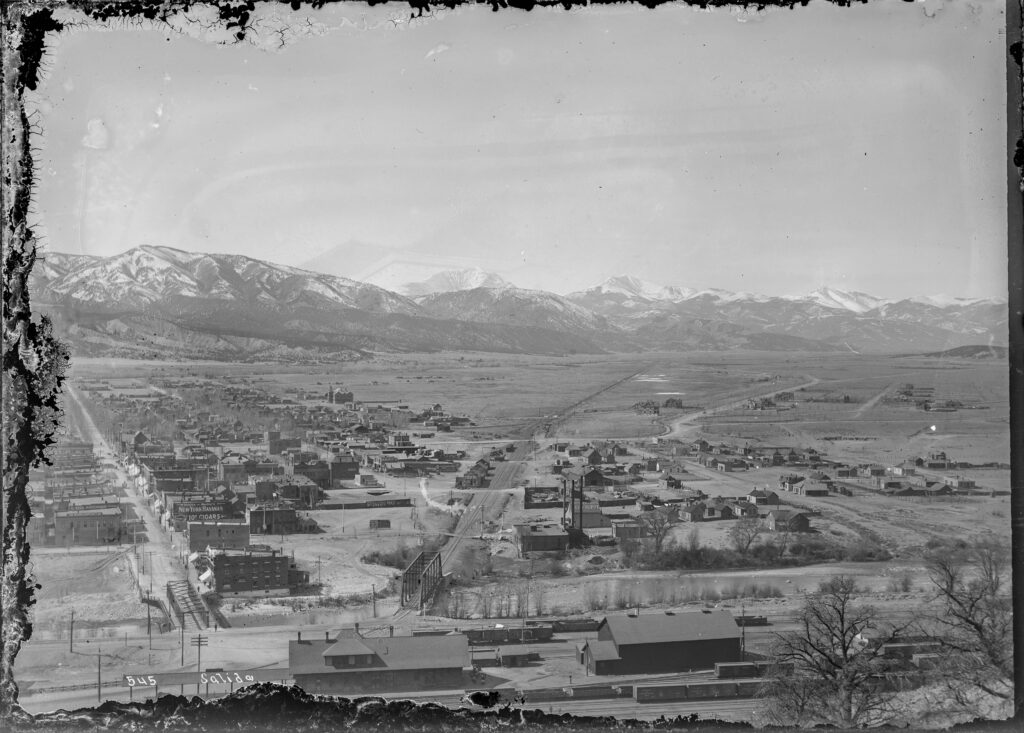
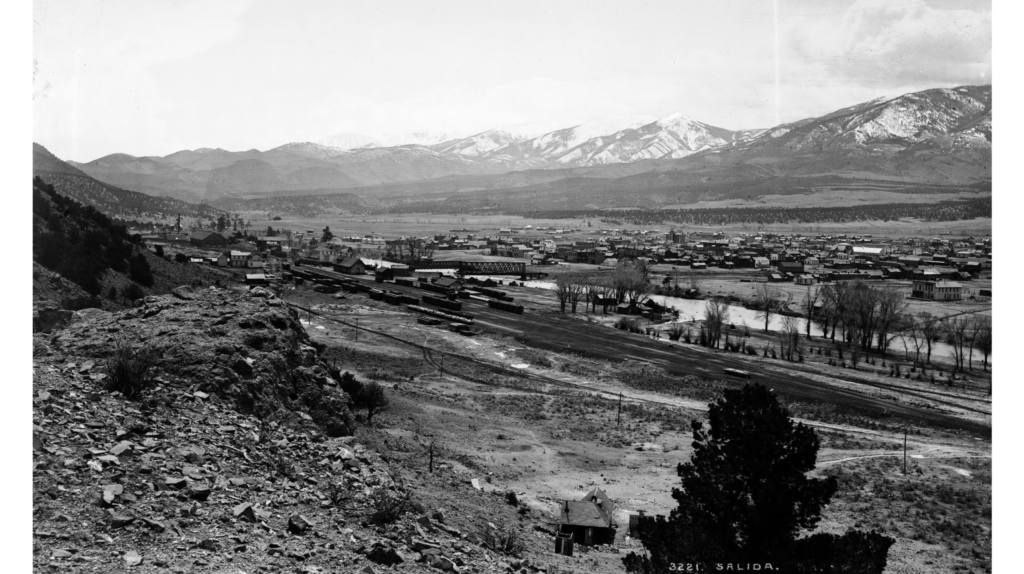
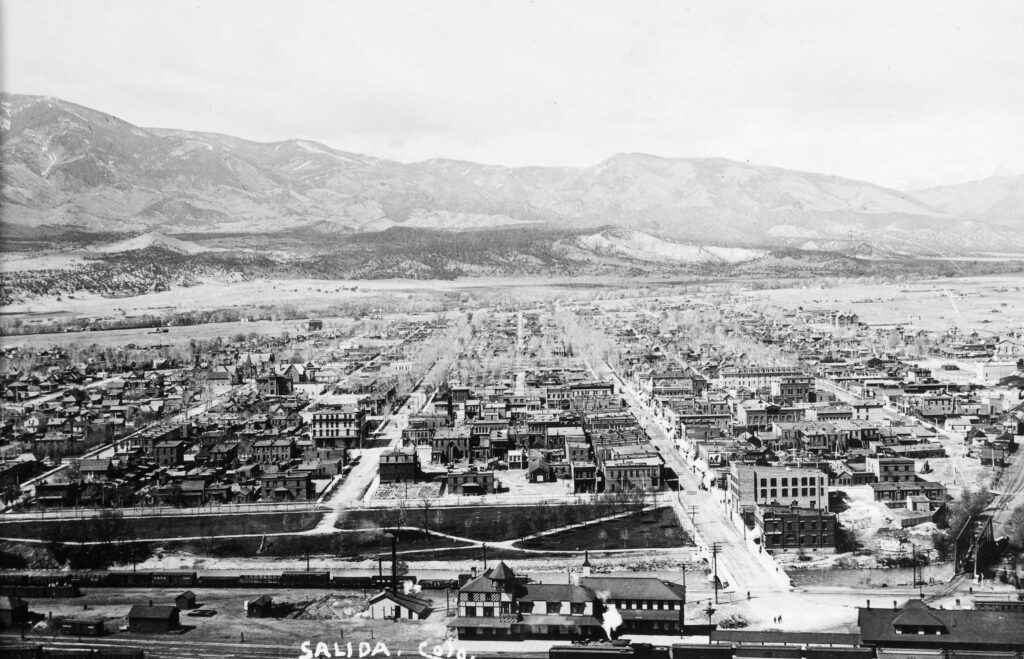
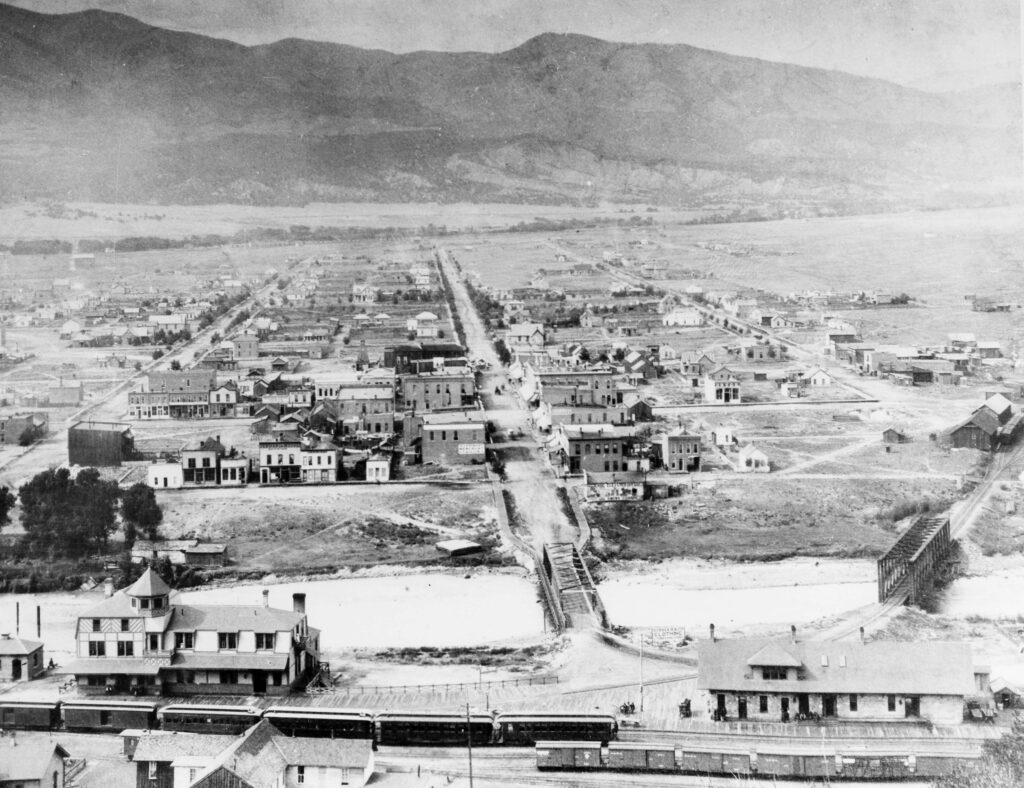
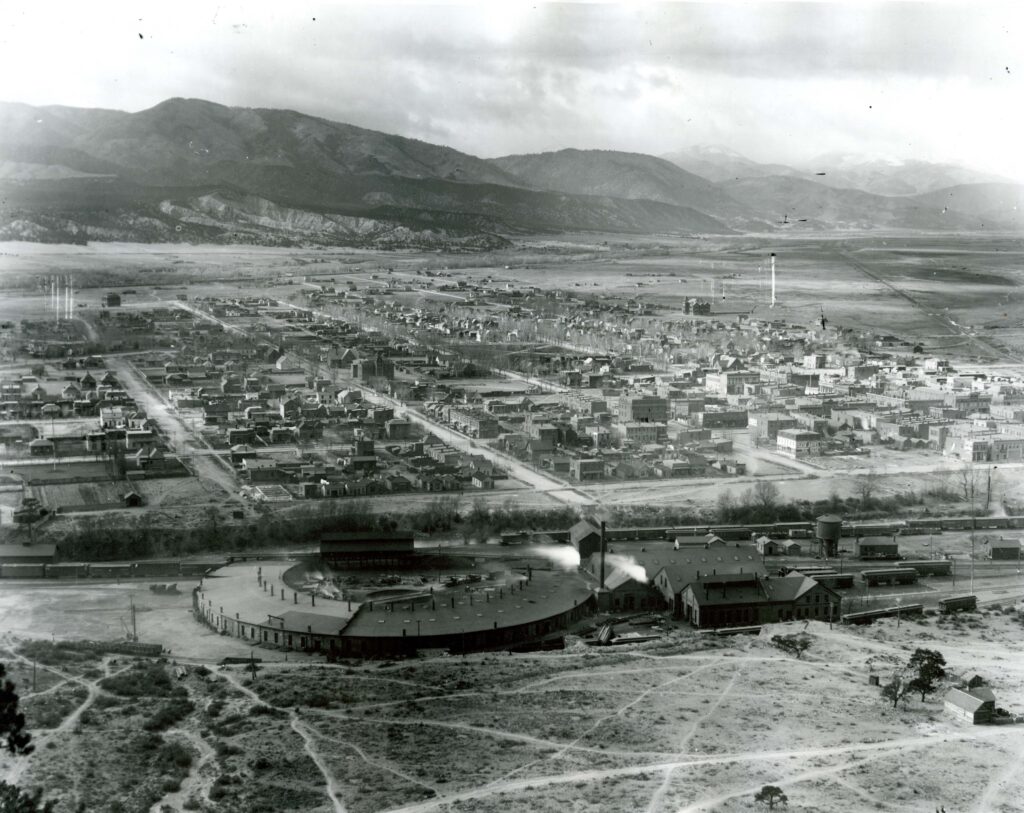
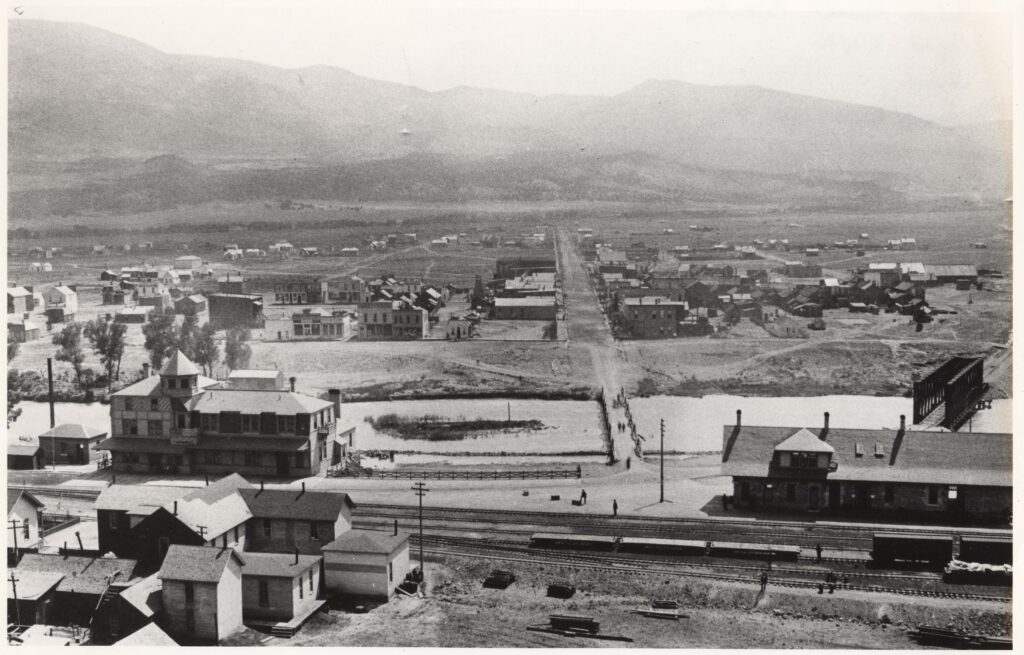
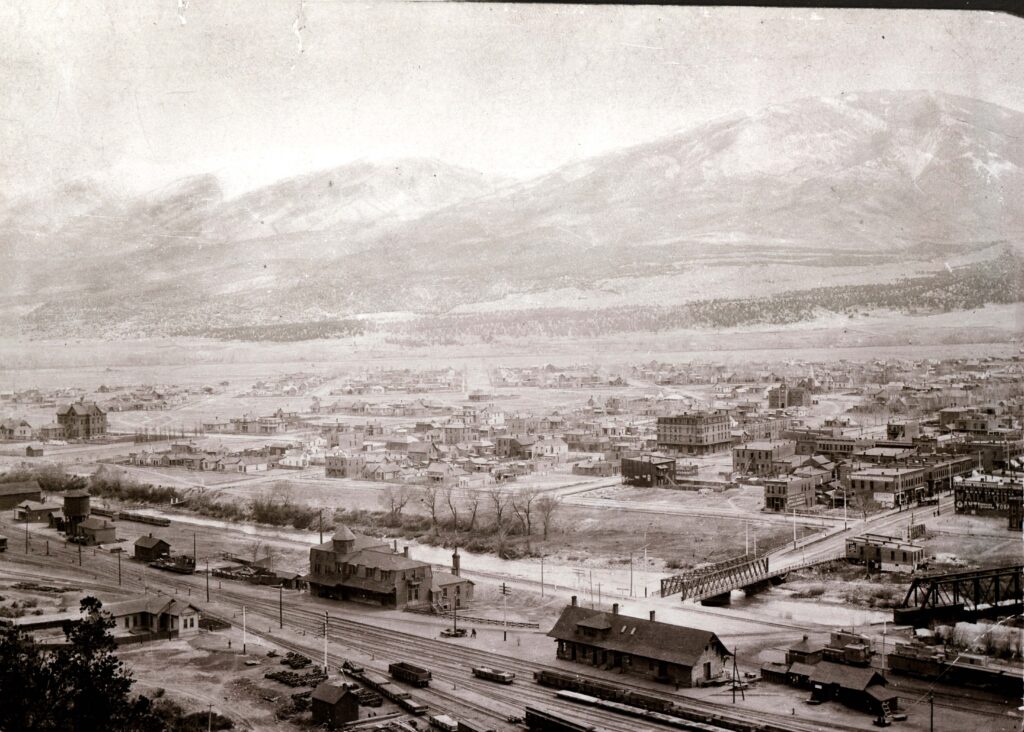
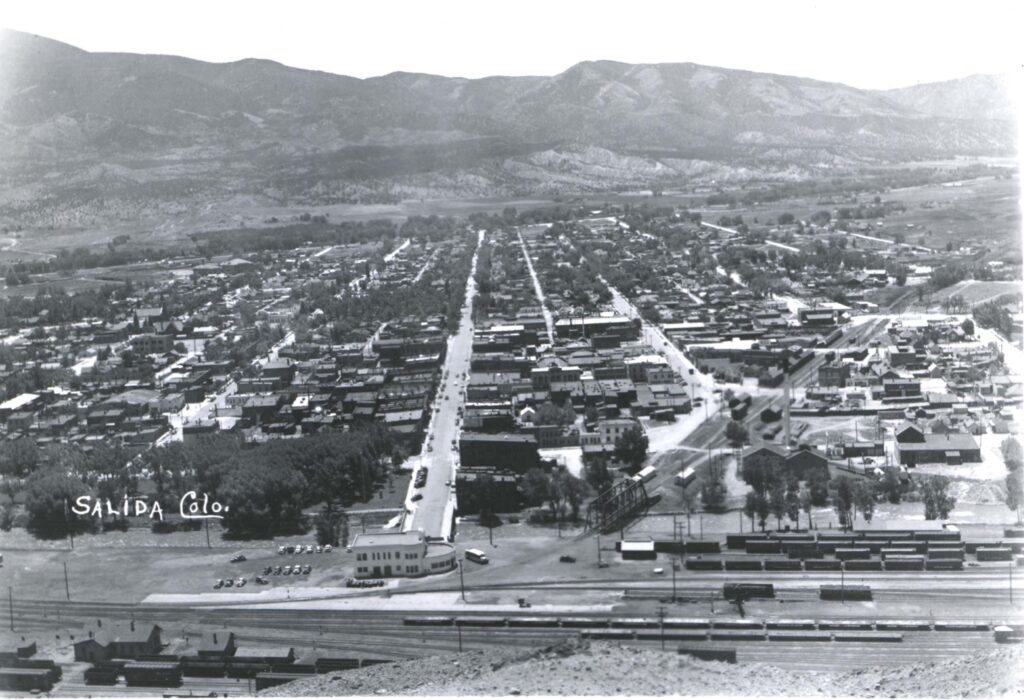
Tenderfoot is a convenient location to take a bird’s eye view of Salida. The Salida Library houses several of these bird’s eyes, some of which are featured here. A few are from the Denver Public Library’s collection. The oldest bird’s eye is above, taken about 1880. Note the trees growing in the foreground of the image. Pinon and juniper trees covered Tenderfoot before the Denver & Rio Grande Railroad moved in.
Salida was known as South Arkansas until July 24, 1880 when Governor Alexander Hunt renamed it. The Mountain Mail newspaper proclaimed: “For the benefit of all concerned, we will say that the word is pronounced Sah-Lee-Dah.”
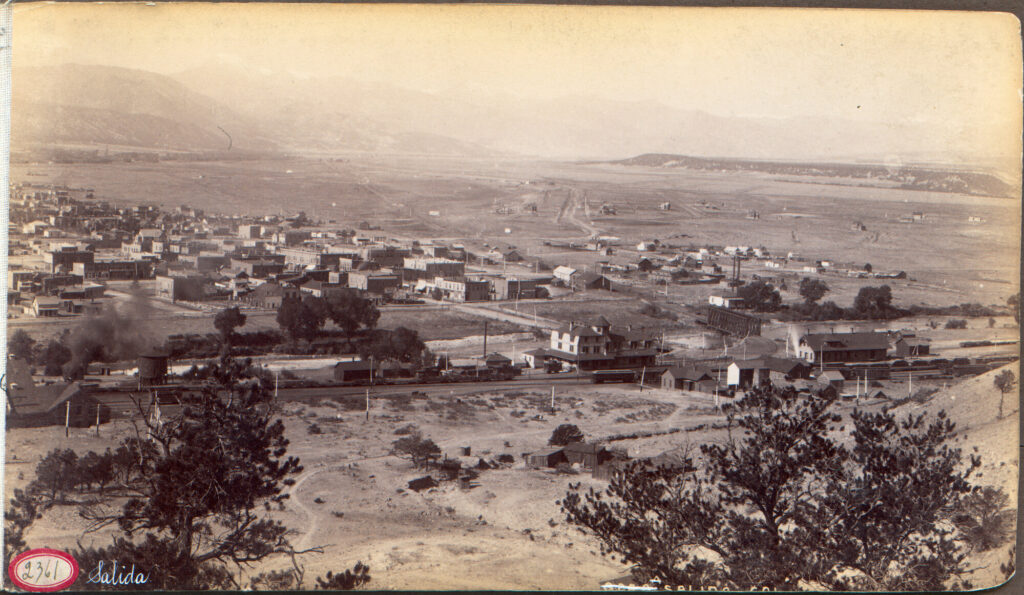
Knowing when buildings and landmarks rose and fell is a convenient way to date bird’s eye views of Salida. The lengthy list below is a helpful tool to try and date each of the bird’s eye views, found below, in no particular order:
The Denver & Rio Grande depot was built about May 1880. It was a temporary structure and the stone depot was built in October 1880; an addition to the depot went up in 1881. This depot was razed in 1941.
The Denver & Rio Grande roundhouse was built at the end of 1880 into 1881. The roundhouse and accompanying buildings burned down in December 1892 and were rebuilt the next January. The original roundhouse doors had square roofs; the later roundhouse doors had pointed roofs. Calco moved into the old D&RG shop building (still standing, on the D&RG grounds) in 1977.
The original F Street bridge was built in 1880. The steel truss enclosed bridge was built in 1891; the stone F Street bridge that we know today was built in 1906-07.
The Hawkins House/Hotel was moved from Cleora by Judge Hawkins in 1880 to E. Sackett Avenue. This is the two-story building with three windows on the top floor located at the middle of E. Sackett between F and E Streets. It closed in 1882 and was probably razed in 1883.
The Monte Cristo Hotel was built in May 1883; it was razed in 1941.
The D Street School (on current Post Office grounds, 310 D Street) was built in 1884-85. Later known as Central School, then McCray.
The Denver & Rio Grande Hospital at 448 E. 1st was built in 1885; it burned down in April 1899. The hospital was rebuilt in 1900; renovated in 1955. Today, this is the Touber building.
The Salida Academy (on current SHS grounds) was built in 1886. It closed in 1904. It was blown up with dynamite in June 1922.
A devastating fire burned through downtown Salida in March 1886, torching much of 1st Street from F Street down to the railroad. A second fire burned through downtown in January 1888, torching F and Second streets and radiating outward from there.
The Salida Opera House at 129 W. 1st Street (today the Unique Theatre) was built in 1888.
The St. Clair Hotel at 200 E. 1st Street (aka the Hotel Denton, aka the Rainbow Hotel) was built in 1890; it was razed in 1938.
The Salida High School at 7th & H Streets (where the current Longfellow Elementary playground is) was built in 1892. This later became the H Street School (and then Longfellow) when the new high school was built.
The Manhattan Hotel at 228 Lower F Street (aka the Collins building) was built in 1901.
The Victoria Hotel and Tavern at 143 Lower F Street was built in 1901-02. Mildred Johnson opened the Mildred Rooms on the top floor of the Vic in 1904.
The Palace Hotel at 204 Lower F Street was built in 1907-08.
The Red Cross Hospital at 140 W. 3rd was built 1908-09. It closed in 1941 and was purchased by the Masons. It was renovated and the top floors were removed; it was dedicated in 1942.
The Salida High School (on current SHS grounds) was built in 1909-10; it burned down in April 1962. A new high school was built by 1963; it was razed in 2011. The current Salida High School at 26 Jones Avenue was built in 2012.
The Denver & Rio Grande art deco depot (at the F Street turnaround) was built in 1941; it was razed in 1985. The narrow gauge bridge was removed at about the same time. The last D&RG passenger trains went through in 1964. In 1999, the last freight train into Salida occurred when the Union Pacific No. 844 steamed through.
A little census data:
In July 1880, the population of South Arkansas (aka Salida) was 330; the population of Poncha Springs was 170; the population of Cleora was 184.
In July 1885, the population of Salida was 1,890; the population of Poncha Springs was 97.
In March 1890, the population of Salida was 4,000.
Link to Richard Carroll’s Founding of Salida
Link to Denver Public Library’s collection – an amazing trove of early Salida images
Link to the Salida Library’s marmot digital archive
—–
Joy is a desk clerk, researcher, and archivist at the Salida Regional Library. Her book ‘Retro Salida’ is available at amazon. If you note any discrepancies in the above information, please get in touch at jjackson@salidalibrary.org
Museum Board of Directors
The current museum board of directors is comprised of the following:
President, Bob Campbell
Secretary, Earle Kittleman, 719-221-3685
Treasurer, Larry Kovacic, 505-280-4831
Board Member, Arlene Shovald, 719-539-3139
Board Member, Bonnie Konopka, 505-270-6523
Board Member, Terry Pintane, 719-221-4177
Board Member, Dennis Kapela, 720-320-9132
We wish to thank Margaret Dean, who volunteers as a board representative from Maysville. The members of the South Arkansas Landowners Association (SALA), comprising residents in the Maysville area, do a lot of work taking care of the historic Maysville School, which is owned by the museum. We appreciate their efforts to maintain the school as a historic landmark and look forward to a long and fruitful relationship.
Museum Docents
Patrick Hardin
Terry Pintane
Dennis Kapela
Earle Kittleman
Bonnie Konopka
Larry Kovacic
Many thanks go to our docents; they are the reason the Salida Museum remains open to visitors.
Volunteers Needed
If you are interested in becoming a board member and coming to one meeting a month, or becoming a docent and working one day a week, let us know. We would be very happy to talk to you about joining our team. Our board meetings are open to the public, so if you want to attend one and find out if you’re interested, the meetings are the third Wednesday of the month, 11:00am, at the museum.
Support the Salida Museum
The Salida Museum Association is an all-volunteer non-profit organization that relies on donations, memberships, admissions and limited fundraising to remain operational. You can help support the museum by making a donation or becoming a member.
Donation – any amount appreciated
Annual Membership – $15, includes 5 free visits
Lifetime Membership – $100, includes unlimited free visits
Memberships and donations are tax deductible. Send your payment to the address listed below, use our website to remit with PayPal, or join when you come in to see the museum. You will receive an acknowledgement letter for tax purposes. (make sure we have your address)
Salida Museum Association
406 1/2 W. Hwy 50, Salida, Colorado 81201
salidamuseum@gmail.com
719-539-7483
For more museum information, see our website or Facebook page.
| Note: You’ve been included on the list because you are a member, left your email in our visitor log book or asked to be added. We promise we won’t overstuff your inbox, but if you decide you want to unsubscribe you can do so below. |