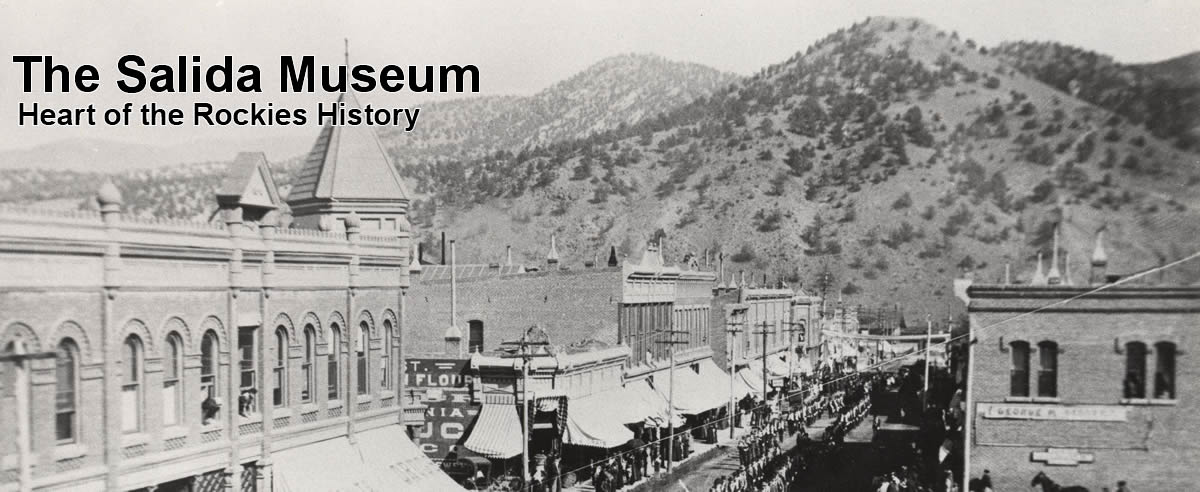
WISHING YOU CONTINUED HEALTH AND SAFETY!
From the Board
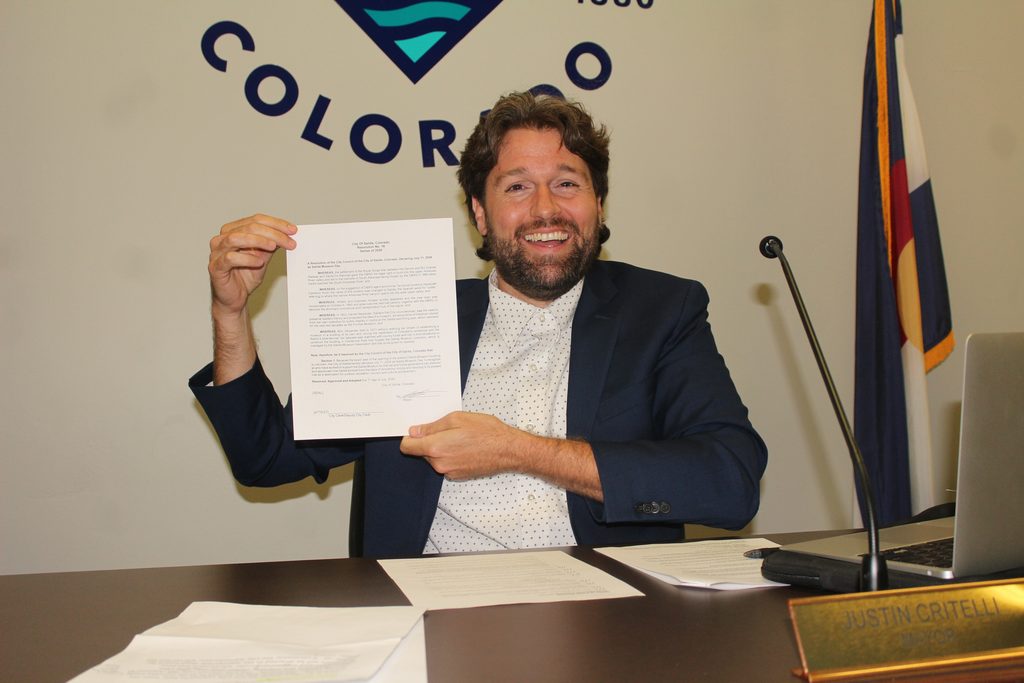
It was a good visitor season for the museum, if not a bit stressful due the Chamber of Commerce moving out of the building we share and a new city facilities plan that leaves the museum’s future in limbo. Nevertheless, Salida Mayor Justin Critelli spoke most highly of the museum at the 50th anniversary celebration held July 11TH. See the celebration story and about other events below in “Happenings.”
Salida is bigger and in better financial shape than it was a couple of decades ago when most of our museum board members started volunteering at the museum. The 50th anniversary throws a light on how generous the city and community have been to sustain us for so long. But times and priorities may change. The museum may be a cherished institution (Mayor Critelli’s words), but it will never be critical in terms of the budget.
We are outgrowing our present two-room location and had hoped to expand into the space vacated by the Chamber of Commerce, which has moved downtown. But the city at present has plans to use it for recreation offices.
No one is telling us to move. Not yet, anyway, but we should start now by growing a base of supporters, broadening membership, attracting more volunteers and fund raising an endowment to become a more self-sufficient private nonprofit, because we can’t count on the present arrangement to continue forever.
Enjoy this newsletter, which Larry Kovacic has been producing for several years now. Know how much we appreciate you subscribers, donors and friends of history. And, please think well of our President Bob Campbell who is having serious health problems.
Earle Kittleman, Secretary, Salida Museum Association
Halloween at the Museum
We’re celebrating Halloween at the museum from noon to 4 p.m. Saturday, October 31 with another free day and a bit of a party. Cider and donuts will be served, and there will be candy for early trick-or-treaters. Come in costume if you want. Our staff will probably be in costume for that day.
We’ll have a few vintage Halloween cards on display and a special guest, an ancient dark soul (a vampire), Magnificence, will show up from 1 to 2 p.m. Magnificence is a star on You Tube, Tik Tok and Instagram. If you want to check him out beforehand, go to www.youtube.com and then put in Per Saecula Volare.
We invite you to join us for this special Halloween extravaganza at the museum.
50 Year Museum Celebration
by Arlene Shovald, PhD.
Salida Museum celebrated 50 years at 406 ½ West Rainbow on July 11 with about 75 locals and visitors in attendance. With temperatures nearing 90, the crowd sat in the shade outside the museum to hear about the history of the museum which was started in 1954 in rooms at the Salida Hot Springs Aquatic Center and moved into the current location in the summer of 1976.
The museum was started by Harriet Alexander, Salida’s first female council member, and Byrd Fuqua who had the foresight to begin preserving Salida’s history. Harriet’s dream was for the museum to have a home of its own. She didn’t live to see that happen, but her bequest of $10,000 started fundraising efforts for the building that celebrated it’s 50th year on July 11.
MC, Dennis Kapela, introduced Board President Bob Campbell who welcomed the crowd. Keynote speaker, Steve Chapmen of Salida Walking Tours, followed with a history of Salida and Salida Mayor, Justin Critelli spoke about the importance of the museum to the community. Critelli and the Salida City Council declared July 11 Salida Museum Day in a resolution approved at the July 7 meeting of the city council.
Another highlight of the event was playing of the Salida Song , taken from a 45 record in the display in the music section at the museum. The song was written by Steve Soltow in 1978.
Following the outdoor festivities, the crowd enjoyed a free day in the museum with cake and iced tea and a Powerpoint presentation by Shawn Michlich. whose mother, the late Judy Michlich, was involved with the museum since its first days at the swimming pool. As a five year old, he accompanied his mother to the original opening of the new museum building in 1976.
“This was the best event I’ve attended at the museum,” Brock Oyler, a friend of the museum said.
That comment was repeated many times by others who attended.
Salida Museum History
Written and footnoted: 1-20-2012
Earle Kittleman
The Salida Museum started as the Frontier Museum located in two rooms in the Hot Springs Pool building. Opening ceremonies were held May 30, 1954.
The remarkable person who organized the volunteer effort and seeded the museum with her personal collection of antiques was Mrs. Harriet Alexander. A petite woman described as having boundless energy, Harriet Alexander was a prominent citizen.
HARRIET WRIGHT ALEXANDER moved from Indiana to Salida for her health in 1905 when she was 23 years old. She married WILLIAM CALVIN ALEXANDER, who ran the local jewelry store and eventually became Mayor. After he husband died in 1941 Harriet Alexander continued operating the store at 2nd and F Streets (now Lallier’s Pharmacy).
In 1954, the same year she organized the museum, Harriet Alexander was elected the first woman to serve on the Salida City Council and remained in office for the next ten years. She also served as president and secretary of the Republican Women’s Club and had been the volunteer chairman of the Red Cross Chaffee County Home Service to veterans through two world wars.
While serving on the city council she advocated for airport facilities and made a $1000 gift as one of the first contributors to build the new terminal at the airfield in Salida. Ultimately, of course, the airfield was named for her.
Harriet Alexander’s friend and co-founder of the museum was also a remarkable woman.
BYRD RAIKES FUQUA gave up her high society connections in Missouri to come west. She proved her outdoor abilities by bagging a live mountain lion and, in the process, winning a $500 bet. Newspaper accounts say she roped the critter after tracking it for five days west of Buena Vista. Eventually she donated the cat to the St. Louis zoo.
An amateur thespian, BYRD FUQUA had been secretary of the Missouri Chapter of the National Shakespeare Society. During World War I, she donned another costume—a Red Cross uniform–and drove from Detroit in an ambulance donated by Henry Ford to St. Louis promoting the war effort.
Between the wars Byrd Fuqua operated the Byrd Colonies at Mount Princeton—a dude ranch for wealthy Easterners and those not so fortunate who came out in summers on the train. The colonies are now operated as the Young Life Camp.
Like her friend Harriet Alexander, BYRD RAIKES FUQUA also collected Native American and other Western objects and donated hers to the Frontier Museum.
In 1955, one year after the museum opened, the Koppers Company donated the little Porter tank engine that still sits in the park by the Hot Springs Pool. Koppers, which treated railroad ties with creosote, was going out of business in Smeltertown.
By 1966 there was no more space. Reportedly some 75 stuffed animals waited to be donated, along with several Indian baskets and a gem and mineral collection.[1]
Then Harriet Alexander’s final civic contribution was discovered in her last will and testament. She had died Aug. 3, 1971 at the age of 89, but a provision of her will was not made public until 1973. Mack Witty, City attorney, stunned City Council with the announcement that her will contained a $10,000 bequest to build a new museum building.[2]
Alexander’s will named as executrix Donna Nevens, a co-worker at the museum. Alexander had no children and her other belongings had since been sold at auction so that her estate could be divided among her heirs living out of state, according to Colorado law.
By November the nonprofit Salida Museum Association had organized to administer the nest egg left by Mrs. Alexander and to search for a suitable building to house the museum. The Association board named Mrs. SAM “HOPPY” RANDOLPH president, HUGH WILSON vice president, JACK BYARS treasurer and JUDY MICKLICH secretary. Other board members elected were DONNA NEVENS, Mrs. GEORGE DOMINICK, ED BRADBURY, RALPH TAYLOR, ART HEAD, GEORGE ENGLE and GEORGE EVERETT.
In the meantime, JACK HENDERSON, Chief and 20-year veteran of the Salida Fire Department, had been killed in an automobile accident. Henderson had taken pride in the department’s collection of antique fire equipment and kept it in mint condition for occasional public display. It was suggested that the collection be housed in a memorial wing of the new museum. Equipment included a hose cart from pioneer days, a 1911 Kissel pumper truck, a huge 1928 American-LaFrance ladder truck and a 1942 International pumper.
When charter and bylaws for the new Association were in place, President MRS. SAM “HOPPY” RANDOLPH said she hoped enough funds could be raised to “erect a suitable building, it may be located on a city-owned site just east of the swimming pool building.”[3]
Later at a crowded city council meeting to discuss the pool’s future Randolph proposed that “the city build a new museum and general purpose building on the ground adjoining the pool in which an enlarged museum could be housed. She also suggested that such a structure could include a meeting room for the use of local organizations and small conventions, as well as a curio shop.”[4]
The purpose of the museum would be to preserve area history, create interest in preserving historical items, cater to school field trips, attract tourists and generate revenue for the city.
[1] Newspaper story, More Room Needed, Feb. 8, 1966.
[2] Mountain Mail, April 3, 1973. According to Witty, if the will was accepted for probate, the money could be used to help construct a new building. It would contain “all of Mrs. Alexander’s personal property which was on display in the present museum at the time of her death, so long as it is displayed in a local museum for a period of not less than 21 years.”
[3] Pueblo Chieftain
[4] Mountain Mail (probably)
Jersie Hart Presentation
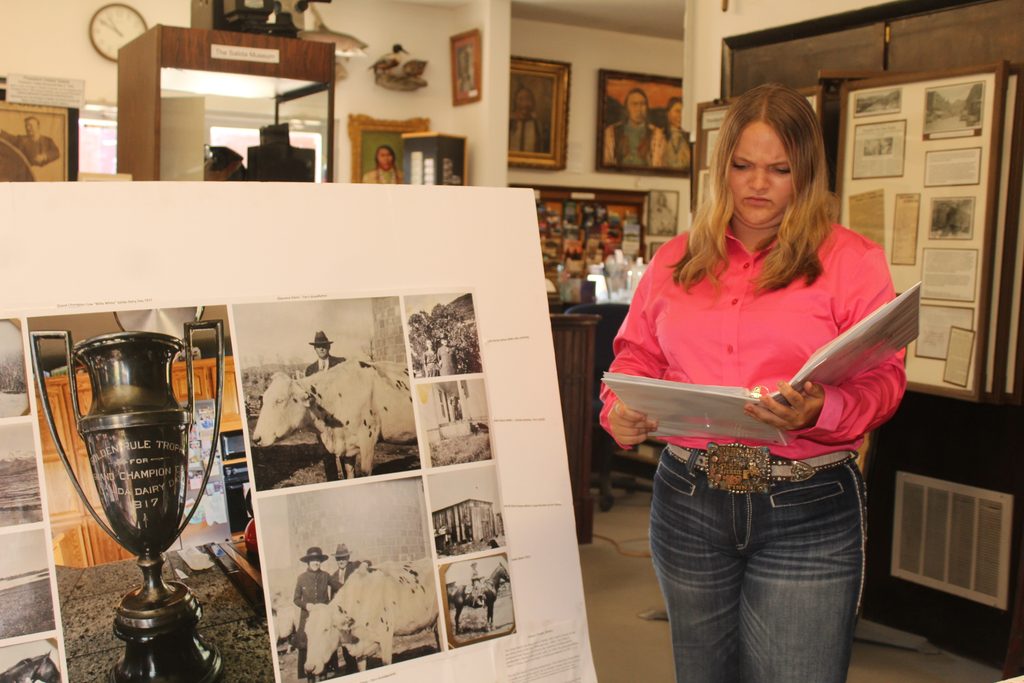
Jersie Hart, a 14-year-old 4H member, gave the Salida Museum Board a presentation on “The Art of Ranching” at the July 15 museum Board Meeting. The program included photos of the Tim Glenn Ranch which has been in the Glenn family for several generations. Jersie was very knowledgeable for her age and did a great job of presenting the information that she had researched and put together herself.
Slice of Salida History
by Arlene Shovald, Ph.D.
Football Was Salida’s Claim To Fame
Salida has always been a “football town. with not only the high school players and their families being fans. The whole community gets involved.
Among the memories older folks cherish are the years 1933 to 1936 when the Spartans played a winning streak of 39 straight games. Information about those years came from an interview with the late Stan Provenza during the Salida Centennial in 1980.
The teams, in those years, were coached by Harold A. White, an avid sportsman who was respected and admired not only by his students but by the town in general. He came to Salida during the depression and at a time when there wasn’t a whole lot to be excited about, he put together a winning football team that brought the community together.
When the Spartans played home games on Saturday, the stores were closed and remained closed until the game was over. When games were out of town, a special football train followed the team.
Teachers at Salida High School assisted Coach White in a variety of ways. “Guv” Gruenler was assistant coach. Mr. Burgener, the manual education teacher, and Dean Rouse, who did accounting for the school, helped manage the team’s finances. Mr. Barrett, the principal, a newsman at heart, wrote the news articles about the games for the newspaper. Their wives helped by driving to and from games at a time when money for gasoline was scarce and roads were often little more than dirt trails.
Local doctors supervised the games and provided medical attention when needed. Dr. T.L.A. Shaffer, Dr. Cochems, Dr. Fuller and Dr. Larimer were all team physicians. Dr. Shaffer, who worked at the Red Cross Hospital, was often able to accompany the team out of town.
Fortunately, the doctor’s professional services weren’t needed often. The bulk of the injuries were fractured collar bones and broken noses.
“Coach White saw to it that we were in good condition,” Provenza said. “I think that’s why we didn’t have many injuries. In those days we didn’t have the safety equipment we have today (1980 . Helmets were just leather caps with padding inside and we didn’t wear face masks.”
Provenza was a member of one of the championship teams.
School colors were purple and white but the team played in dingy brown and purple uniforms that first year under Coach White. Despite being in the height of the depression White somehow managed to secure better uniforms and thereafter they played in good looking purple and white uniforms with a satin finish. (Rumor has it, though never confirmed, that Laura Evens, who owned a brothel on Sackett Street, bought those uniforms for the team. She was known for doing a lot of good in the community in spite of her dubious business.)
All good things must come to an end, however, and as Salida knew it would, the winning streak came to an end in the fall of 1936. The team lost to Grand Junction by a score of 6 to 0.
Possibly the reason for the loss was the fact that Coach White lost his center, Pat McNamara, who died of pneumonia and another top player, a full back, became ineligible to play. Explaining the ineligibility, Provenza said, during the depression many students stayed in school for nine semesters and didn’t graduate until they were 19 or 20 years old. Students who were in school longer than nine semesters or were past age 19 became ineligible.
Football was very important to folks in those days and still is. In about 1976 the teams that played during those championship years began having reunions. Coach White was able to attend the first two and at a ceremony in 1976 the former Spartan Field was renamed White Field. He died in 1978.
Museum Talks at the Library
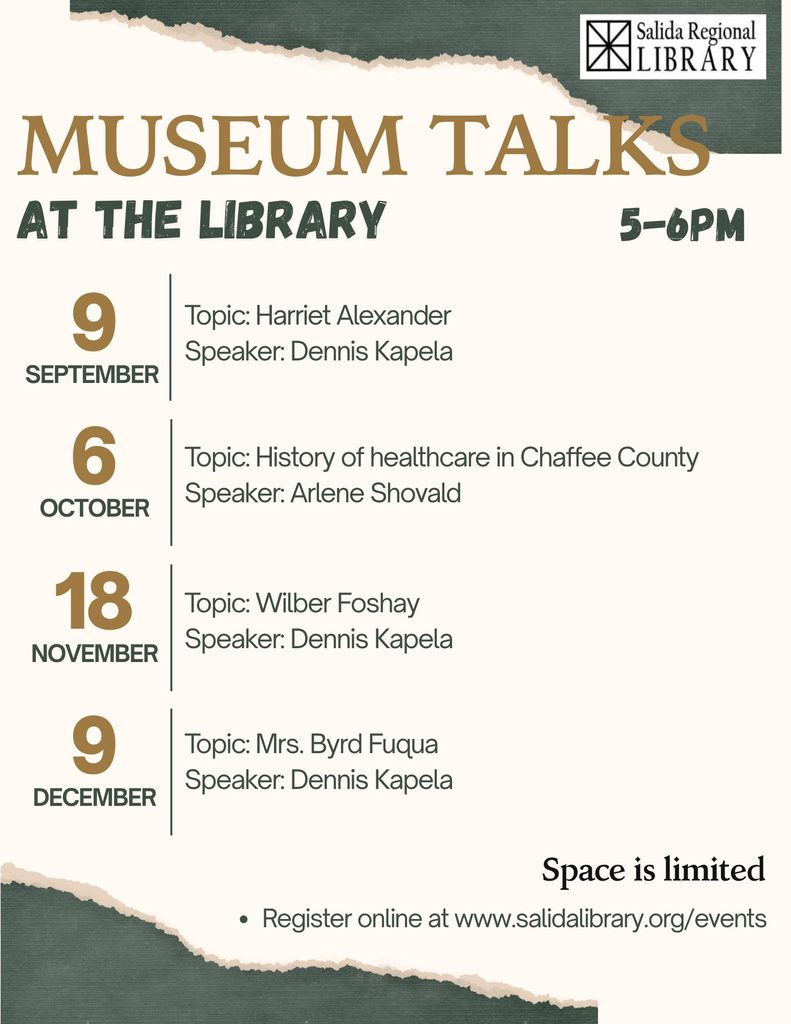
The Salida Regional Library is again hosting a series featuring Salida Museum staff presenting programs on local history with connections to displays in the museum. The series is being conducted according to the poster featured below. We again thank the library for this chance to present our historical information the the public.
Mountain Mail Move
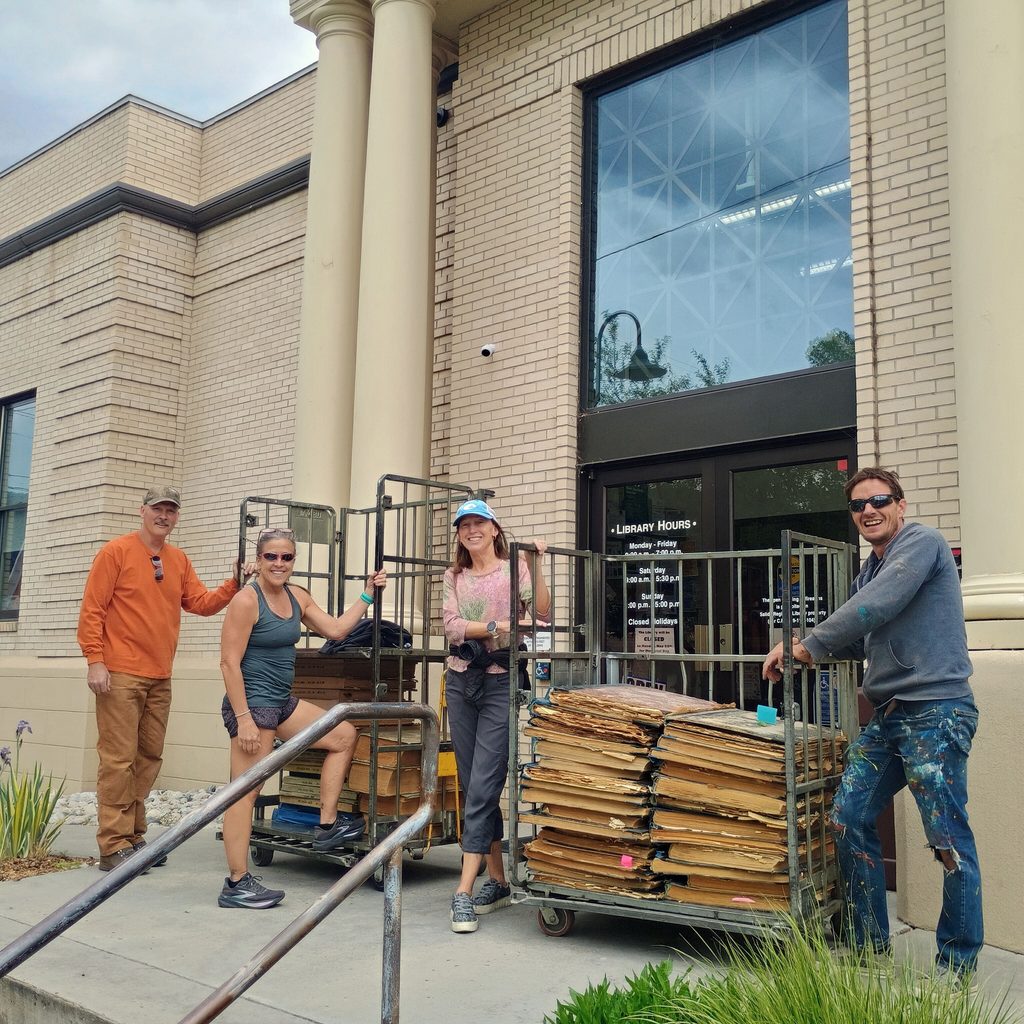
Salida’s history was saved May 22 and 28 when volunteers gathered at The Mountain Mail at 125 East Second Street, to move the original bound copies of newspapers ranging from 1880 when Salida was founded to the present, to the Salida Regional Library. The newspaper is moving to a new location and O’Rourke Media Group, the current owner, donated the archives to the Salida Museum Association, a nonprofit organization, for safekeeping. Since the museum has no room for the massive collection, the Salida Regional Library agreed to store them.
“Salida Museum appreciates the help of Steve Chapmen, the volunteers and the help and generosity of Joy Jackson and the library to provide room for such an important collection of the history of of Salida and the Upper Arkansas Valley,”s said Bob Campbell, museum president.
Steve Chapman of Salida Walking Tours coordinated the move as volunteers pushed Salida’s history on carts approximately three blocks up the street to the library. Others involved with the transfer were Joy Jackson of the Salida Regional Library, Earle Kittleman and Arlene Shovald of the Salida Museum.
“The biggest challenge was pushing the newspapers in carts to the library,” Chapman said. “From this point, Joy Jackson of the library will examine the archives for quality and then have them shipped to the State Library in Denver for digitization To date she has supervised digital archiving of all issues from 1880 to 1925.”
Happenings
by Earle Kittleman
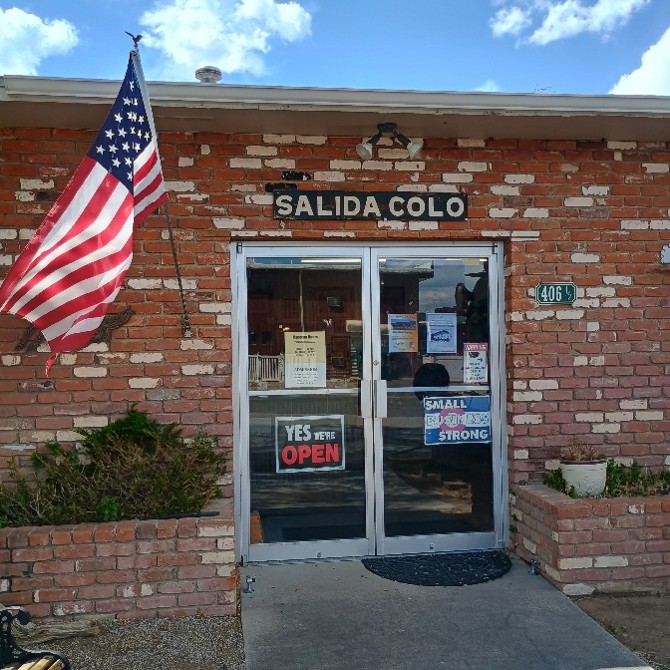
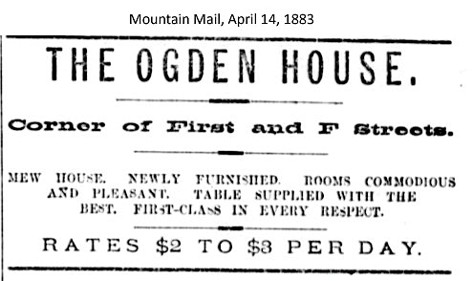
As it happened, in April an old SALIDA COLO sign turned up in a collection of railroad memorabilia in Michigan, came here by way of a donation, and now displays itself over the front door of the Museum. The donor, Alice Murphy of St. Johns, Michigan, has her own connection to the area. Her great, great grandfather William Layton Ogden ran a hotel in St. Elmo and later a hotel and bakery in Salida in 1882-83.
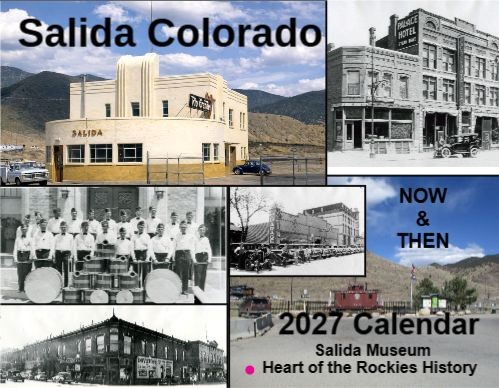
In June, the 2027 Calendar went on sale, featuring pictures of Salida “Then and Now.” Museum president Bob Campbell found the old photos and matched them with the current look. Plenty of copies are left, if you want one.
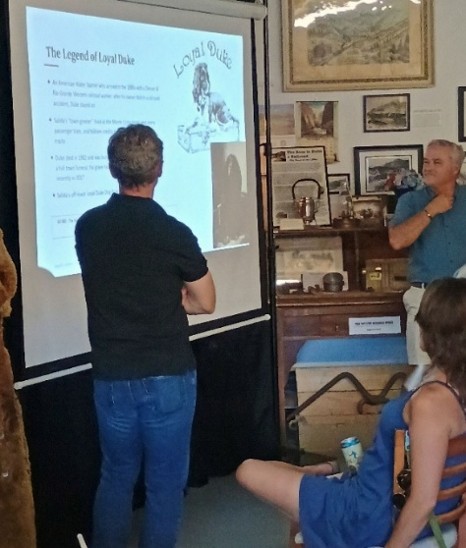
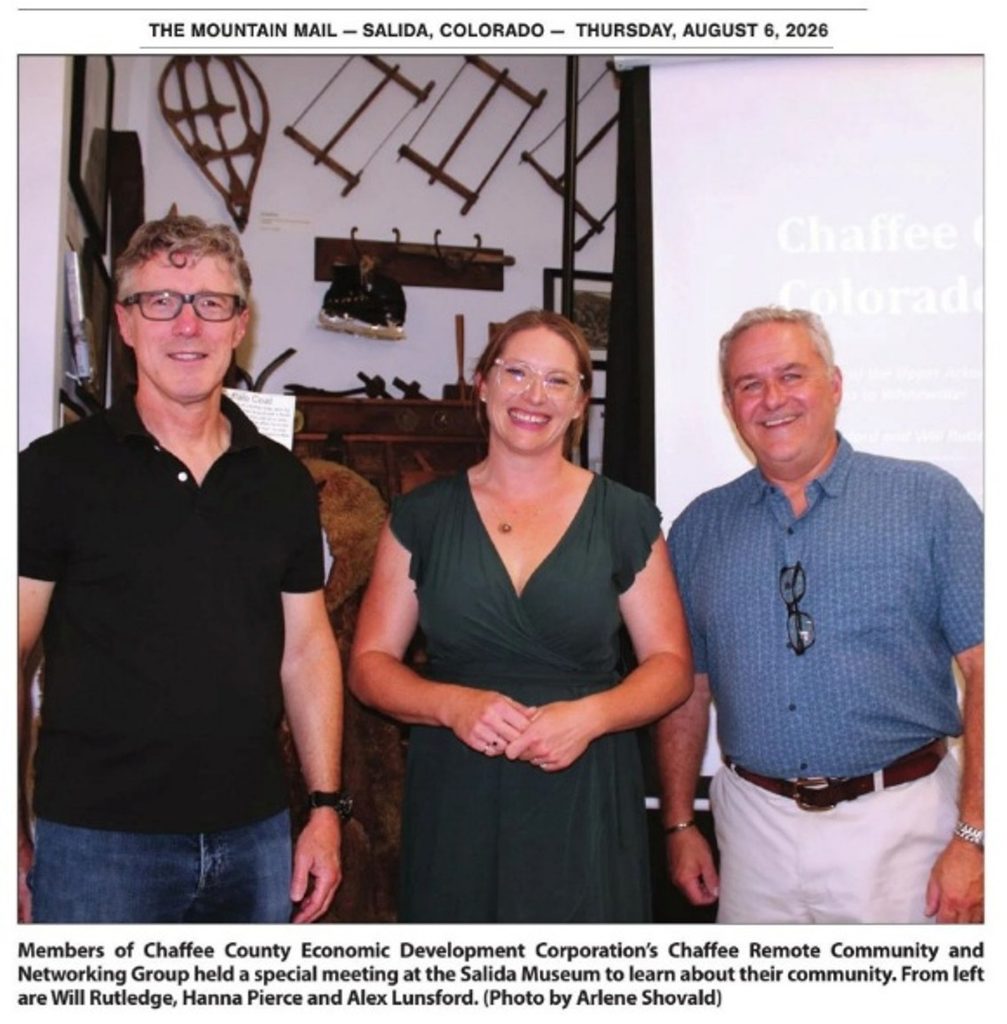
At the end of July, Chaffee Remote used the museum for one of its regular happy-hour events that help teleworkers connect with the surrounding community, which is sometimes difficult due to being awake at different time zones. Persons working odd hours at home make up 24% of the county workforce. The group made their own slide-show presentation about the area stretching back to geologic times. Arlene Shovald wrote a story that appeared in the Mountain Mail along with pictures.
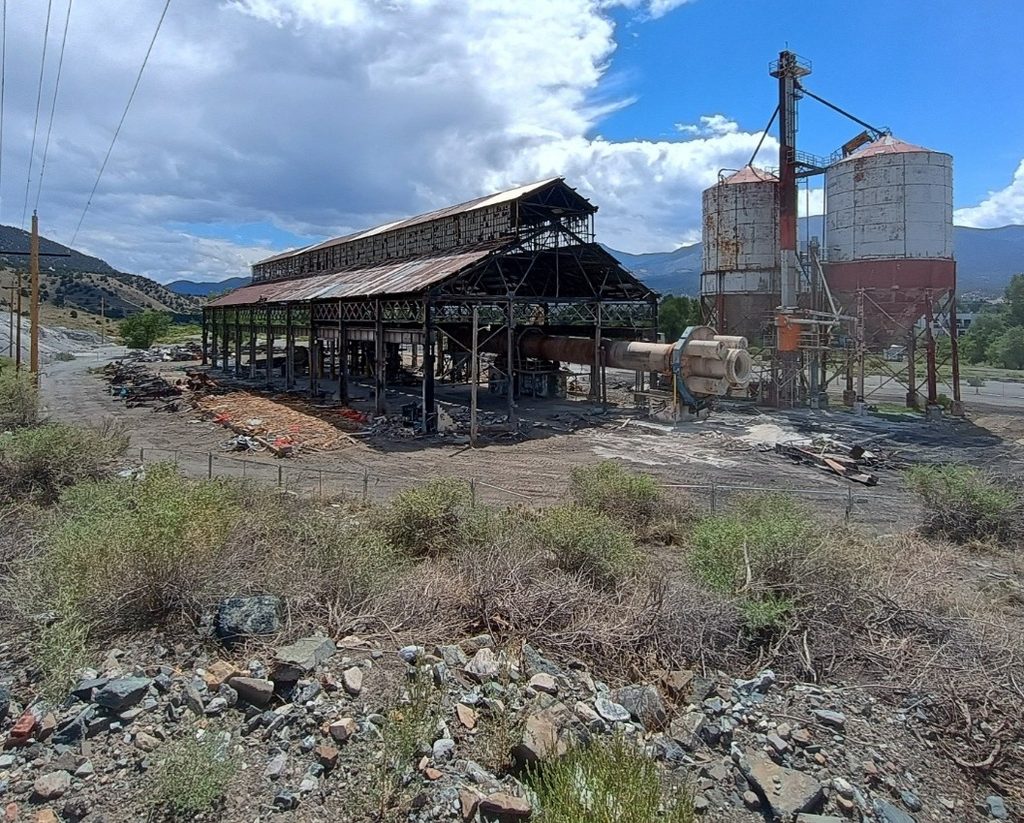
By mid-August demolition was well underway on the last building in Salida’s historic railroad yard, the abandoned Calco limestone plant built originally in the 1920s as the Denver & Rio Grande machine shop. As history buffs, we can’t let the event go by unnoticed. The building had become a liability to both the owner and City of Salida, which had no objection when Union Pacific, successor to the D&RG, announced plans to tear it down. Gone, but not forgotten, we can say.
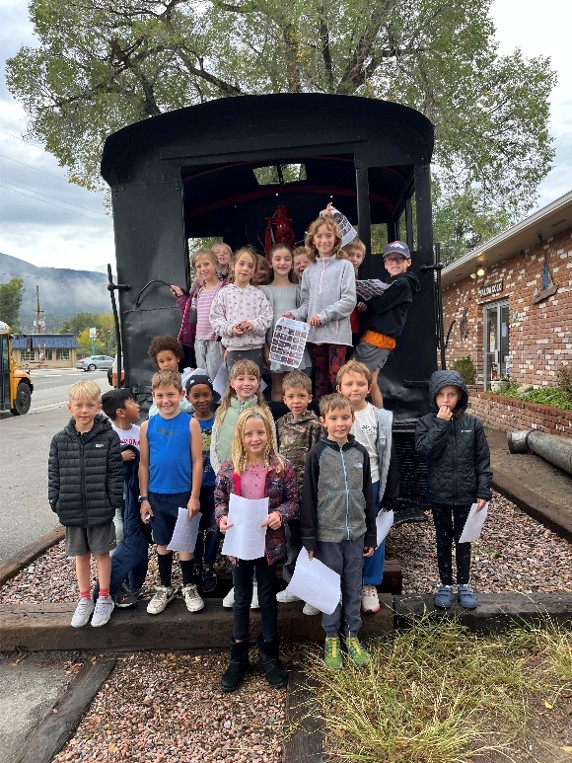
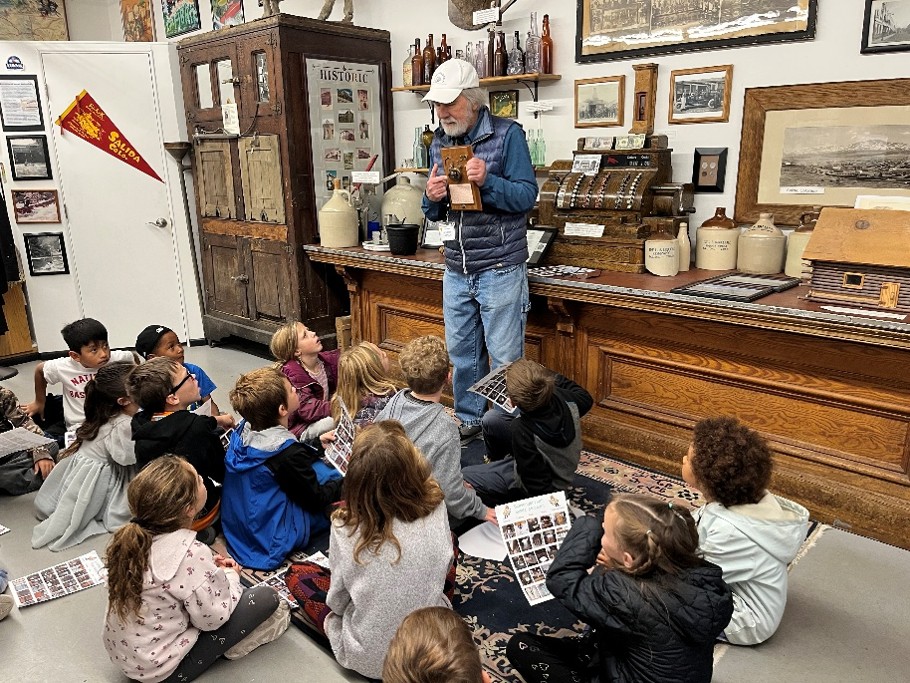
Finally, bringing us into Fall, were the latest crop of 2nd graders from Longfellow Elementary eager to see the museum. On a cold Oct. 1st, four classes came by bus, one after the other at four separate times for a total of 83 students with their teachers and aides. Each student got a scavenger hunt sheet with pictures of old things they were encouraged to find among the exhibits.
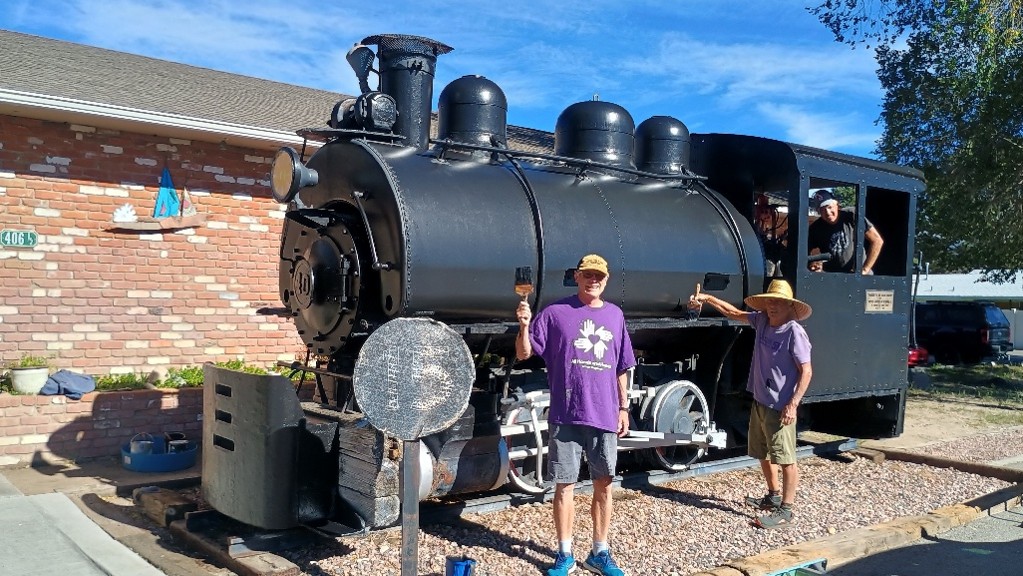
Lorita Groover’s class took a picture outside on the Porter Tank Engine No. 40 that just turned 100 years old with a new coat of black gloss paint. Museum volunteer Dennis Kapela (former Scout leader) wrapped things up by showing Marshall Baxter Stingley’s pocket watch that took a direct hit in a gunfight and saved his life May 30, 1883.
PRESERVATION: ENGINE NO. 40 AND CABOOSE NO. 0576
By Earle Kittleman
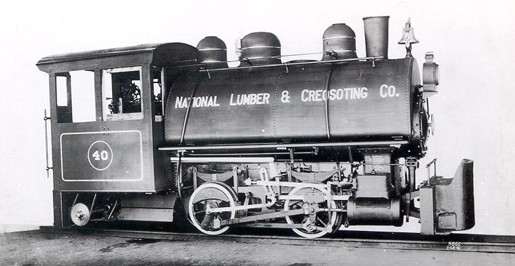
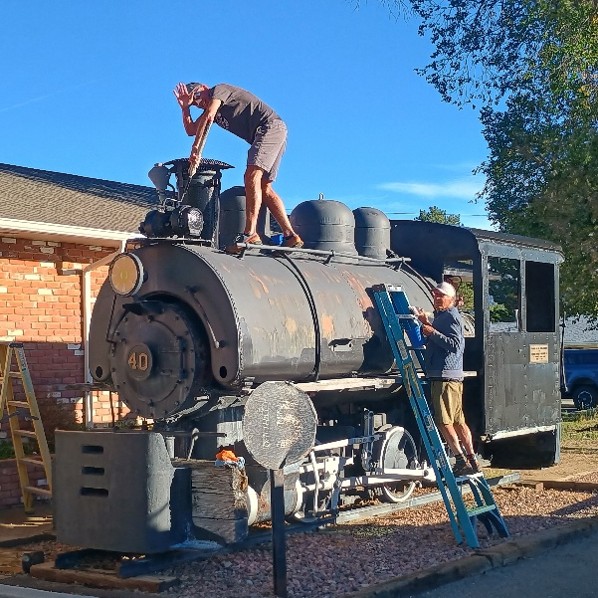
In September, we finally got the engine in front of the museum painted. She’s 100 years old and looking just as proud in retirement as she did when her builder’s photograph was taken at the Porter Company in Pittsburgh, PA. The little two-foot gauge, “dinky” or “yard goat” as they were known, served her entire career at the creosote plant in Smeltertown. She pushed a pulled carloads of fresh cut railroad ties in and out of long vats where the wood was impregnated with hot, pressurized creosote for rot protection. At that time Denver & Rio Grande Western was expanding and upgrading track throughout its system. At the center of the system, Salida served as division point for the whole Colorado southwest.
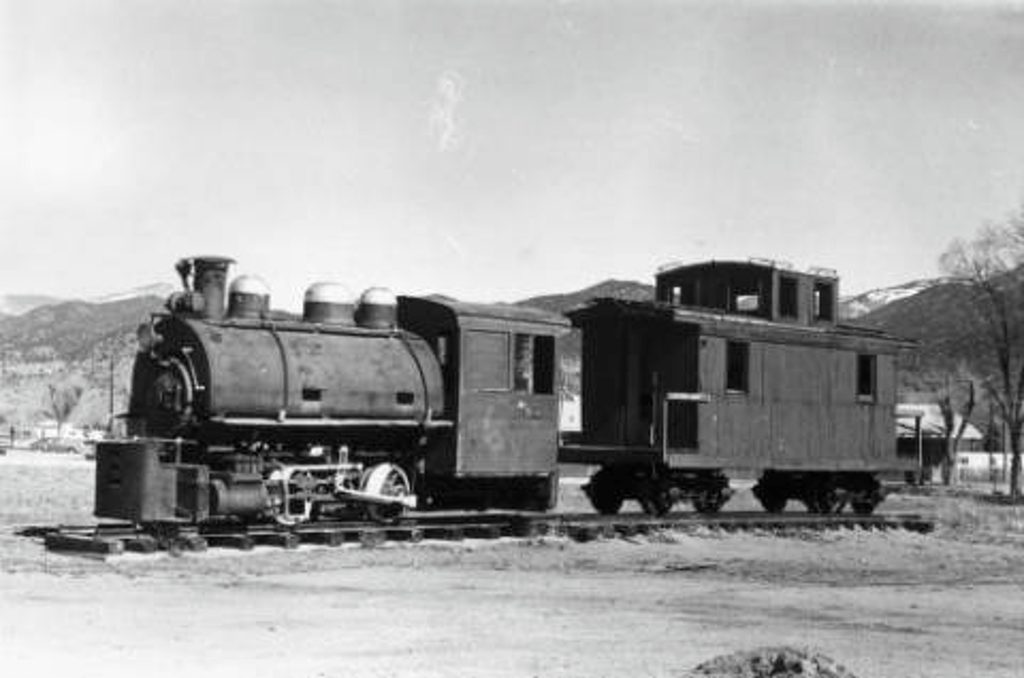
Koppers Company, as it became known, eventually went out of business and in 1953 donated Porter Tank Engine No. 40 to Salida Museum. It was moved to position near the hot springs pool in what is now known as Centennial Park. There it rested on static display for the next 60 years along with an old narrow-gauge caboose that had been bought at surplus and used as a backyard clubhouse until being donated to the city by the Terry Gill family after the son left home to join the U.S Army during the Korean War.
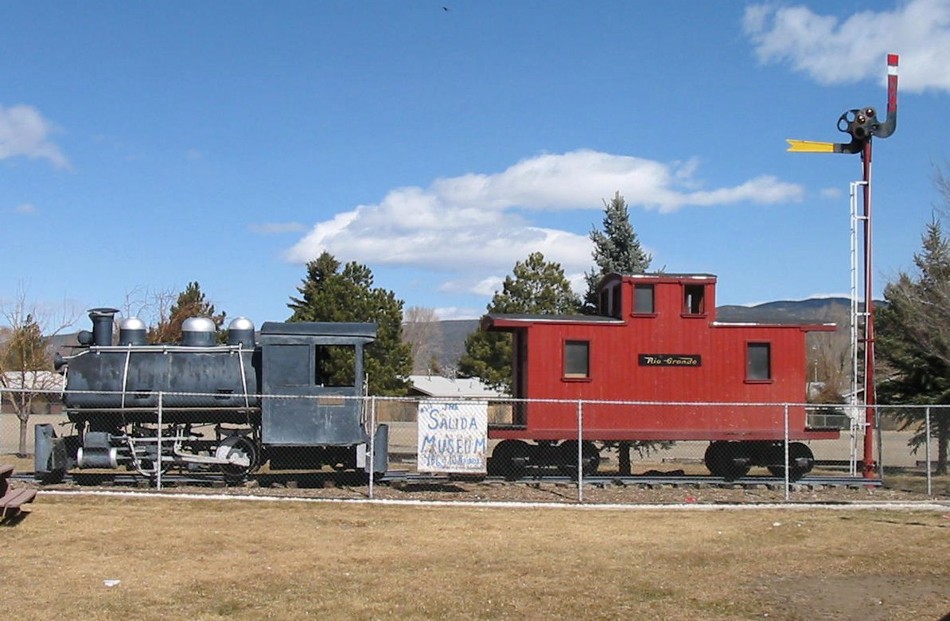
Every several years volunteers re-painted the engine and caboose to preserve them against the elements. In 2005, retired firefighter Dexter Jennings of Buena Vista noticed the need and gave engine and caboose a bright, three-tone paint job that earned him a certificate of appreciation from Salida Mayor Danny Knight and city council. Jennings spent three weeks stripping, priming and painting and he paid for all the supplies himself.
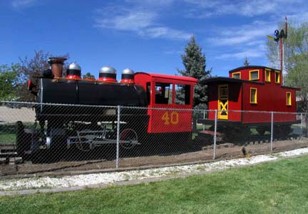
The engine on two-foot-wide track and the caboose on three-foot track never operated together, so were an unlikely pair for display from the beginning. There was one more re-painting in 2013 and then the caboose got a new assignment.
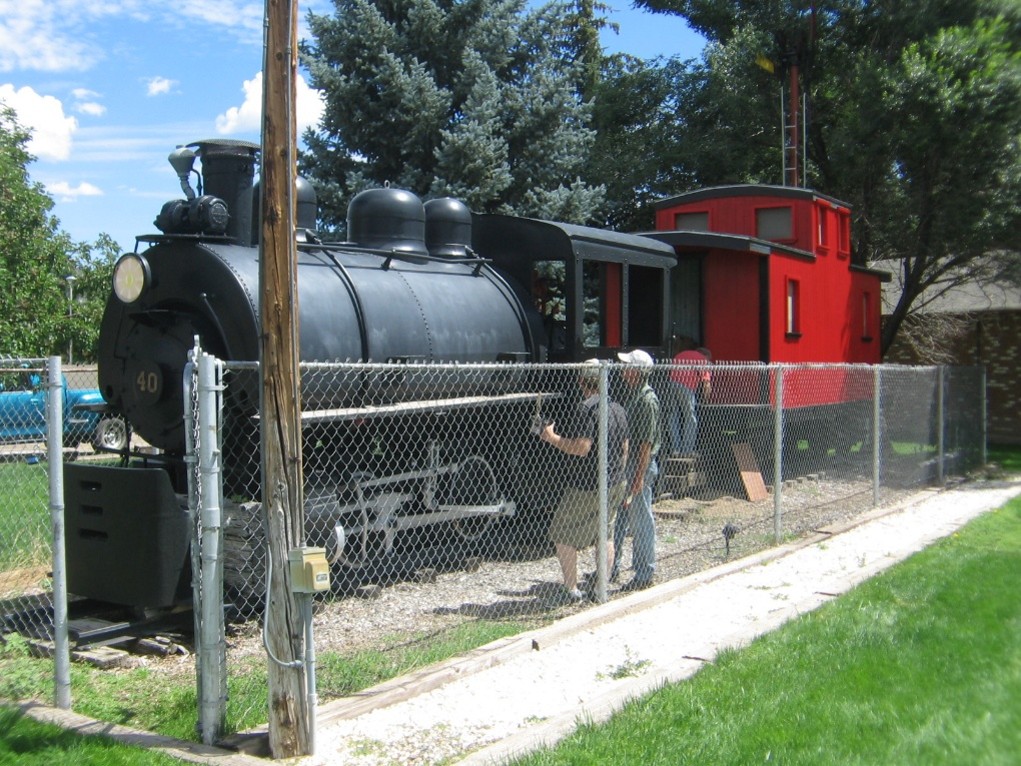
By 2014, the caboose had been researched and identified as No. 0576 built in 1886 by the Denver & Rio Grande. There were historic photos of it working in Salida yard. Salida Mayor Jim Dickson urged to have the caboose designated a historic local landmark by ordinance and moved to the foot of F Street overlooking the former railroad yard where she had spent her career.
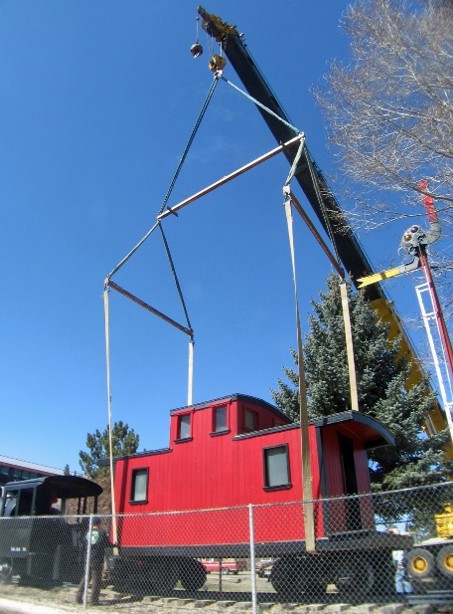
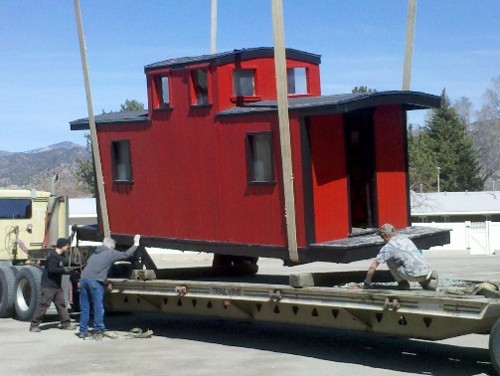
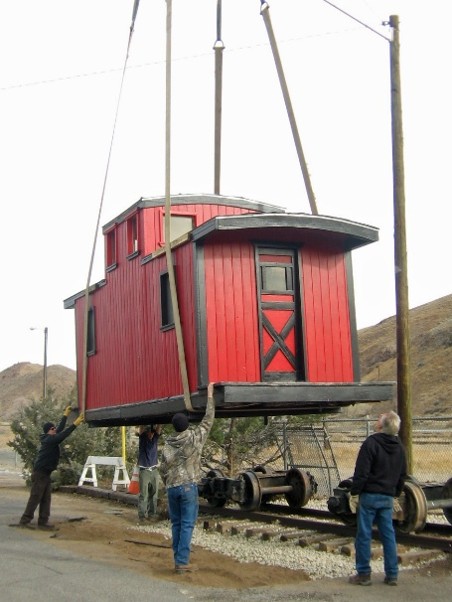
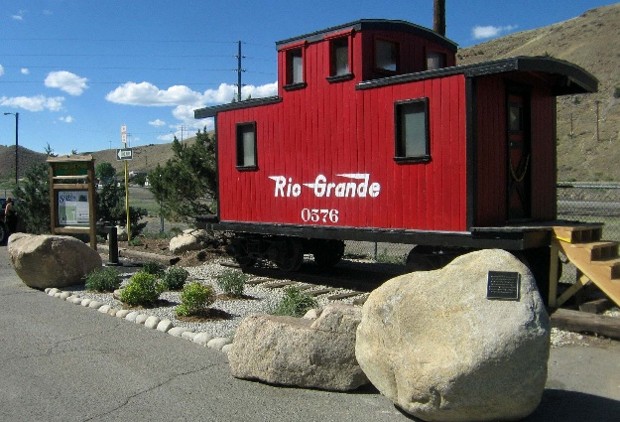
The site was landscaped and signed with a commemorative plaque to the Gill family. Still, the caboose suffered from years of alterations and rested on the wrong size wheel sets. Rio Grande “speed lettering” so called, was from later era. A complete restoration would be expensive, but worth it for the sake of authenticity.
Public Works Director David Lady, himself a history buff, took interest and did the grunt work of writing grant requests to get a historic assessment from History Colorado and getting another hefty grant to actually have the caboose restored to its authentic original look with appropriate lettering and hardware most of which had to be refashioned or scrounged from other railroad graveyards, including correct size wheels. To get this accomplished the city packed up and drove the caboose to Silverton, Colorado for restoration by Klinke & Lew, a contractor with experience on numerous historic projects of this type in southwest Colorado.
The return of Caboose No. 0576, in all her original glory, to the rail yard that had given birth to Salida caused much excitement and speech making. We listened on a chilly day May 9, 2024 to Mayor Dickson give thanks all around for making No. 0576 a great city attraction.
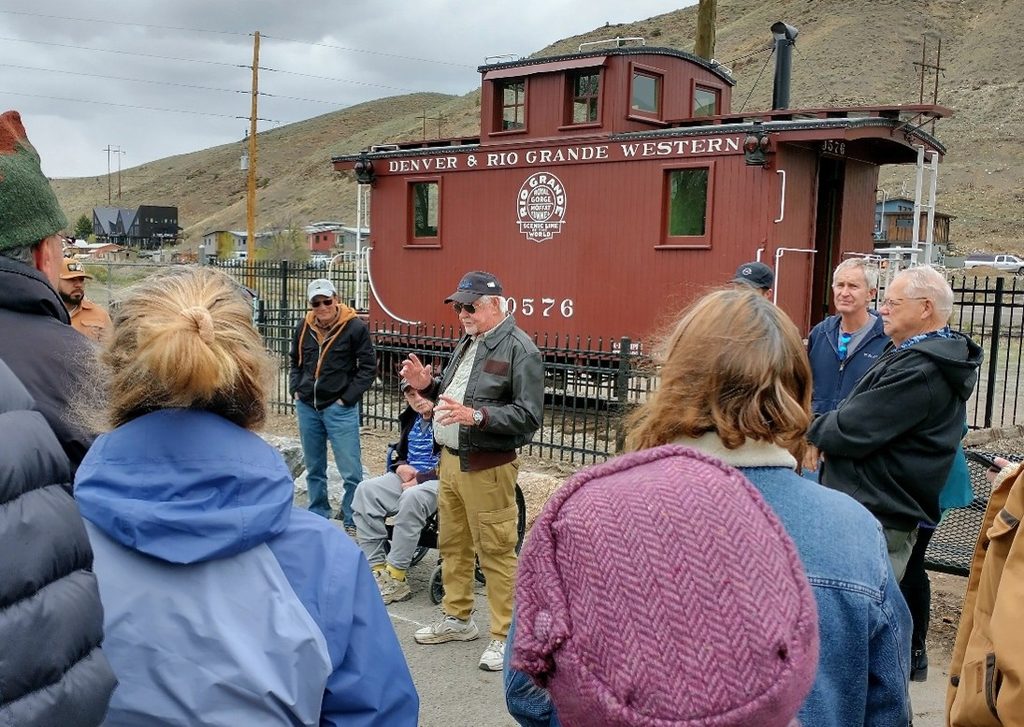
From Silverton, CO came Loren Lew and Fritz Klinke to share in the celebration and take credit for the complete resurrection of the caboose. And, David Lady with Larry Kovacic took their share of credit for moving the project to fruition.
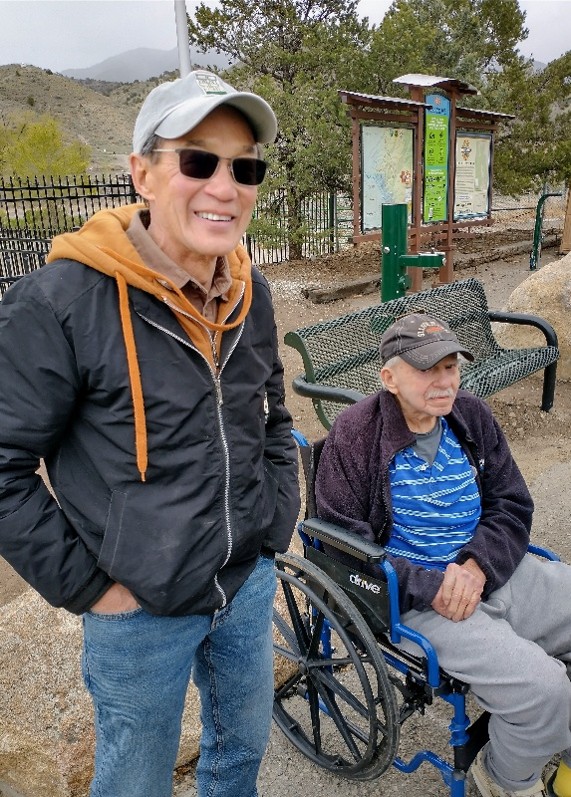
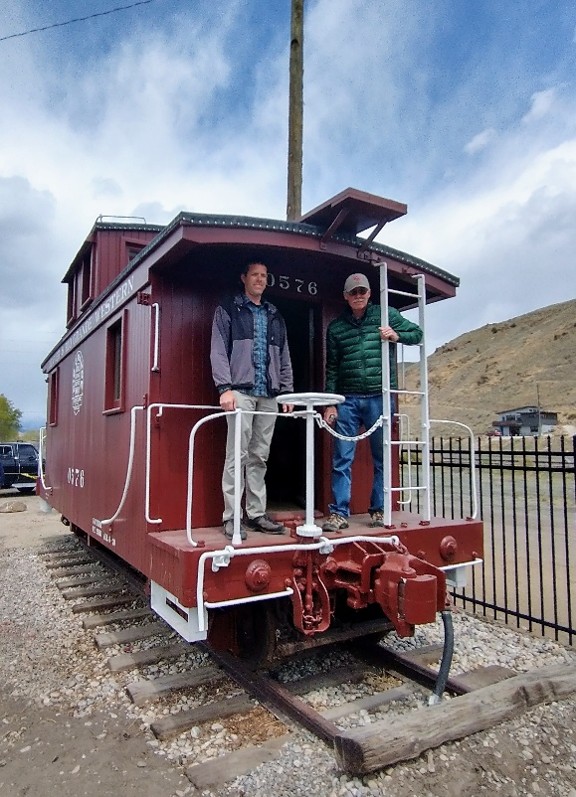
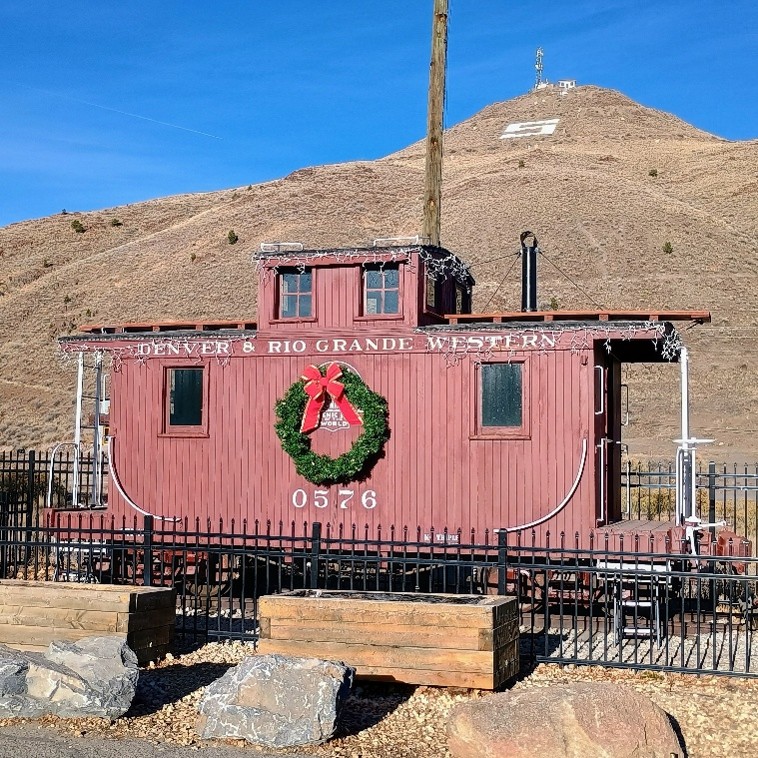
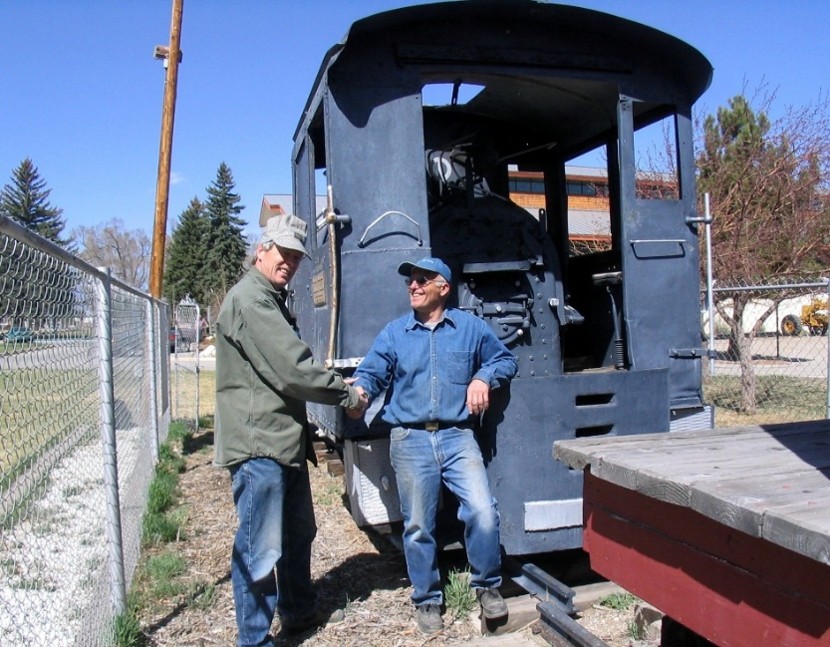
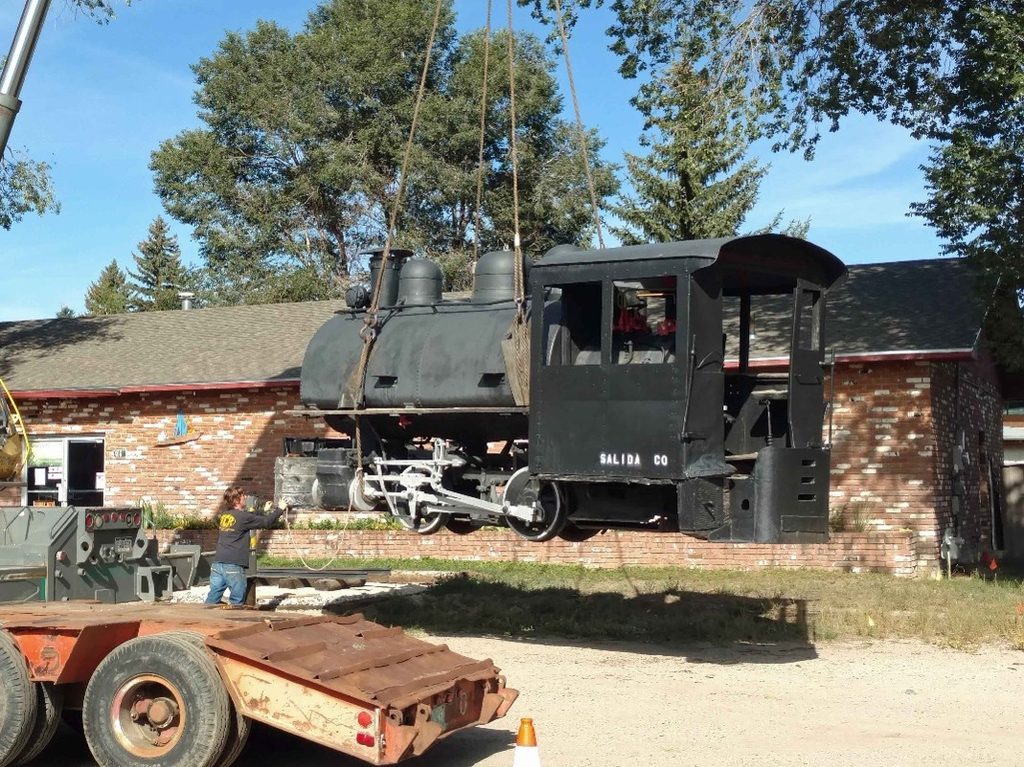
Meanwhile Engine No. 40 back in Centennial Park had its date with the movers and got lifted around to the front side of the museum building to make way for new pickle ball courts to satisfy fans of the fast-growing sport.
Finally, the Engine got its birthday paint job this year, from a team organized by museum board member Terry Pintane. They started early Sept. 11 before the sun could broil the metal. He and Jerry Fesenmeyer and Patrick Hardin finished the job by noon with touch up completed in days following. The engine had not been painted since 2013. Happy 100th birthday you old Goat!
At the Library
by Joy Jackson
The Salida Granite Company
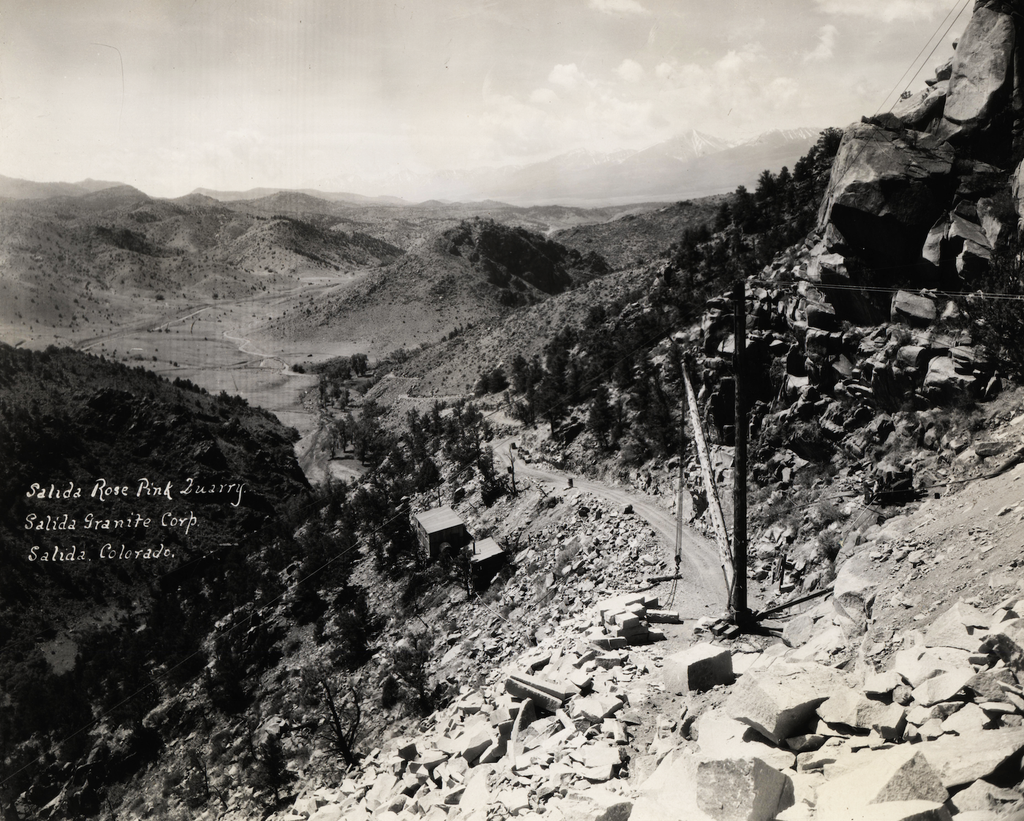
Chaffee County was once considered ‘the granite center of the world.’ The granite found near Turret, Colorado was equal or better than some of the best quarries in the world and the kings of the industry here were the Salida Granite Company.
The company formed in 1893 and incorporated in 1901. The Salida Mail newspaper reported on their history: “Before locating their quarry, their president, Ed Bowen … prospected the hills, and at that time there were no other granite claims. The consequence was that he picked a very fine ledge of granite that was accessible by means of the county road, known as the Ute Trail Road. So fine was the quality of this granite and so great the demand that a finishing plant was erected in Salida and wholesale as well as retail business was engaged in.”
The Salida Granite Company made their headquarters at the northeast corner of 5th and I Streets in Salida and grew to become a corporation that made many millions of dollars off the granite found in the Turret district. They also owned and operated the Salida Rose-Pink Quarry, aka the Federal Quarry, which is private property today.
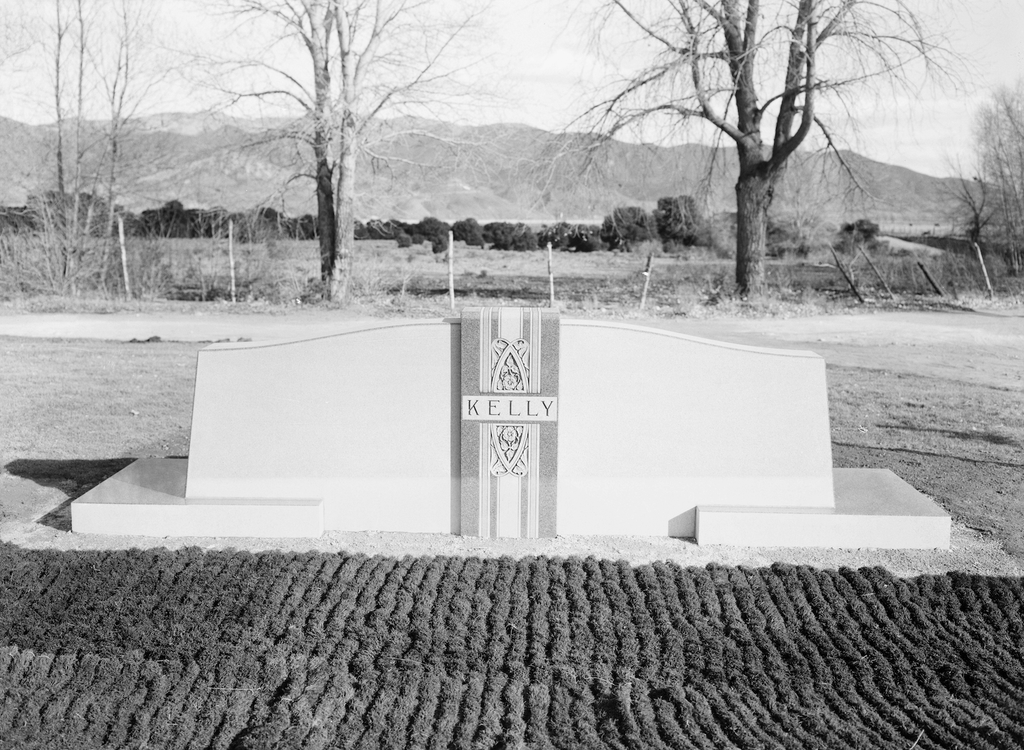
Salida granite was sold all over the nation. Most famously, the Mormon Battalion Monument in Utah and the Steunenberg Monument in Idaho were made with Salida rose -pink granite. Examples of this rose-pink granite may be seen at Salida’s Fairview Cemetery and one of the most beautiful is Frank Kelly’s stone in section K, which is just off the main road heading north. Look to your left as you enter in.
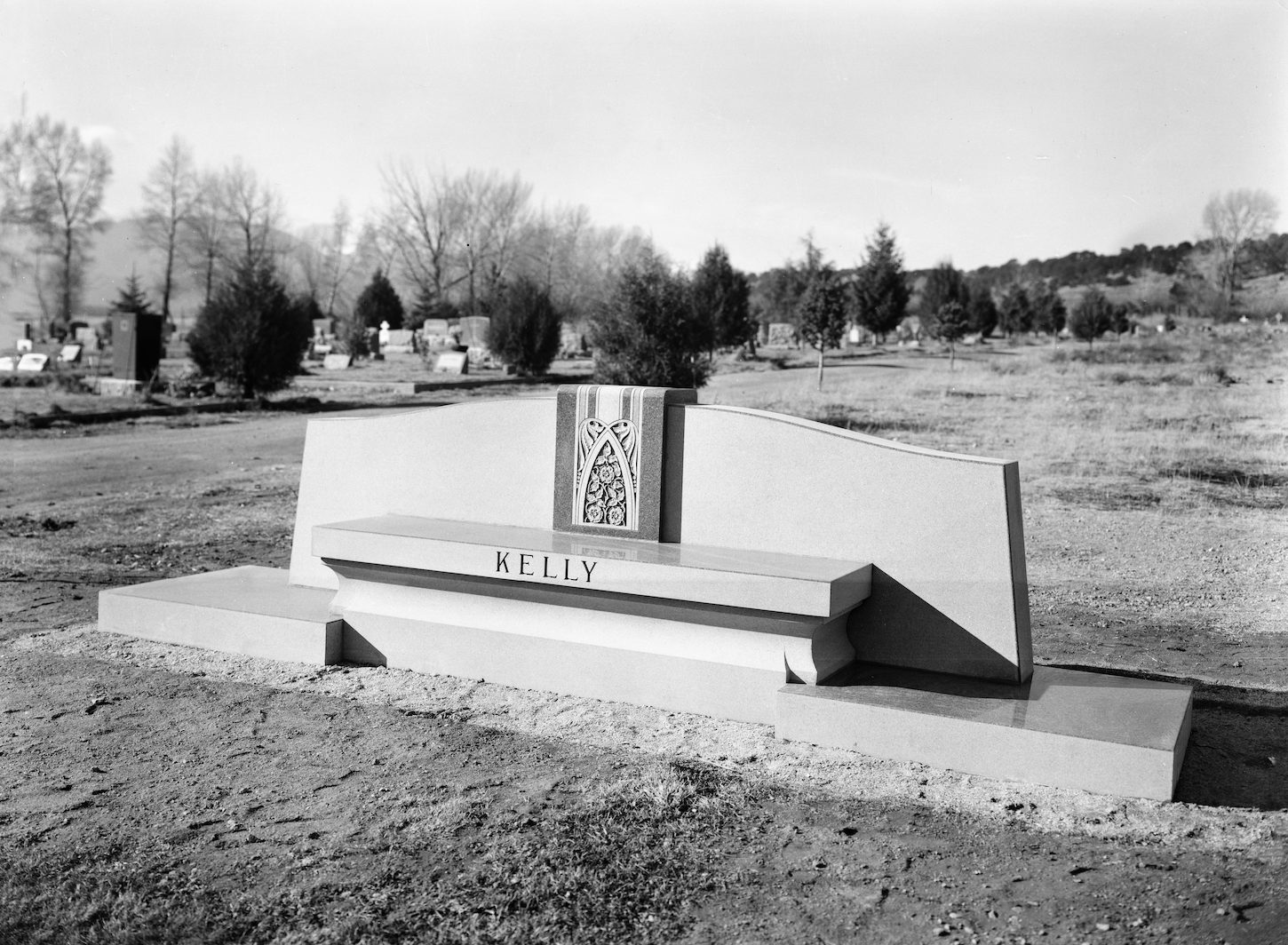
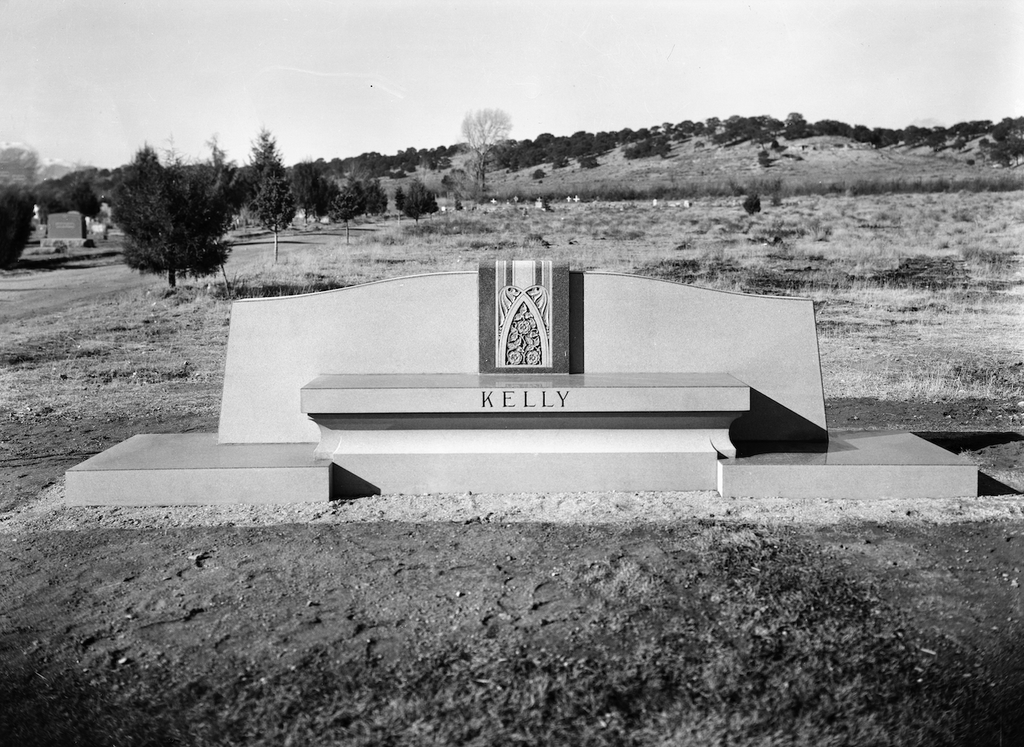
Around 75% of the headstones at Fairview Cemetery are made from Salida granite, and the Tuesday Evening Club cornerstone located at the Salida Library is, as well.
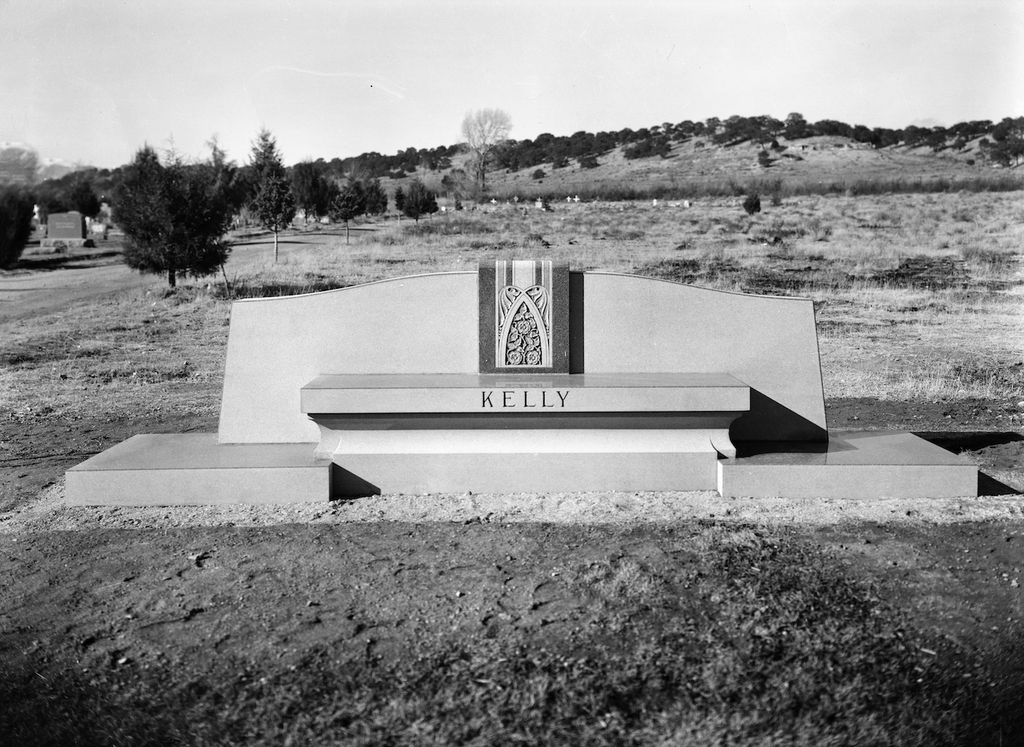
Joy will be hosting a Day of the Dead tour at Fairview Cemetery to talk stones and history on November 1st at 1 o’clock. Visit salidalibrary.org and check the events calendar to sign up!
Museum Board of Directors
The current museum board of directors is comprised of the following:
President, Bob Campbell
Secretary, Earle Kittleman, 719-221-3685
Treasurer, Larry Kovacic, 505-280-4831
Board Member, Arlene Shovald, 719-539-3139
Board Member, Bonnie Konopka, 505-270-6523
Board Member, Terry Pintane, 719-221-4177
Board Member, Dennis Kapela, 720-320-9132
We wish to thank Margaret Dean, who volunteers as a board representative from Maysville. The members of the South Arkansas Landowners Association (SALA), comprising residents in the Maysville area, do a lot of work taking care of the historic Maysville School, which is owned by the museum. We appreciate their efforts to maintain the school as a historic landmark and look forward to a long and fruitful relationship.
Museum Docents
Patrick Hardin
Terry Pintane
Dennis Kapela
Earle Kittleman
Arlene Shovald
Bonnie Konopka
Larry Kovacic
Many thanks go to our docents; they are the reason the Salida Museum remains open to visitors.
Volunteers Needed
If you are interested in becoming a board member and coming to one meeting a month, or becoming a docent and working one day a week, let us know. We would be very happy to talk to you about joining our team. Our board meetings are open to the public, so if you want to attend one and find out if you’re interested, the meetings are the third Wednesday of the month, 11:00am, at the museum.
Support the Salida Museum
The Salida Museum Association is an all-volunteer non-profit organization that relies on donations, memberships, admissions and limited fundraising to remain operational. You can help support the museum by making a donation or becoming a member.
Donation – any amount appreciated
Annual Membership – $15, includes 5 free visits
Lifetime Membership – $100, includes unlimited free visits
Memberships and donations are tax deductible. Send your payment to the address listed below, use our website to remit with PayPal, or join when you come in to see the museum. You will receive an acknowledgement letter for tax purposes. (make sure we have your address)
Salida Museum Association
406 1/2 W. Hwy 50, Salida, Colorado 81201
salidamuseum@gmail.com
719-539-7483
For more museum information, see our website or Facebook page.